Hairstyles for Face Shapes: The Complete Salon Matching Guide
You save a photo of a gorgeous cut and wonder if it will suit your face. Maybe you tried a trendy style once and hated it by morning. That doubt is real, and it costs you money, time, and confidence.
Hair adds a second layer to the puzzle. Fine strands fall flat, thick hair spreads wide, and curls spring up as they dry. The same cut can look different on two people with the same face shape.
One idea matters most. The best hairstyles for face shapes balance your widest and longest points, so your cut adds what your face lacks and softens what stands out.
You will learn how to find your shape, pick a cut and bangs that suit it, and style the result at home.
Hairstyles for Face Shapes Start With Six Basic Outlines
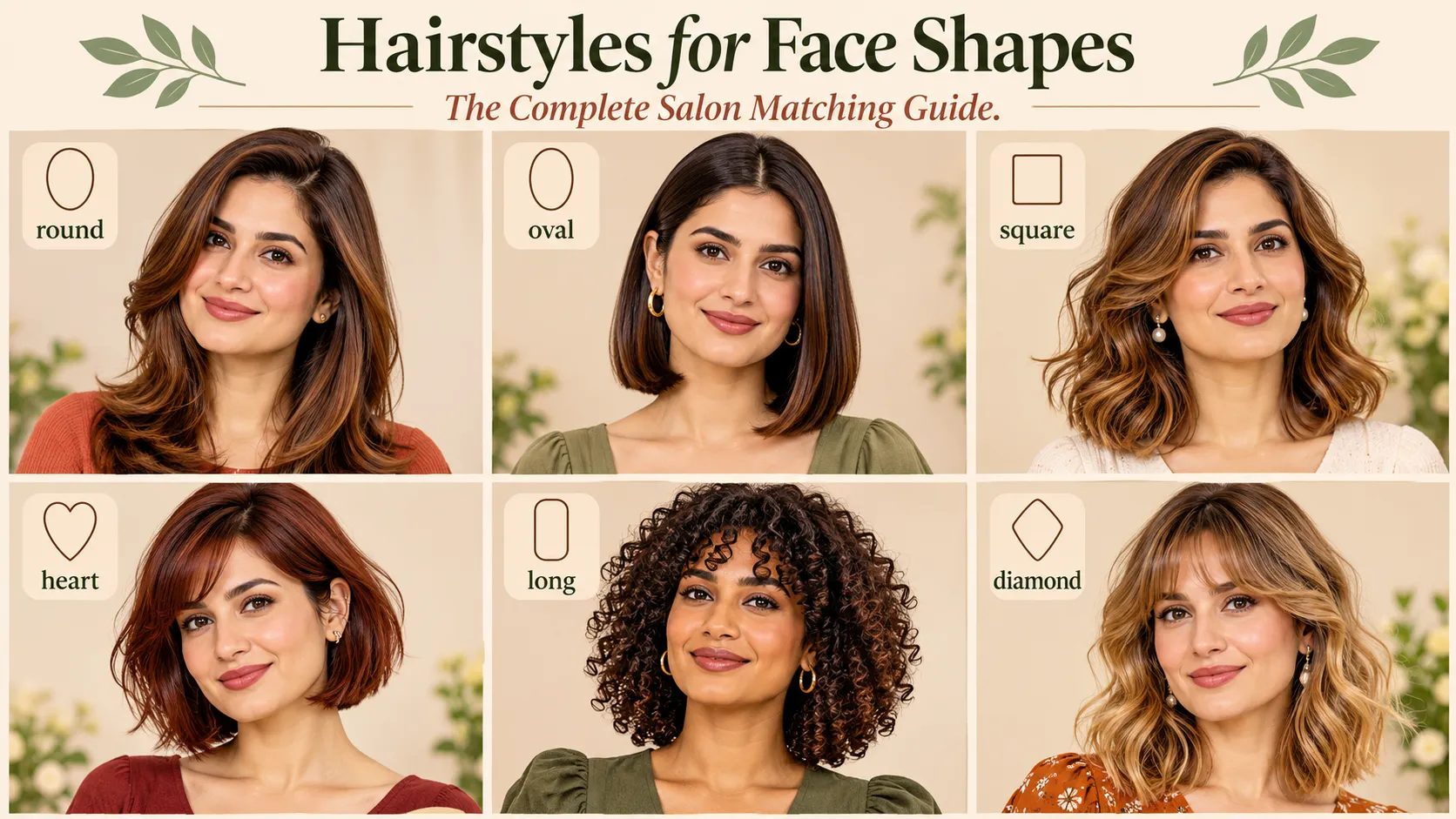
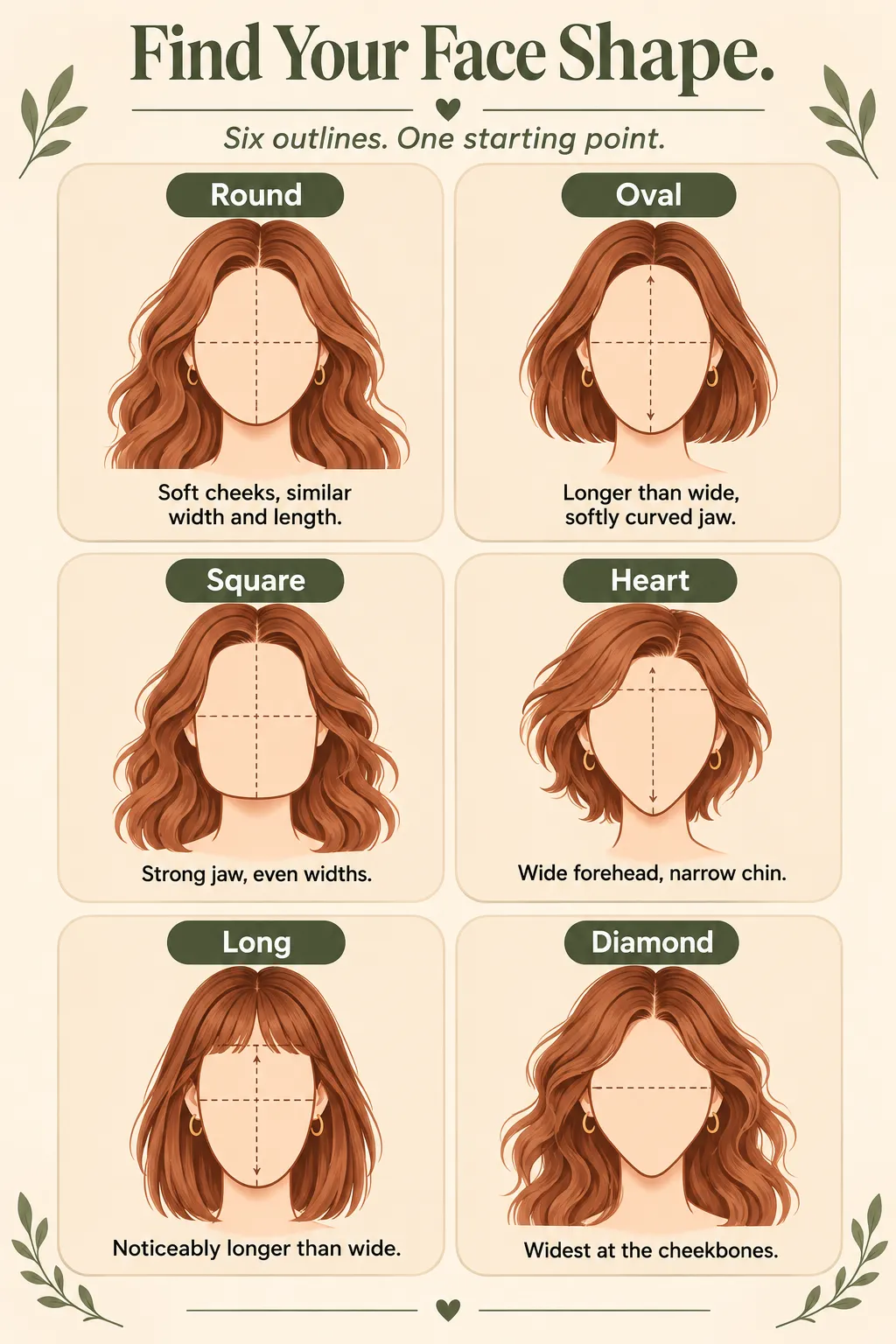
Most faces sit close to one of six outlines: round, oval, square, heart, long, and diamond.
Each outline has a different widest point. Your cut should work with that point, not against it.
Hair is the one feature you can change in an afternoon. Length, layers, parts, and volume all move the eye. A cut can add width where a face is narrow or soften a strong angle.
Use this table as a quick reference. Real faces often blend two shapes, so treat it as a starting point.
| Face Shape | Main Trait | Styling Goal |
|---|---|---|
| Round | Width and length are close, with soft cheeks | Add height and lengthen the lines |
| Oval | Longer than wide, with a gently curved jaw | Keep balance and show your features |
| Square | Strong jaw, with forehead and jaw similar in width | Soften the corners |
| Heart | Wide forehead and a narrow chin | Add fullness near the jaw |
| Long | Noticeably longer than wide | Add width and shorten the look |
| Diamond | Widest at the cheekbones | Soften the forehead and jaw |
Cut Note: Face shape is a guide, not a verdict. Your hairline, features, and growth patterns count too.
Think of the outline as a map, not a rule.
A Mirror and a Soft Tape Reveal Your Face Shape in Five Minutes
You do not need a salon chair to read your outline. Knowing how to measure your face shape takes one soft sewing tape and a bathroom mirror. Pull your hair back, face the glass, and hold still.
How to Measure Your Face Shape in Four Steps
- Forehead: Measure from temple to temple, halfway between your brows and hairline.
- Cheekbones: Measure across the widest point, from the outer edge of one cheekbone to the other.
- Jawline: Measure from the tip of your chin to the corner below your ear, then double it.
- Length: Measure from the center of your hairline to the tip of your chin.
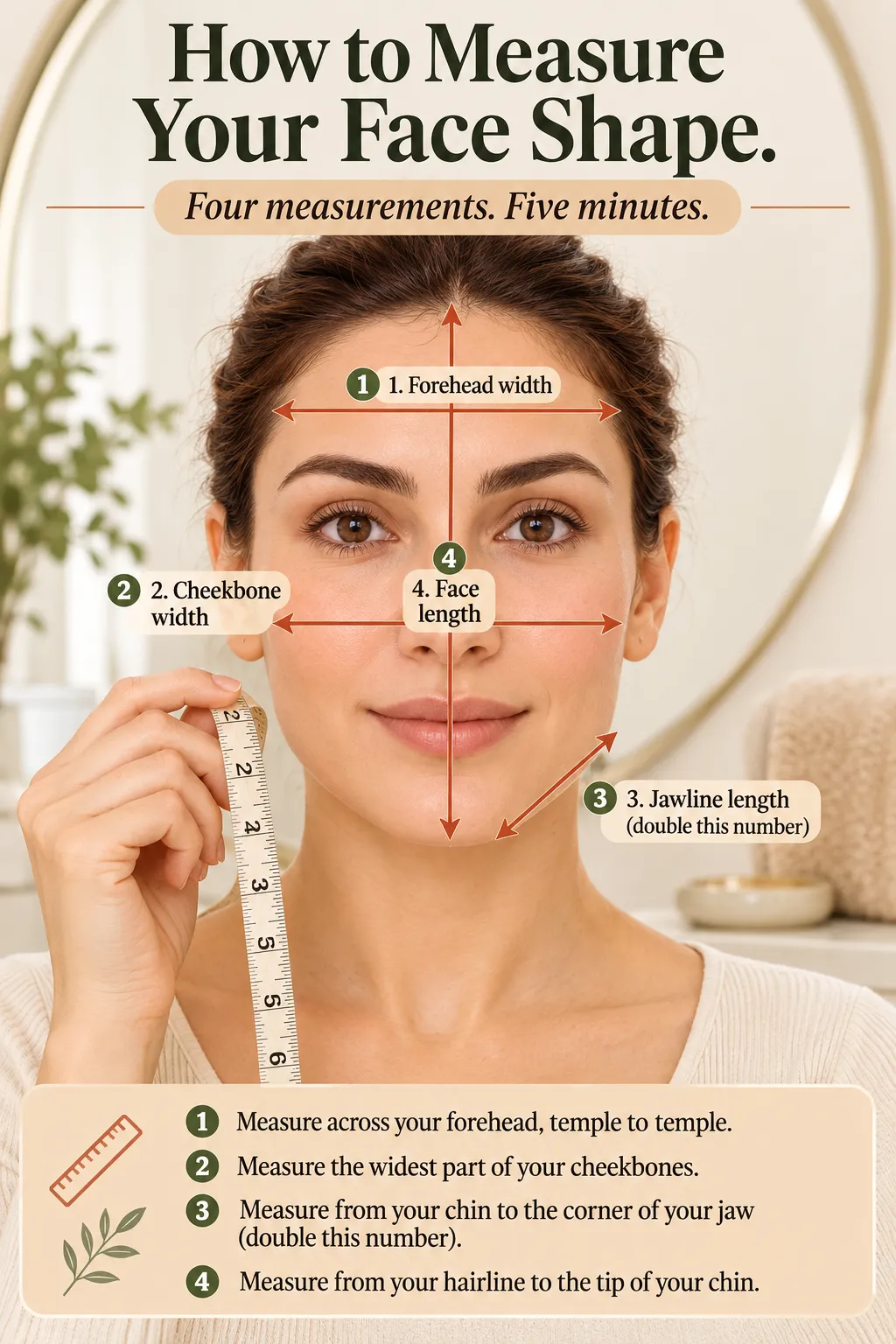
Now compare the numbers. A forehead wider than the rest suggests a heart shape. Cheekbones that lead suggest diamond.
Three matching widths mean square. When length and cheek width are close, think round.
When length clearly wins, think long, or oval if the jaw is soft. Many people land between two shapes, and that is normal.
Prep Note: Measure with your hair pulled fully back. Bangs and loose strands hide your true hairline.
Numbers guide you. Your mirror gets the last word.
Round Faces Look Longer When You Add Height and Keep the Sides Slim
A round face gains length from vertical lines. Height at the crown and length below the chin pull the eye up and down. Width at the cheeks is the part to quiet.
Best Haircuts for Round Faces at Every Length
Long layers that begin below the chin keep the sides slim. A shoulder length or collarbone cut with an angled front adds a lengthening line. A deep side part breaks up roundness too.
Short hair has options. A pixie with volume on top and tight sides lifts the face. Skip a blunt bob that ends right at the cheeks, because it points to the widest part.
Curly and coily hair often gains width as it dries. Ask for shaping that keeps volume at the crown, not the sides. Fine hair benefits from a root lifting spray and a blow dry that pushes the crown up.
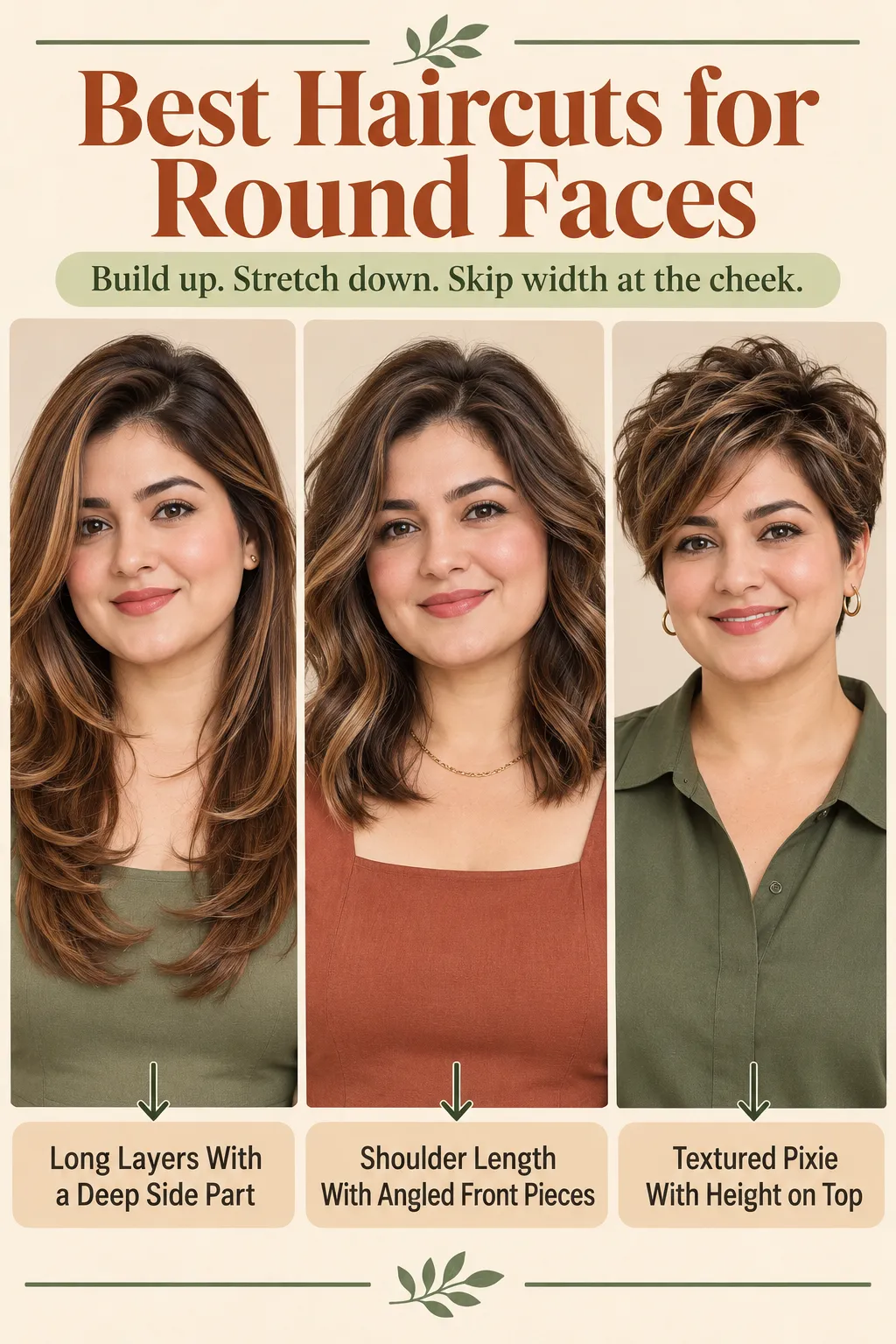
Stylist Tip: Ask for face framing layers that start at your chin or lower. Layers that start at the cheeks add width.
The best haircuts for round faces follow one rule: build up, stretch down, and skip width at the cheek.
Oval Faces Have Options and Square Faces Need Softer Edges
These two shapes want opposite things. An oval face is already balanced, so your job is to avoid hiding it. A square face has a strong jaw, so your job is to soften it.
Hairstyles for Oval and Square Faces Follow Two Different Rules
Oval faces can carry almost any style, from a sleek pixie to a blunt bob to long layers. Heavy bangs that cover the whole forehead may shorten the face, so choose them on purpose. Pick the cut that fits your hair and routine.
Square faces look softest with long layers and loose waves at the ends. A side part blurs the corners better than a hard middle part. A blunt bob that ends at the jawline repeats the angle, so cut it a little longer.
Fine hair may need fewer layers so the ends do not look thin. Straight hair can look stiff against a strong jaw, so a loose bend from a curling wand may help.
On short hair, try a textured pixie with a long, side swept front.
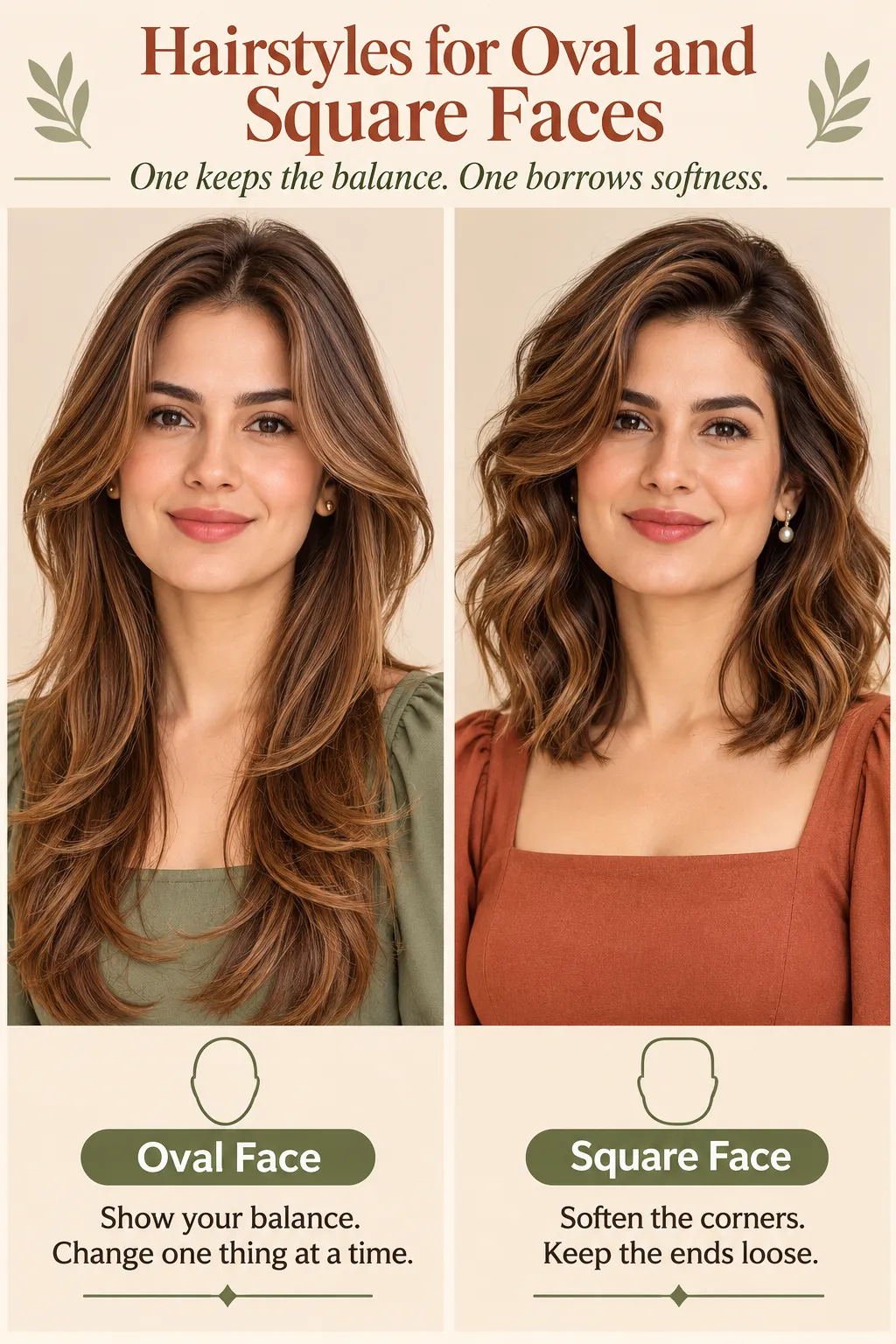
Shape Note: With an oval face, test one change at a time. Try a new part first, then bangs, then a new length.
Oval keeps the balance. Square borrows softness.
Heart, Long, and Diamond Faces Each Need One Small Adjustment
Each of these three shapes needs only one change. Find it, and hairstyles for face shapes get easier to pick.
- If your face is heart shaped: Add fullness near the jaw. Chin length bobs, side swept bangs, and layers that flip out at the ends balance a wide forehead. A deep side part also softens the top of the face.
- If your face is long: Add width and break up the length. Jaw length cuts, fullness at the sides, and bangs all help. Very long, flat hair with a middle part stretches the face more.
- If your face is diamond shaped: Add softness at the forehead and jaw. Wispy bangs and a wavy long bob keep the cheekbones from taking over.
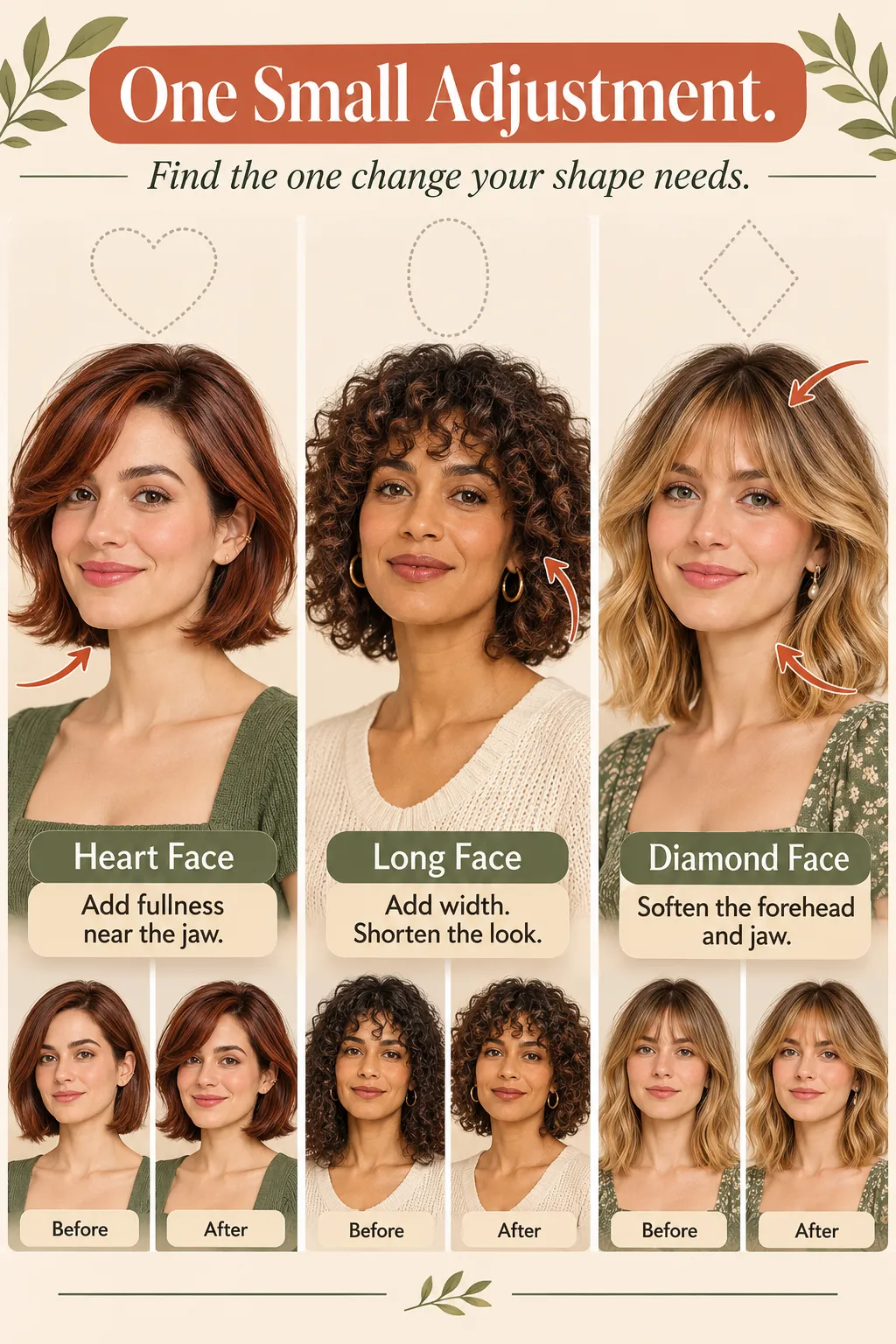
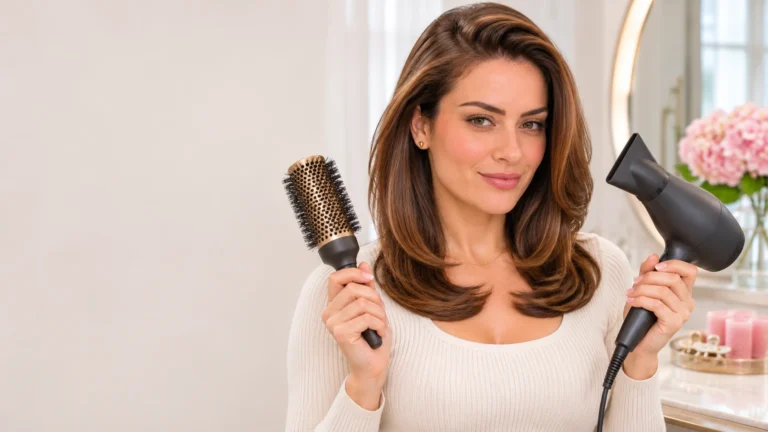
A round brush and a blow dryer do most of the shaping. Roll the ends outward at the jaw for a heart shape.
Lift the roots at the sides for a long face. Soften the front and wave the ends for a diamond shape.
Hold Note: Skip heavy gels. They press hair flat and cancel the fullness you just added. A light mousse or flexible spray holds shape without weight.
Fix the one thing and leave the rest alone.
Bangs Can Reshape Your Forehead and Cheeks in One Cut
Few cuts change a face faster than bangs. They cover or show the forehead, add width or length, and pull the eye toward your eyes. A good match makes the whole haircut look planned.
Bangs by Face Shape at a Glance
Choosing bangs by face shape is about proportion, not trends. Keep this table close when you book your next cut.
| Face Shape | Bang Style | Tip |
|---|---|---|
| Round | Long, side swept bangs | Keep them light and angled |
| Oval | Curtain or wispy bangs | Most styles work, so match your texture |
| Square | Soft curtain bangs | Let them sweep across the forehead |
| Heart | Side swept or wispy bangs | Start them at an angle |
| Long | Full, soft bangs | Fullness makes the face look shorter |
| Diamond | Wispy, side swept bangs | Keep them light so cheekbones show |

Fine hair looks fuller when bangs come from a small front section, which leaves more hair for the length.
Care Note: Bangs pick up oil first. A quick rinse in the sink keeps them fresh between full washes.
If your hairline is thinning or receding, talk to a professional stylist or a dermatologist before you commit to bangs.
Start long. Bangs are easy to shorten and slow to grow back.
Hairstyles for Face Shapes Work Best When You Match Them to Your Hair Texture
Your face shape picks the outline. Your hair texture decides how that outline behaves. A cut that ignores your texture can fall flat by lunch.
Fine hair holds blunt lines well, but it often looks thin with heavy layers. Ask for a one length or lightly layered cut so the ends look full.
Thick hair needs weight removed, or it sits wide at the sides. Internal layers cut inside the hair solve that without losing length.
Wavy, curly, and coily hair shrinks as it dries, so a cut that looks long when wet can land much higher. Ask your stylist to cut dry or to plan for shrinkage. This matters most for bangs and chin length cuts.
Straight hair shows every line of a cut, so precision matters most. Hairstyles for oval and square faces look sharper on straight strands and softer on curls.
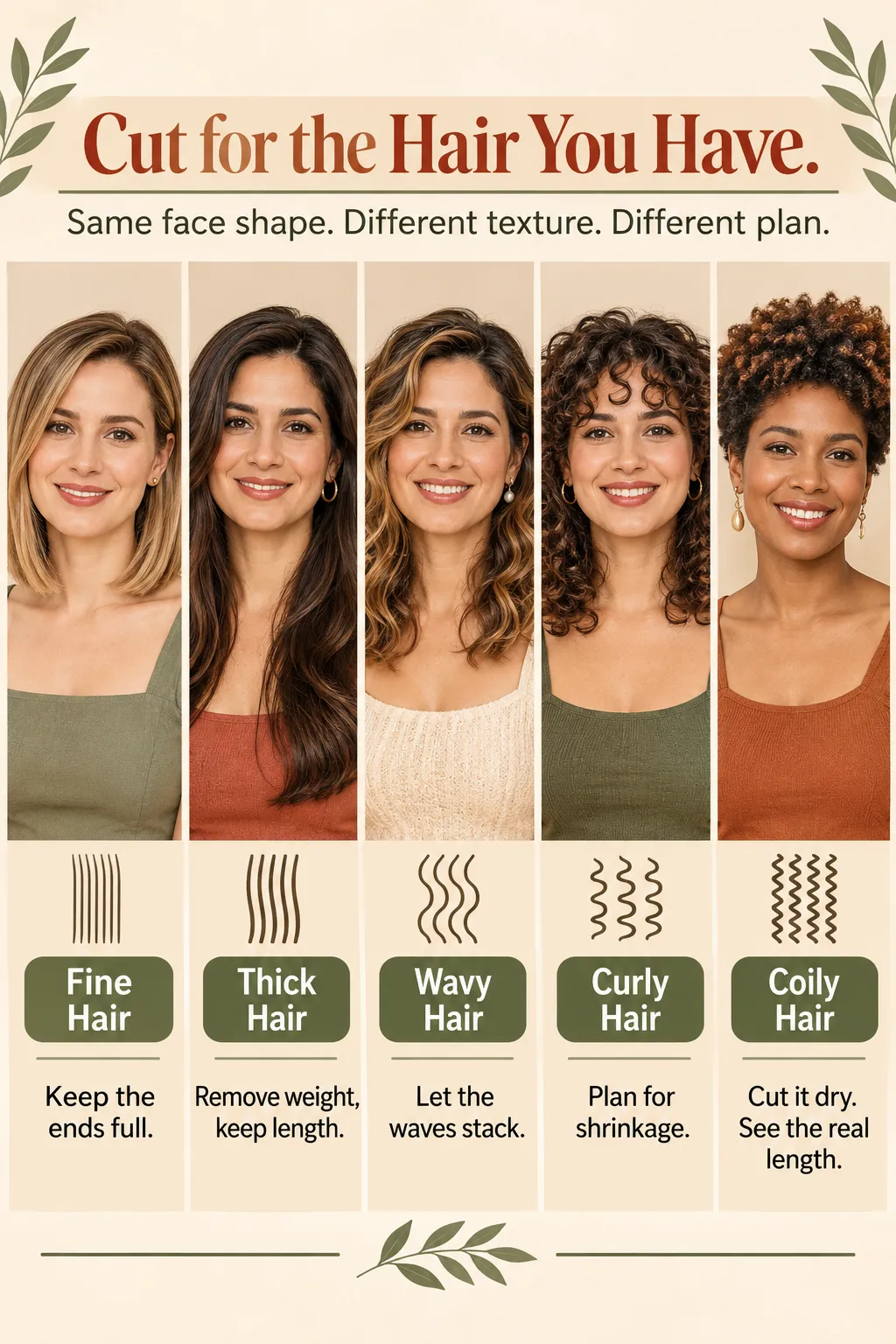
Heat Tip: Use a heat protectant before any hot tool. Dry curls with a diffuser on low heat to keep their shape.
Cut for the hair you have, not the hair in the photo.
Your Stylist Can Match the Cut Faster When You Bring Clear Details
A good consultation saves you from a surprise in the mirror. Your stylist sees your hair, but only you know your habits.
Start with your routine. Say how many minutes you spend on hair each morning and which tools you own. A cut that needs a round brush and twenty minutes will fail if you air dry.
Next, mention your hair history. Color, relaxers, and heat styling change how hair holds a shape. Heavy damage may call for a trim plan, so ask a professional stylist what your hair can handle.
Bring two or three photos of cuts you like, plus one you dislike. The dislike tells your stylist as much as the likes do. Choose photos of people with your face shape and hair texture.
Then ask two questions. Where will this cut land after my hair dries? How will it look as it grows out?
Salon Note: Take a front facing photo with your hair pulled back. It shows your outline clearly and helps your stylist confirm your shape.
A clear brief gives your stylist a target to hit.
Five Common Mistakes Can Undo a Cut That Fits Your Face
Good hairstyles for face shapes can still go wrong when a few habits creep in. Most are easy to fix. Check your own routine against the table below.
| Old Habit | Why It Backfires | Better Way |
|---|---|---|
| Copying a celebrity cut without checking your shape | The proportions may not match yours | Borrow the idea, then adjust it to your face |
| Parting hair in the middle on a long face | It may add to the length | Try a soft side part |
| Cutting a blunt line at your widest point | It draws the eye to that width | Start the length or layers below it |
| Skipping trims between cuts | The shape grows out and proportions shift | Book a trim before the shape fades |
| Pulling hair forward to hide a feature | It calls more attention to that feature | Pick a cut that frames it instead |
Each fix asks the same question: where does this cut send the eye? Aim it at your eyes, cheekbones, or smile. Features you like deserve the spotlight.
Swap one habit at a time, and the cut starts working for you.
A Simple Formula Helps You Choose the Right Cut Every Time
You now have every piece. This formula puts them together whenever you plan a change.
Formula: measure + match + adjust for texture + check the routine.
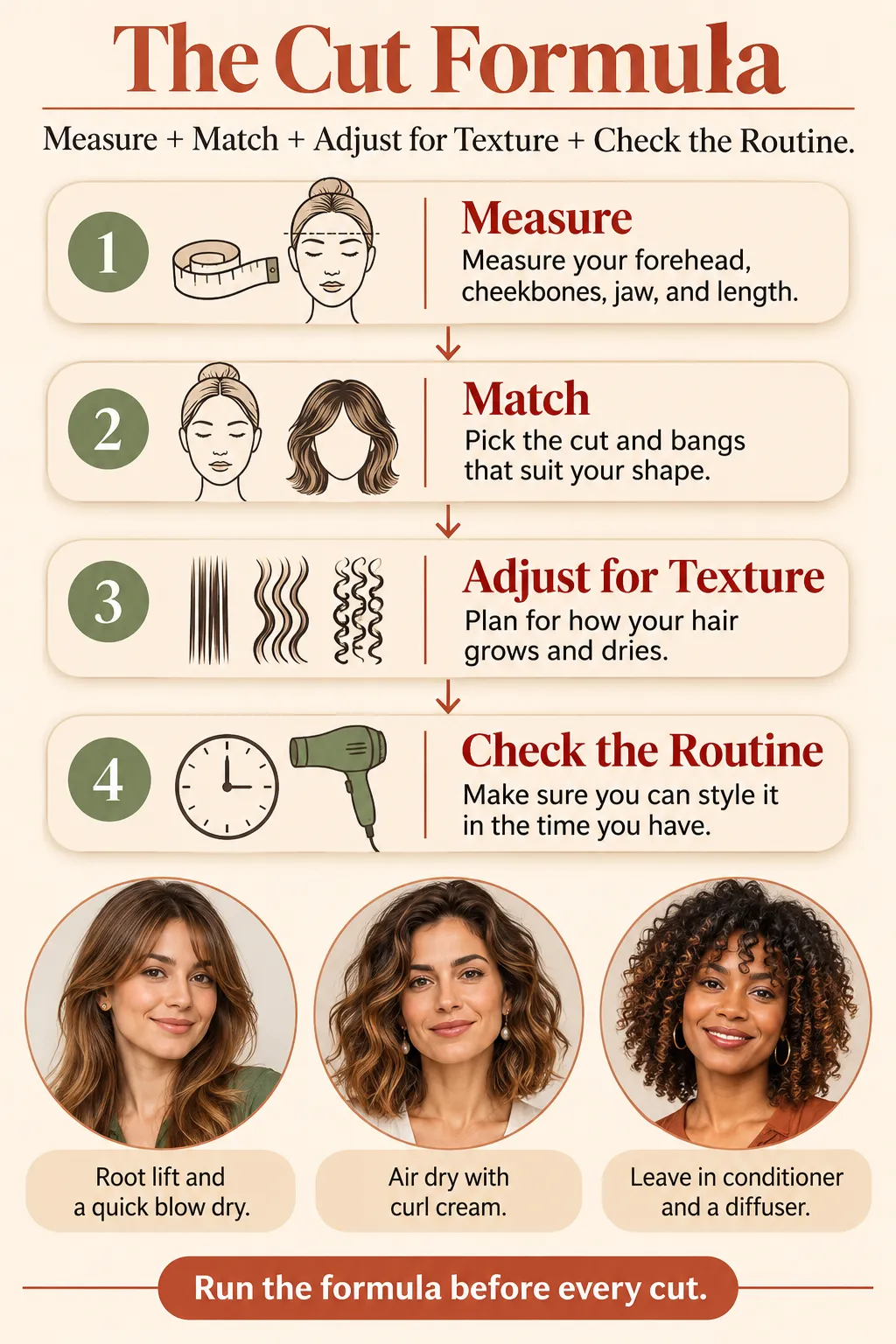
Measure your four numbers. Match the cut and bangs to your shape.
Adjust for the way your hair grows and dries. Check that you can style the result in the time you have.
Here is how it plays out for three different people.
Take a round face with fine, straight hair and ten minutes each morning. Match it with long layers and long, side swept bangs. Adjust by keeping layers light, then check the routine: a root lifting spray and a quick blow dry will do.
Now picture a square face with thick, wavy hair and little time. Match it with soft layers that start at the jaw and a side part. Adjust by thinning the inside so the shape stays soft, then check the routine: air dry with a light curl cream.
Last, try a long face with coily hair. Match it with a jaw length cut that has fullness at the sides and soft bangs. Adjust by cutting it dry so shrinkage shows before you leave, then check the routine: a leave in conditioner and a diffuser keep it simple.
Write your four answers on a note and take it to the salon. Your stylist can then adjust each step with you.
Run the formula before every cut, and the guesswork fades.
Frequently Asked Questions
Can I Wear a Cut That Breaks the Face Shape Rules?
Yes, you can wear any cut you love. Face shape guides are suggestions, not laws, and your confidence, hair texture, and lifestyle count just as much. Ask your stylist to adjust the length, part, or layers so the style flatters you and still feels like you.
Which Cut Works if My Face Blends Two Shapes?
A layered cut with a side part often suits a blended shape. Start by solving your biggest concern, since many hairstyles for face shapes overlap. Your stylist can fine tune the length and layers once they see your hair dry and in motion.
How Often Should I Trim a Cut Made for My Face Shape?
Short cuts and bangs often need a trim every four to six weeks, because small changes show fast. Longer styles may last two or three months. Book the next visit before you leave, since the shape fades as hair grows.
Do Glasses Change Which Cut Suits My Face?
Yes, frames add a strong line across the face, so plan the cut around them. Keep bangs above the frame or sweep them to the side so they stay off your lenses. Short layers near the ears can poke out around the arms, so ask for a little more length there.
Can Hair Color Help Balance My Face Shape?
Yes, color placement can add depth or shape, even when the cut stays simple. Lighter face framing pieces often add softness and width, while darker tones near the sides may slim the look. Ask your colorist to plan the color with your cut so it follows the layers.
Hairstyles for face shapes are guides, not rules, so trust your mirror as much as any chart. Measure once, pick one change, and take your notes to your stylist. A cut that feels like you is the one worth keeping.