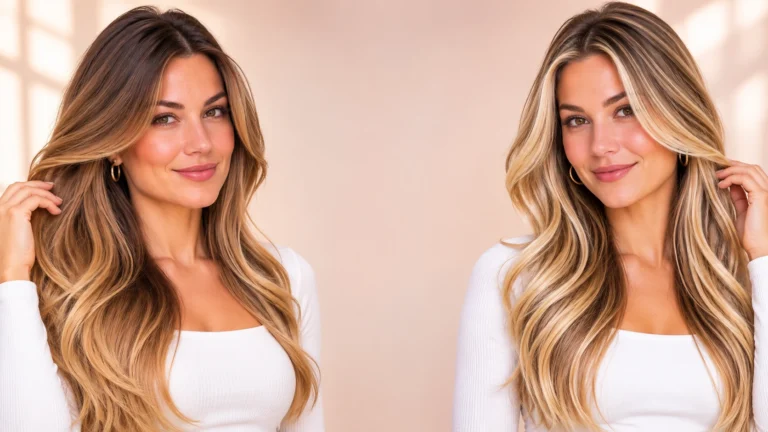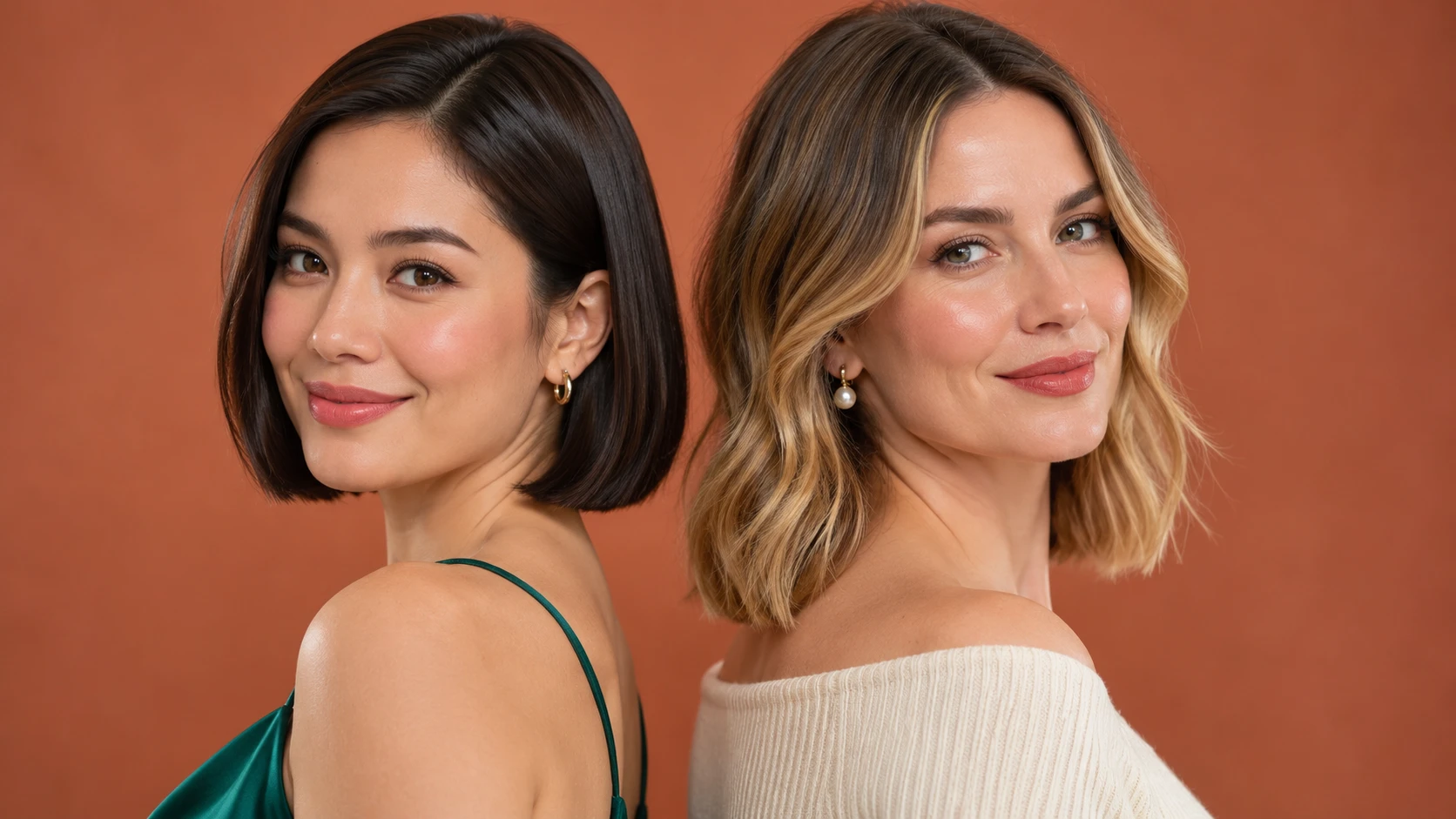
Bob vs. Lob Haircut: Exact Length Difference & How to Choose
Picking between a bob and a lob sounds easy until you sit in the chair. The two cuts look close in photos, and the bob vs. lob haircut choice often comes down to a single inch. Ask for the wrong one, and you may leave with a cut you did not want.
Your situation adds a second layer. Face shape, neck length, hair texture, and even how often you visit the salon all change where a cut lands and how it moves. A style that looks sharp on a model can sit awkwardly on your shoulders.
The core difference is simple: a bob stops within 1 inch of your chin, and a lob starts 2 inches below it. Everything else follows from that gap, from styling time to trim dates.
Below, you will find exact lengths, face shape matches, hair type notes, upkeep needs, and a quick formula for choosing.
Bob vs. Lob Haircut Differences Start With Where the Ends Land
Stylists and social media use length labels loosely. Anchor your choice to body landmarks instead. This article uses the chin and the collarbone, and it measures in inches (1 inch is about 2.5 cm).
How Short Is a Classic Bob
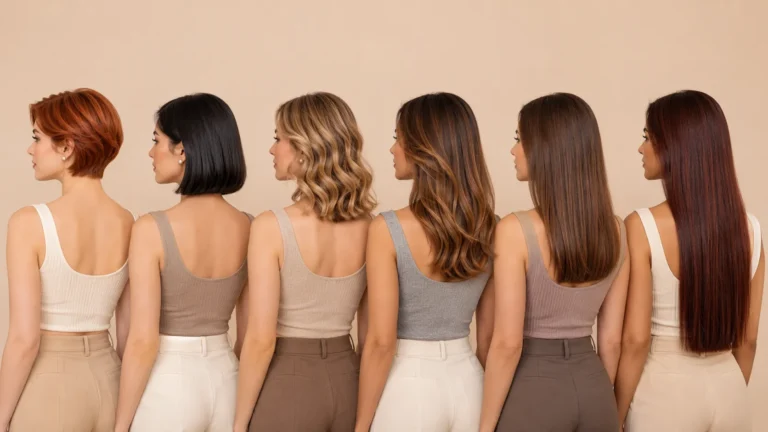
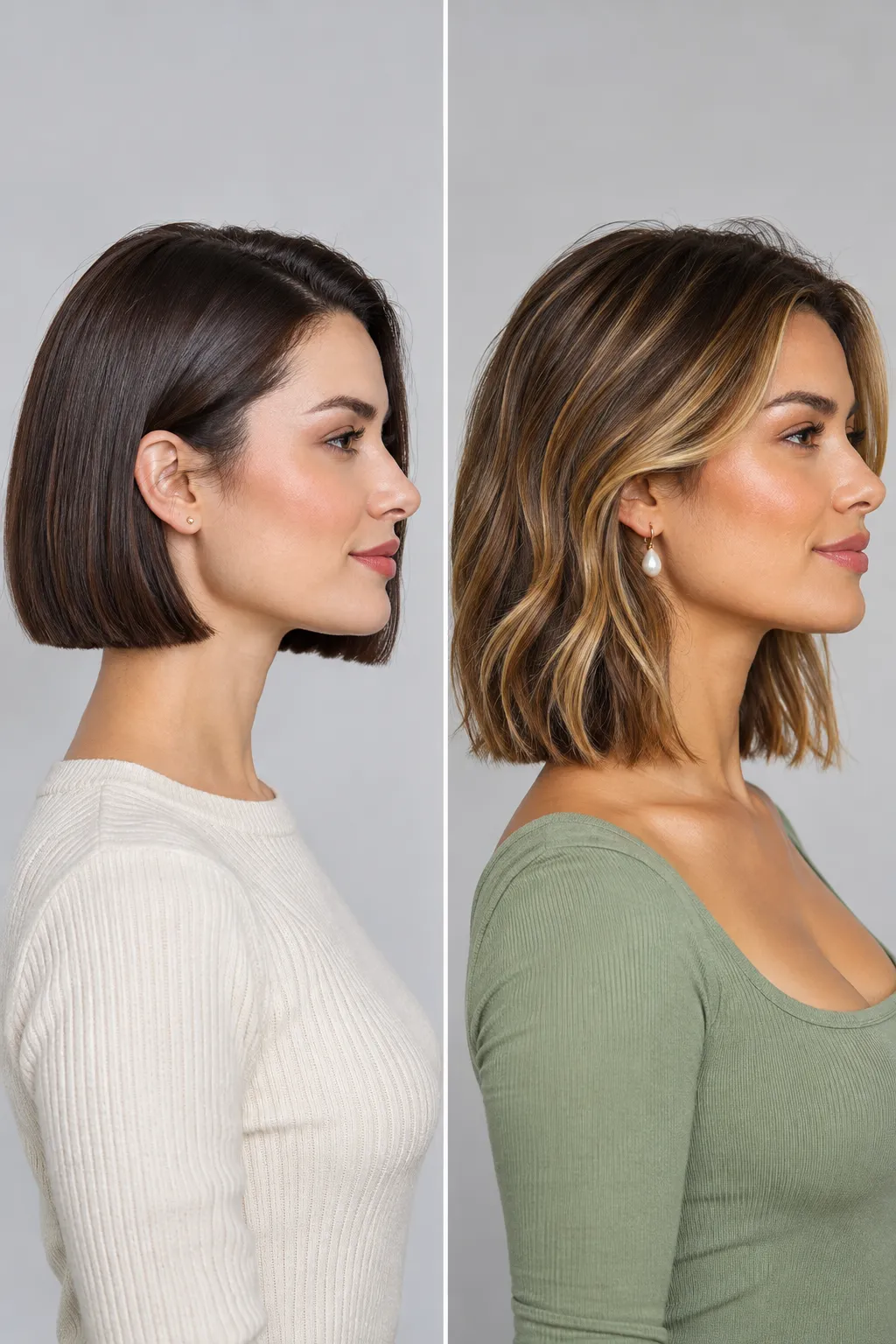
Many cuts carry the name bob. Here, bob means the classic bob: a cut that ends between the jawline and 1 inch below the chin.
This length shows your neck and keeps hair off your shoulders. You can wear it blunt, slightly angled, or with a soft fringe. If your ends sit above the jawline, you have a shorter style than a bob.
What Length Is a Lob (Long Bob)
A lob, short for long bob, ends between 2 inches below the chin and the collarbone. Past the collarbone, you have left lob territory.
The extra length lets a lob hold waves, light layers, and a middle or side part. Hair that lands 1 to 2 inches below the chin sits in a gray zone. It looks undecided, so pick a side before the cut.
| Cut Name | Where the Ends Land | Distance Below the Chin |
|---|---|---|
| Shorter Than a Bob | Above the jawline | Above the chin |
| Bob | Jawline to just under the chin | Up to 1 inch |
| Gray Zone | Just under the chin | 1 to 2 inches |
| Lob | Between the chin and collarbone | 2 inches or more |
| Longer Than a Lob | Past the collarbone | Depends on your neck |
Cut Note: Ask for the chin line if you want a bob, and for at least 2 inches below it if you want a lob.
Same family. Different reach.
Measure Your Chin to Collarbone Gap Before You Book
How short is a classic bob on you, and what length is a lob (long bob) on you? Your neck decides both. A quick measurement ends the guessing.

- Stand straight in front of a mirror with your chin level.
- Hold the end of a soft tape at the bottom of your chin.
- Run the tape straight down to the top of your collarbone.
- Write down the inches. Call this number your chin gap.
- Mark 2 inches from your chin. A lob starts at that mark on you.
This works because it turns a loose label into a number you can show your stylist. If your chin gap is under 4 inches, a lob reaches your collarbone fast and may flip at the ends.
A chin gap of 3 inches leaves only 1 inch between a lob at the 2 inch mark and your collarbone. With 4 inches or more, a lob has room to hang straight, and a 5 inch gap leaves 3 inches of space.
Shoulders matter too. High shoulders push a lob outward sooner, while sloped shoulders give it more room to hang. Take your numbers to your stylist and ask how your shoulders change the plan.
Length Note: Wet hair looks longer than dry hair. Wavy, curly, and coily hair often shrinks by several inches as it dries, so check where your dry hair lands.
Face Shape Tells You Which Length Flatters You Most
Ends draw the eye, so length changes how your face looks. A bob frames the jaw and chin, while a lob stretches the line down the neck. Start with the two shapes people ask about most.
Bob vs Lob for Round and Oval Faces
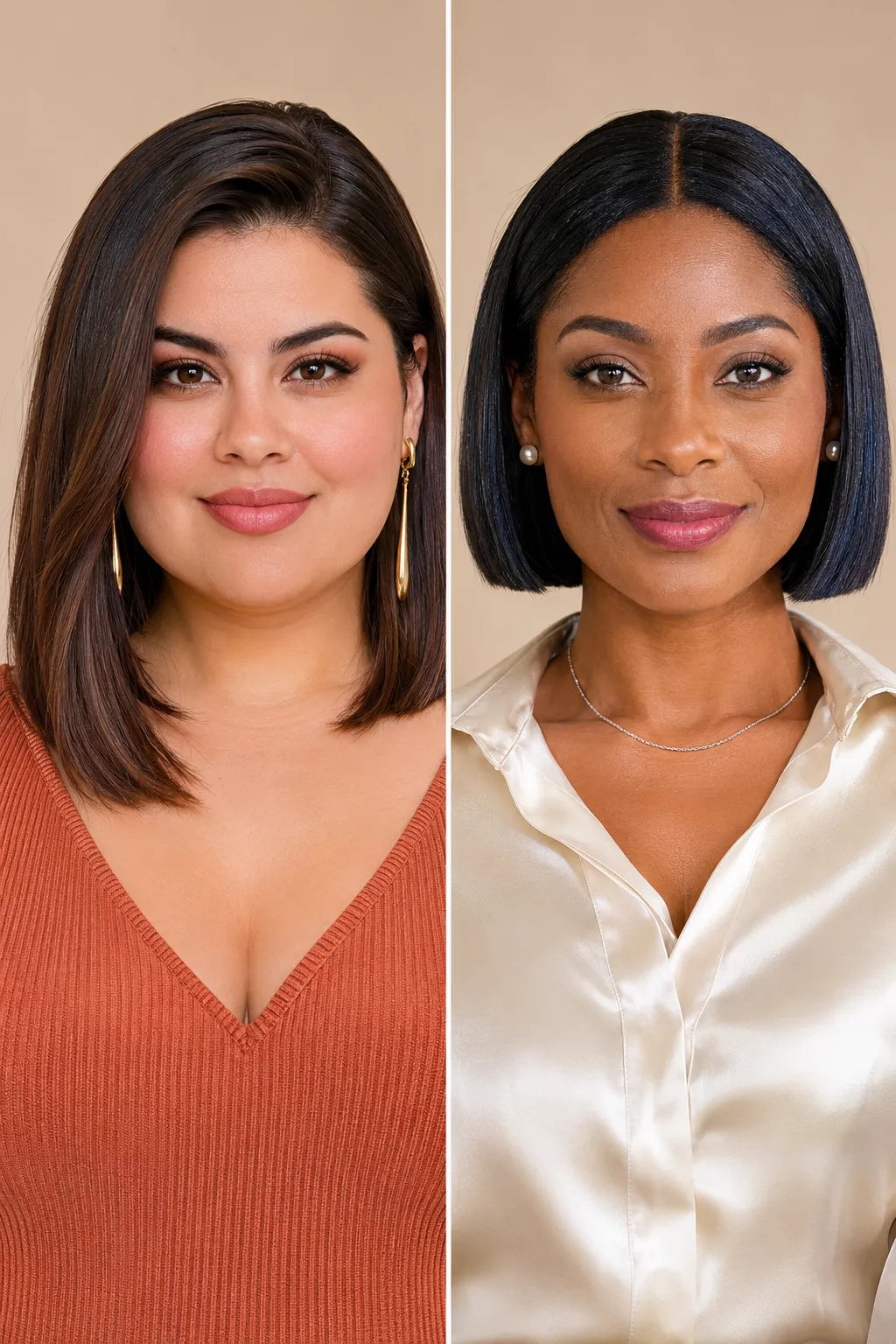
A lob often makes a round face look longer and slimmer. The extra inches add a vertical line. A bob that stops at your widest cheek line can add width, so ask for one that sits 1 inch below the chin and runs slightly longer in front.
An oval face is balanced, so it carries both cuts well. A bob shows off the jaw and cheekbones, while a lob adds softness, especially with loose waves. Let upkeep make the call.
Stylist Tip: Ask your stylist to keep the weight line away from the widest part of your cheeks.
Other Face Shapes Have Clear Favorites Too
Treat this table as a starting point. Your hair type and chin gap still count, so confirm the pick with your stylist.
| Face Shape | Better Pick | Cut Detail |
|---|---|---|
| Square | Lob | Soft ends and a side part ease a strong jaw |
| Heart | Bob | Chin length fullness balances a narrow chin |
| Long | Bob | Side volume shortens the look of the face |
| Diamond | Either | Keep fullness at the jaw, not the cheekbones |
Bangs shift the picture too. Soft curtain bangs ease a square jaw on either cut. A side swept fringe balances a heart shaped face.
Let the ends point where you want the eye to travel.
Bob vs. Lob Haircut Results Shift With Hair Type and Texture
Texture changes how a cut hangs, bends, and grows. Use these notes to match the length to your strands.
- If your hair is fine: A bob keeps the ends dense, so hair looks fuller. Blunt ends look thicker than feathered ones. A lob can look thin at the ends, so stay near the 2 inch mark.
- If your hair is thick: A lob gives the weight room to fall. Light layers may help it move. A bob can turn wide and boxy, so ask your stylist to remove bulk inside the cut.
- If your hair is wavy: Both cuts work. A lob lets waves stretch and show their pattern, while a bob springs up and looks bouncier.
- If your hair is curly or coily: A lob gives curls room to form. Ask your stylist to cut curls dry or in sections so the ends land where you expect.
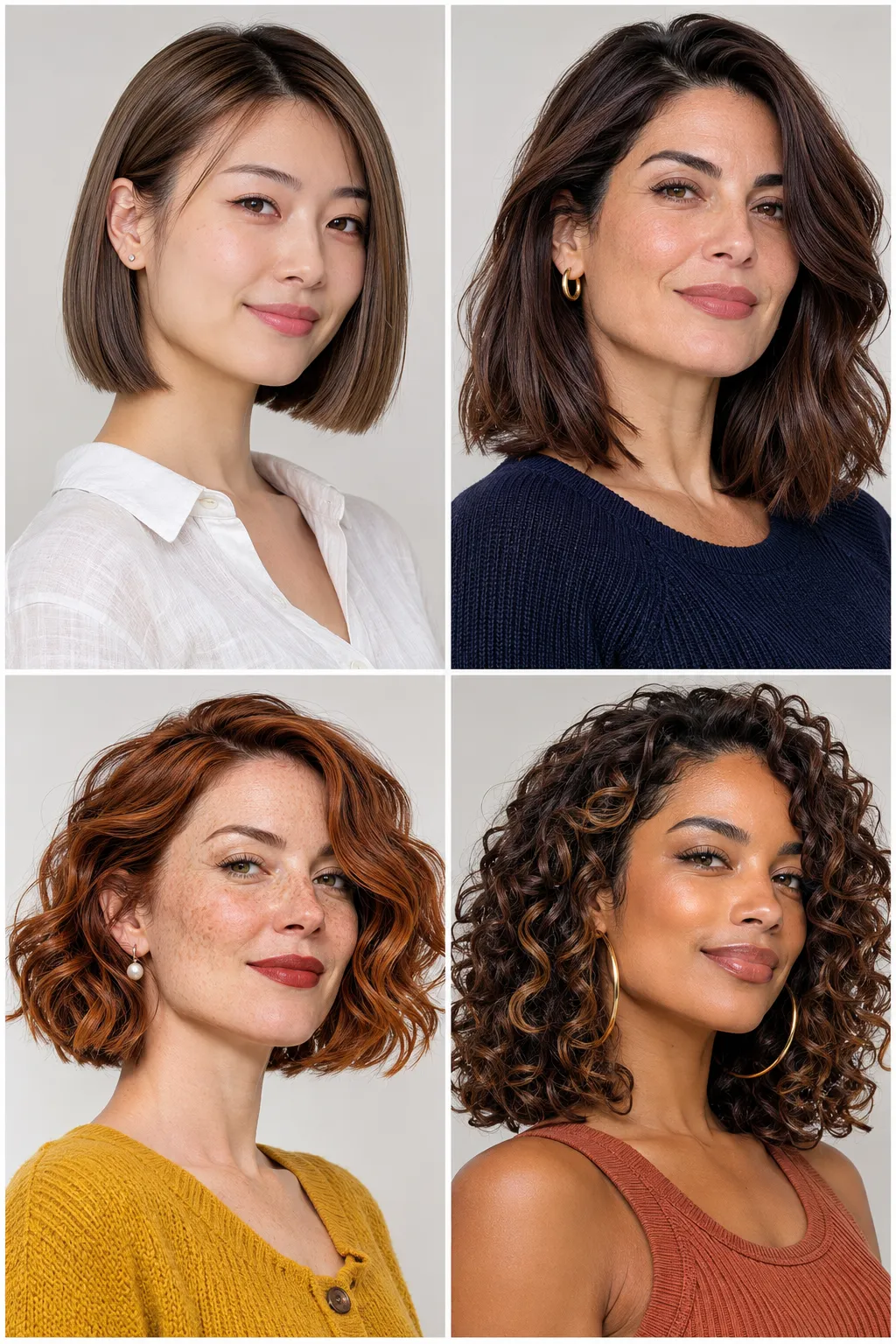
Straight hair shows every edge. A blunt line looks crisp on both cuts, but an uneven trim shows fast. Book your trims on time to protect that clean line.
Mixed textures happen. Many people have straight hair at the nape and waves at the front. Follow your front hair when you choose a length, because it frames your face.
Cowlicks matter too. A strong cowlick at the nape can push a short bob upward, while a lob may have enough weight to settle it. Show your stylist your cowlicks before the cut.
Plan Your Trim Calendar Before You Choose a Length
Each cut asks for a different schedule. A bob keeps its shape only with frequent trims. A lob forgives more time between visits.

Grow Out Maintenance Comparison
| Maintenance Point | Bob | Lob |
|---|---|---|
| Trim Timing | Every 4 to 6 weeks | Every 8 to 10 weeks |
| Visits Per Year | About 9 to 13 | About 5 to 7 |
| Shape Loss | The sharp line blurs fast | The line softens slowly |
| Grow Out Path | Turns into a lob | Passes the collarbone |
| Awkward Stage | Ends poke out at the neck | Ends flip on the shoulders |
Hair often grows about half an inch a month. At that pace, a bob that ends at the chin reaches lob length in about four months. A lob can wait about two months between trims and still look planned.
Growth varies by person, so treat these timelines as a starting point. Want to grow a bob into a lob? Ask for neckline and edge cleanups only, and let the length build.
What to Do During the Awkward Stage
- Book a short neckline trim to keep the back tidy.
- Move your part to the other side to hide uneven growth.
- Pin the front with a small clip or a headband while the ends catch up.
- Apply light texture spray so flipped ends look relaxed.
These steps hide growth while the line catches up. A tidy neckline does most of the work.
Which would you rather book, every month or every other month?
Name Landmarks, Not Labels, When You Ask Your Stylist
The words bob and lob mean different things to different people. Landmarks do not. Phrases like “a little off the ends” or “just a trim” shift from person to person, so swap them for inches and bring photos.
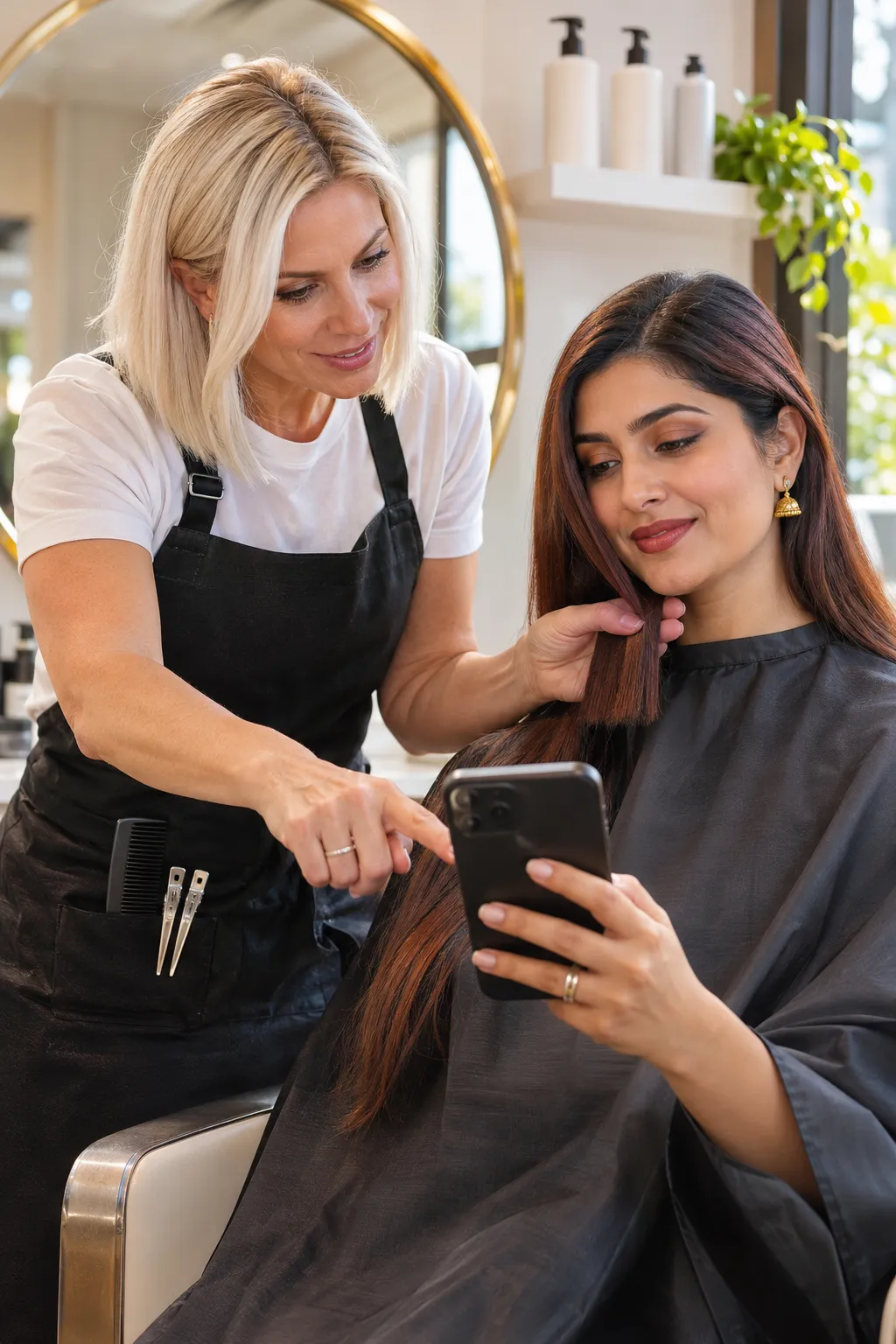
- Save two or three photos that show the length you want from the front and the side.
- Say where the ends should land, such as 1 inch below your chin or 2 inches below it.
- Ask where the weight line will sit and whether it will look blunt or soft.
- Ask if the back will be shorter than the front.
- Ask how your hair will sit once it dries.
Photos show the look, and landmarks set the length. Questions about the weight line and the back remove surprises, and together they leave little room for a misunderstanding.
Pick landmarks that stay put: the jawline, the chin, the collarbone, and the top of the shoulder. Hair ends change with texture and growth, but your bones do not.
Say the name of the cut last. If your stylist hears bob and you picture a lob, the inches will show the gap before the scissors do.
Bring one photo of a style you dislike, too. It shows your limits faster than words can.
Chair Tip: Ask for a cut that lands slightly longer than your goal. Your stylist can shorten it at the next visit, but nobody can add length back.
Daily Styling Gets Easier When the Tool Matches the Cut
Both cuts style fast, but they ask for different tools. A bob needs shaping at the ends. A lob needs movement through the length.
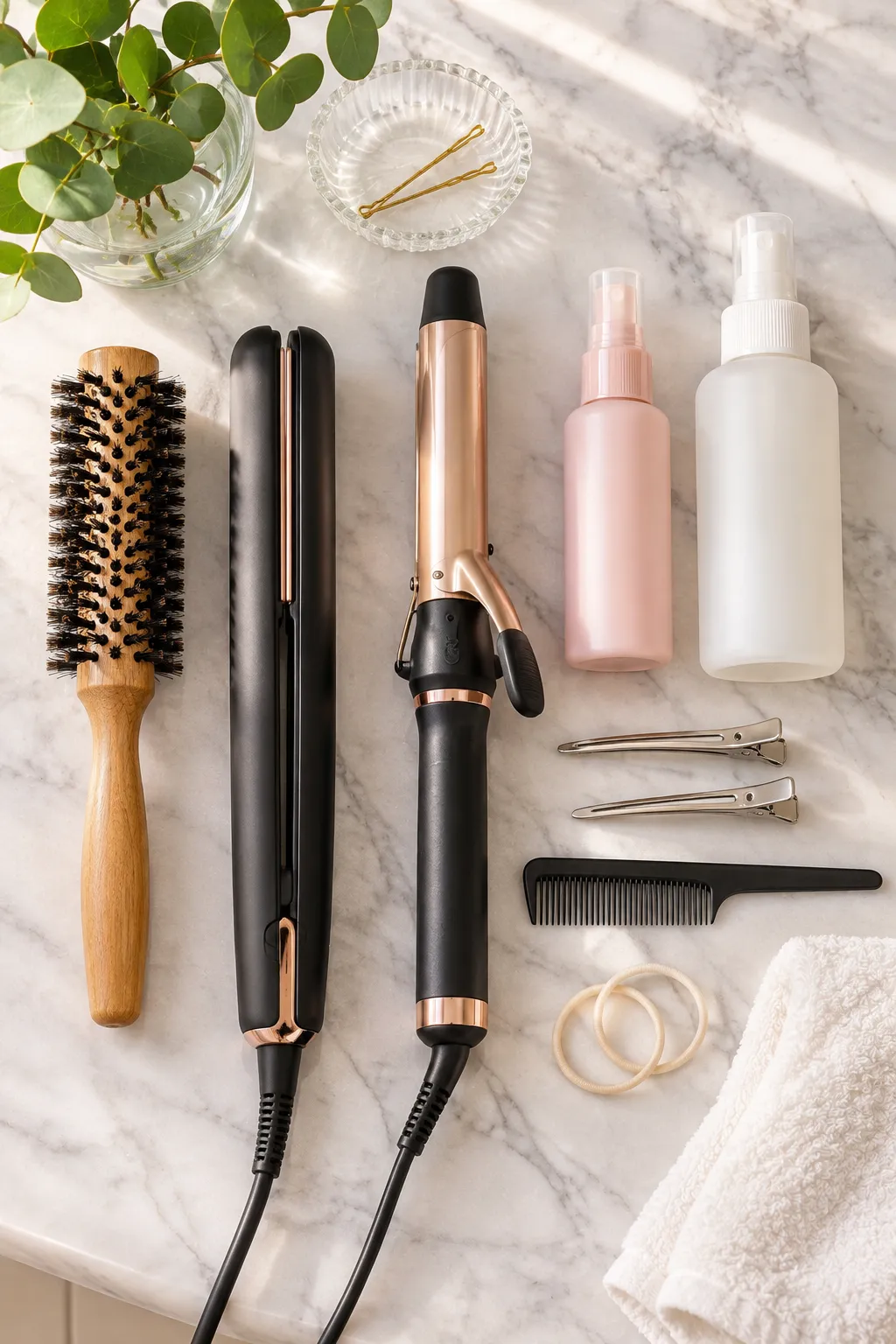
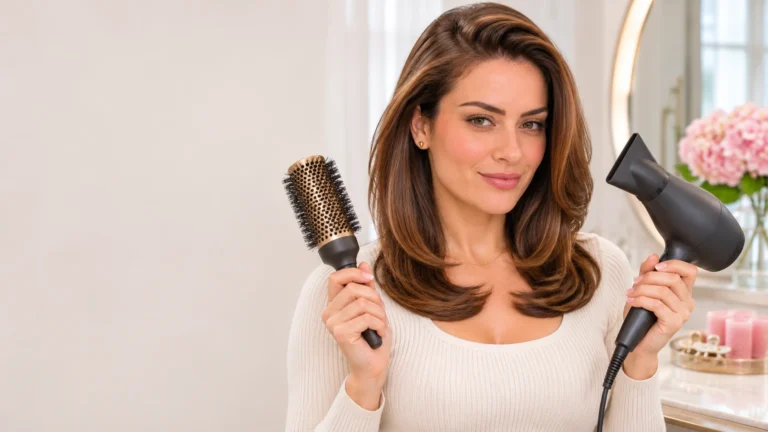
- For a bob: Blow dry with a small round brush to curve the ends under, then smooth with a flat iron. A light smoothing cream keeps the line crisp.
- For a lob: Use a medium barrel curling iron for loose waves, or a round brush to turn the ends in. Waves hide the shoulder flip.
- For busy mornings: Air dry and add light texture spray. A bob looks tousled. A lob looks relaxed.
Shoulder flip deserves a note. When a lob rests on your shoulders, the ends push outward. Curve them inward with a round brush, or lean into the flip with a little product.
Product type matters as well. Fine hair often likes a lightweight mousse at the roots, and thick hair may prefer a smoothing serum on dry ends. Curly hair often does best with a leave in cream.
Barrel size changes the result. A smaller barrel makes tighter curls on a bob, and a larger barrel gives a lob soft bends. Let each curl cool before you touch it, since cool curls often hold longer.
Heat Tip: Use a heat protectant spray before every hot tool, and keep the setting medium. If your hair feels very dry or breaks easily, a stylist can check it before you add more heat.
Medium heat, light product, quick finish.
One Formula Helps You Choose the Right Length Fast
Use one formula to settle the bob vs. lob haircut question for your own head. Your trim calendar comes straight from the grow out maintenance comparison above.
Formula: chin gap + face shape + hair type + trim calendar.
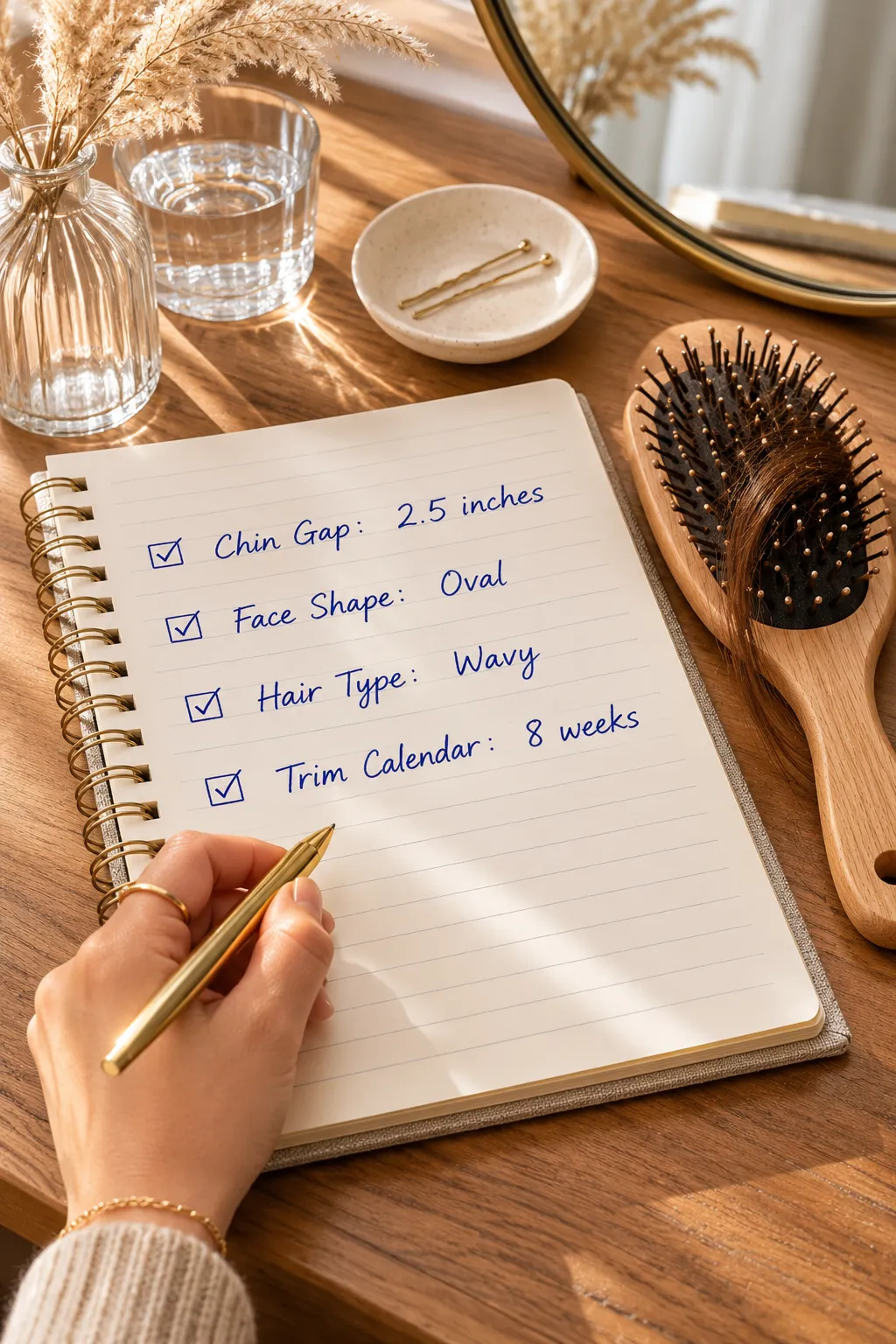
Take a 3 inch chin gap, a round face, thick hair, and a trim every 10 weeks. The formula points to a lob that ends 2 inches below the chin. That is the shortest lob, so it clears your collarbone, and you can ask your stylist to remove bulk inside the cut.
Now try a 5 inch chin gap, an oval face, fine hair, and a trim every 5 weeks. The formula points to a bob that ends at the chin. The blunt line keeps fine ends dense, and the schedule matches the upkeep.
Last, picture a 4 inch chin gap, a square face, wavy hair, and a trim every 8 weeks. The formula points to a lob that ends 3 inches below the chin, with soft ends and a side part. The waves show, and the visits stay spaced out.
Change one input and watch the result move. A long face with a 4 inch chin gap, for instance, tips the table toward a bob.
Before your appointment, write the four answers in a note on your phone. Show that note to your stylist. If two answers clash, let your trim calendar break the tie, because you will live with the upkeep all year.
Frequently Asked Questions
Is a Lob Just a Long Bob?
Yes, a lob is simply a long bob. In the bob vs. lob haircut debate, the lob is the longer cut, ending 2 inches or more below the chin, while a bob stays within 1 inch of it. Because people use the labels loosely, ask your stylist for inches instead of names.
Which Cut Looks Better on a Round Face?
A lob often looks better on a round face because it adds a vertical line that lengthens the look. For bob vs lob for round and oval faces, round faces lean toward the lob, while oval faces can choose by upkeep. If you still love a bob, ask your stylist to keep it slightly longer in front.
Can a Bob Work With a Short Neck?
Yes, a bob can work with a short neck. A bob that ends at the jawline shows more neck, which may make the neck look longer, and it keeps hair off the collar. If you choose a lob instead, stay near the 2 inch mark so the ends clear your shoulders.
Which Cut Needs Fewer Salon Visits?
A lob needs fewer salon visits than a bob. Plan on a trim every 8 to 10 weeks, compared with every 4 to 6 weeks for a bob, so you spend fewer hours in the chair. Over a year, that adds up to about 5 to 7 visits versus 9 to 13.
Does a Lob Need Layers?
No, a lob can be blunt or layered. A blunt lob looks crisp and keeps fine ends dense, while light layers may add movement on thick or wavy hair. Ask your stylist what your texture needs, because layers that suit one head can look heavy on another.
Your bob vs. lob haircut decision now has numbers behind it. Measure your chin gap, check your face shape, and count the trims you are willing to book. Then walk into the salon with landmarks and photos.