Types of Hair Layers Explained: What to Ask Your Stylist For
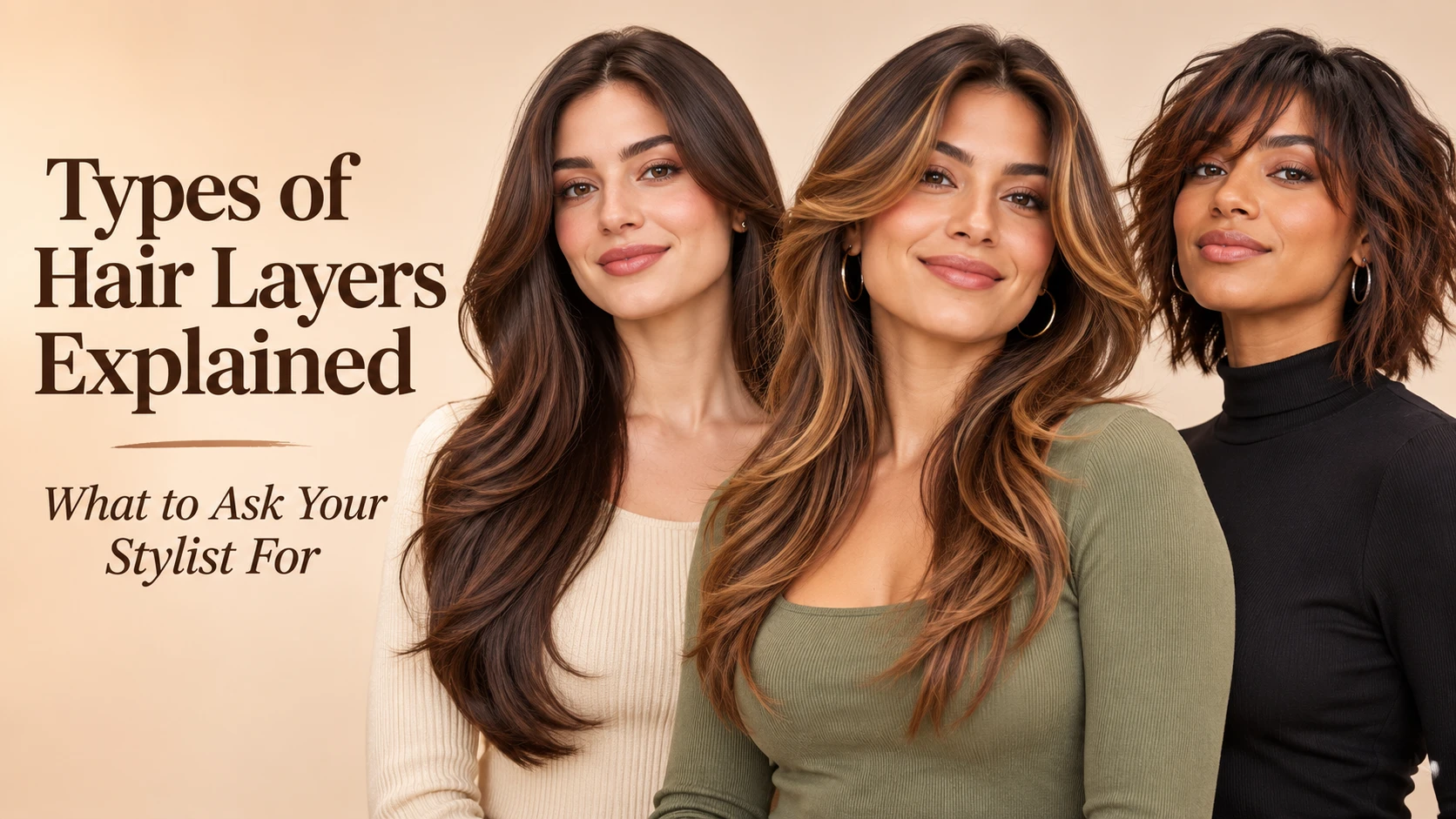
You ask for layers, and your stylist asks, “Which kind?” Suddenly one simple word has a dozen meanings. Among the types of hair layers, each one changes your hair in a different way.
It gets trickier when your hair is fine, thick, wavy or curly. Fine hair can look thin at the ends. Thick hair can puff out at the sides. The same cut can look light on one head and flat or heavy on another. You could walk out with a shape you never pictured.
Here is the answer in one idea. Learn what each layer does to weight and movement, then describe your goal in plain words.
This guide shows you how each layer works, which one suits your hair type and face shape, and what to say when you sit in the chair. You also get a simple formula to bring to your next visit.
Layers Shape Your Hair by Changing Its Weight and Movement
Layers are sections of hair cut at different lengths. Those steps in length decide how much weight stays in your hair and how much movement it gets.
Start with a one length cut. All the weight sits at the ends, so hair hangs straight and looks full at the bottom. Add layers and some of that weight moves away from the ends. Hair lifts, bends and swings more.
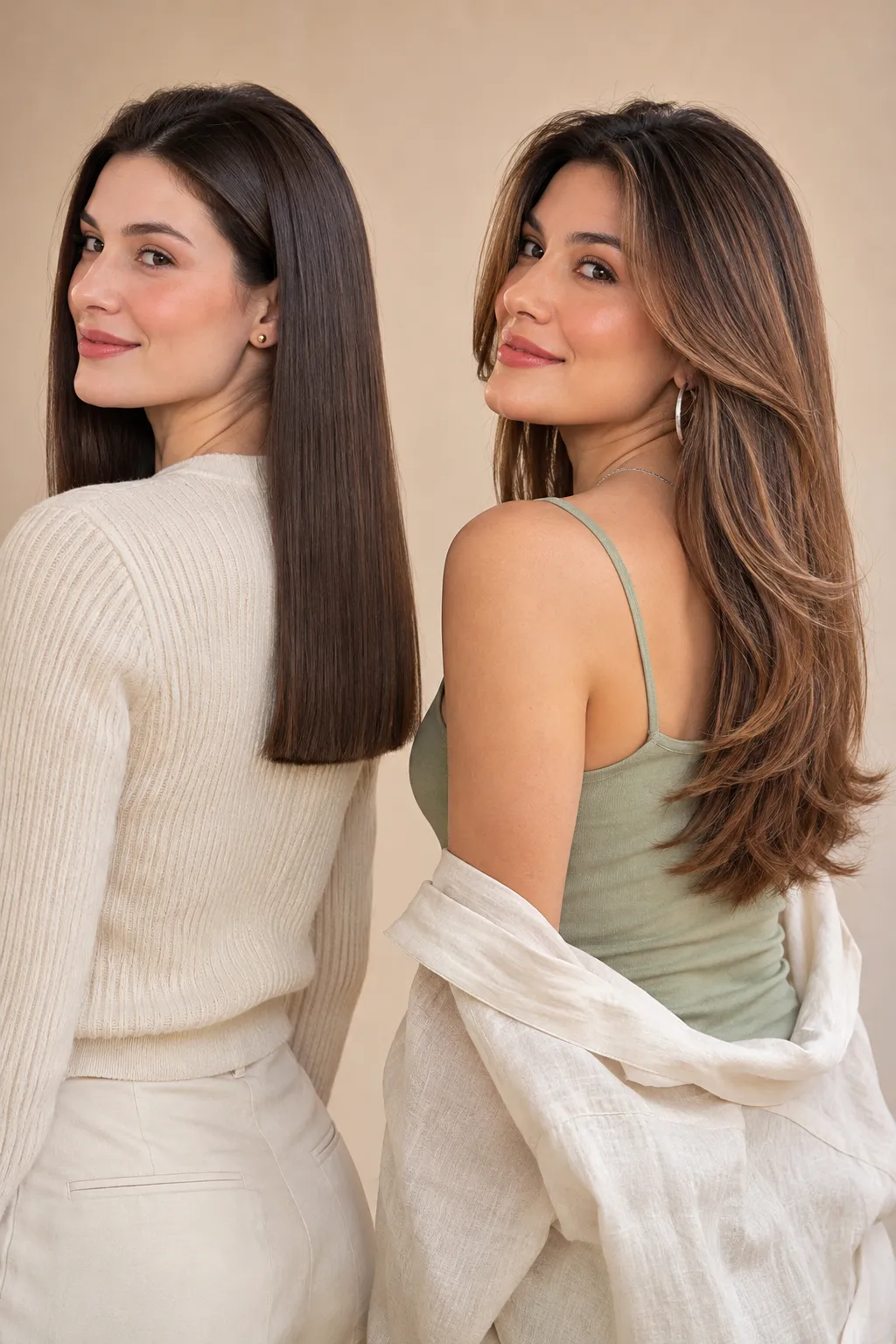
Every layered cut comes down to three choices:
- Placement: where the shortest layer starts, such as the chin, the collarbone or the crown. A higher start adds more lift.
- Length gap: how much shorter each layer is than the one below it. An inch or two looks soft and blended. Several inches look bold and stepped.
- Edge: how the ends of each layer are cut. Soft edges blend together. Broken edges stand apart.
Change one choice and the whole look changes. That is why two people can ask for layers and walk away with cuts that look nothing alike.
Layers also have limits. They can make hair look lighter, bouncier or fuller on top, but they cannot add density or repair damage. Set your goal first, then pick the layers that move you toward it.
Your hair type adds one more twist. Straight hair shows every layer line. Wavy and curly hair hide those lines, so the overall shape matters more than the exact steps. Same word. Different hair.
The Main Types of Hair Layers Each Solve a Different Problem
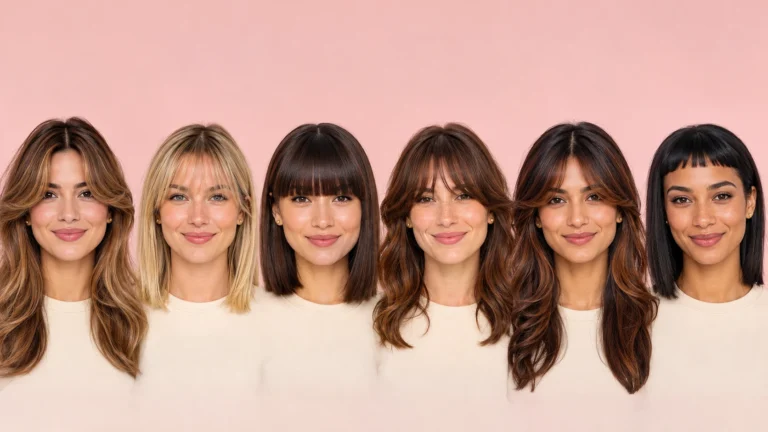
Most layered cuts mix a few basic types. Each type solves a different problem, such as lift, movement, shape around the face or a softer edge. This table shows where each one sits and what it does.
| Layer Type | Where It Sits | Look It Creates |
|---|---|---|
| Long layers | Start at the collarbone or lower | Light movement while you keep most of your length |
| Short layers | Start at the crown or near the cheekbone | Lift at the roots and a fuller top |
| Face framing layers | Start at the cheekbone or chin and blend into the length | A soft frame around the face |
| Feathered layers | Blend through the middle and ends | Wispy, flowing movement |
| Choppy layers | Sit unevenly through the middle and ends | Bold, separated pieces with an edgy finish |
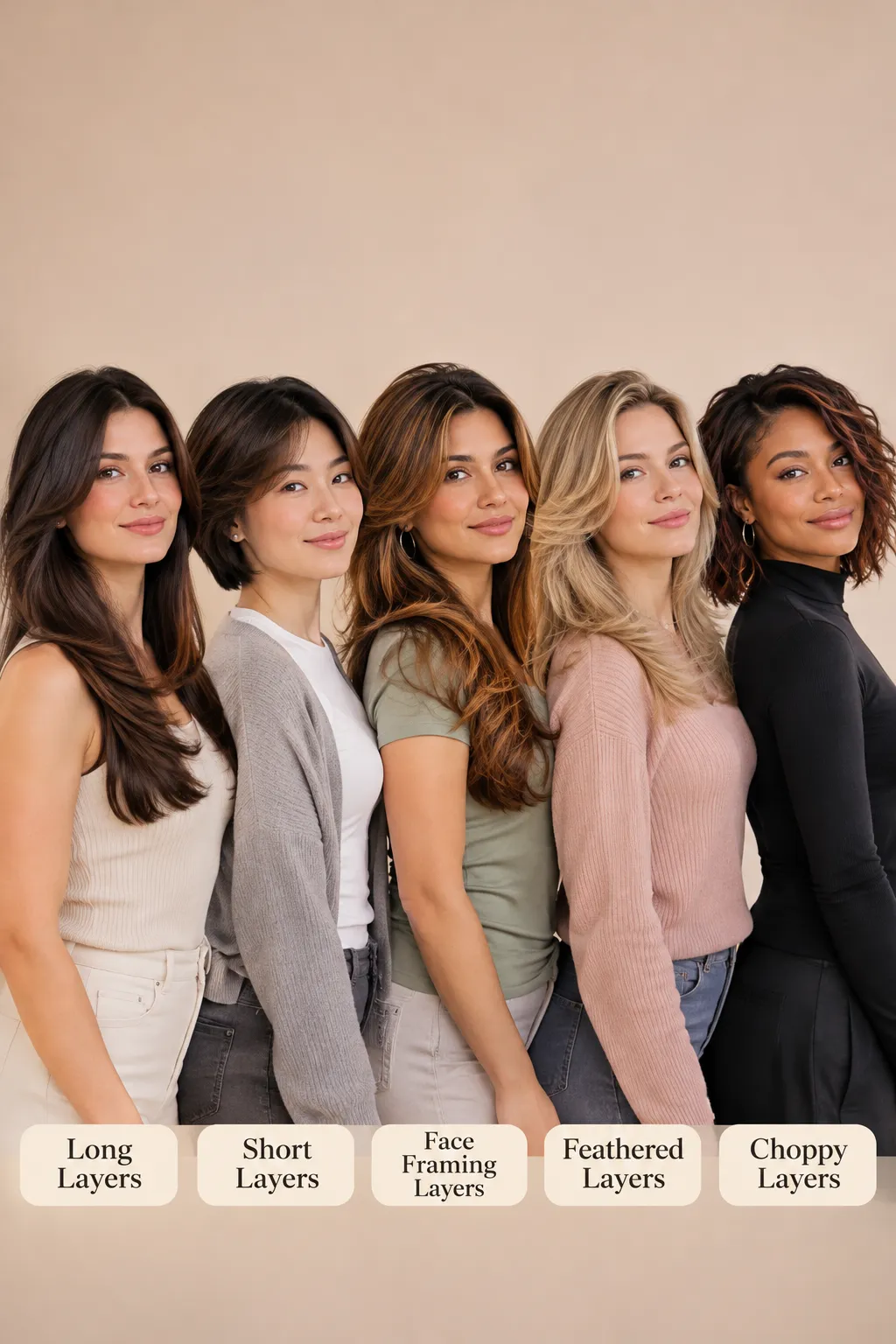
Stylists often combine these types. You might get long layers through the back and face framing layers at the front. Short layers add the most lift, so they suit hair that falls flat at the roots. Each type also reads differently on straight, wavy and curly hair, which the next sections cover.
Ask about the back too. A U shape curves softly and keeps the ends fuller. A V shape points to a longer center and shows more layering.
A quieter type works inside the cut. It gets its own section later, because it solves a different problem: weight.
Cut Note: Ask where your shortest layer will start, not just how many layers you will get.
Compare Popular Layer Styles to Find the Look You Want
Among all the types of hair layers, two pairs get mixed up the most. They look alike in photos but behave very differently on real hair.
Face Framing Layers vs Long Layers: Where the Movement Lands
When you weigh face framing layers vs long layers, think about where you want the action. Face framing layers start at the cheekbone or chin and sit around your face. They show off your eyes and jawline, and they help bangs blend in as they grow out.
Long layers start at the collarbone or lower. They move weight through the back and keep your length. Choose face framing layers for shape up front. Choose long layers for easy movement and a full back. Face framing layers also suit anyone who wants a fresh look without losing length.
Feathered Layers vs Choppy Layers: Soft Blend or Bold Edge
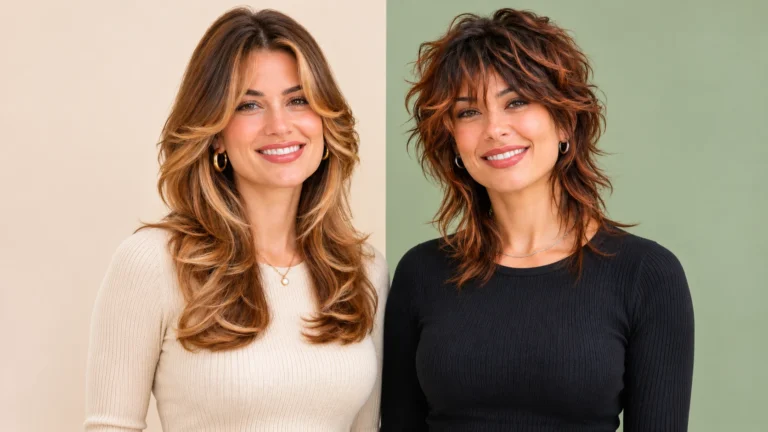
Feathered layers vs choppy layers is mostly a question of edges. Feathered layers blend in small, soft steps. They curve away from the face when you blow dry them with a round brush. Smooth, straight or lightly wavy hair shows that blend best.
Choppy layers use point cutting, which means snipping into the ends at an angle, to leave bold, uneven pieces. A light styling cream shows off that separation, and the broken edges can help waves stand apart. Feathered layers suit a smooth, polished finish. Choppy layers suit a relaxed, lived in look.
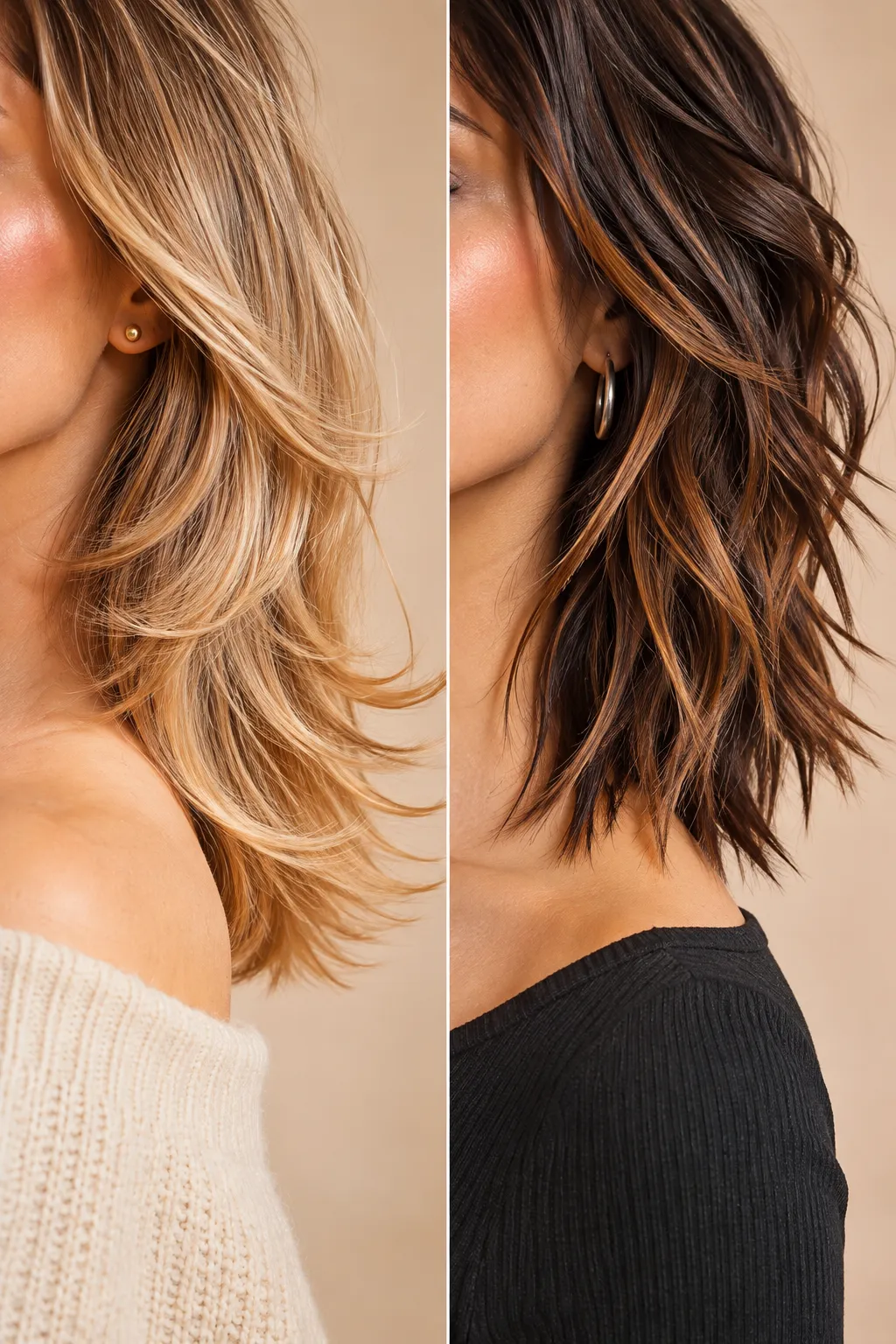
Heat Tip: Use a heat protectant before you blow dry feathered layers, and keep the dryer on medium heat.
Choose Types of Hair Layers by Hair Type, Not by Trend
A photo of a layered cut shows how it looks on that head, not on yours. Your hair type changes how every layer behaves. So does your routine, since a cut that needs a daily blow dry will not suit someone who air dries. Here is how to match layers to each hair type.
- If your hair is fine: Ask for a few long layers with soft edges. Fewer layers help keep the ends full.
- If your hair is thick: Ask about internal weight removal layers to lighten the cut without short ends.
- If your hair is straight: Feathered layers and long layers show up clearly and add easy movement. Ask for smooth blending, since straight hair shows every uneven step.
- If your hair is wavy: Long layers help waves stack into an even shape. Very short layers may poke out.
- If your hair is curly or coily: Ask for gentle steps in length and a rounded shape. Curls spring up as they dry, so your stylist may want to check the cut on dry hair.

Length matters too. Hair above the chin leaves little room for long layers, while hair past the shoulders gives you the most choices. In between, ask your stylist which type will still look balanced once your hair grows an inch or two.
Care Note: Heavy damage, sudden thinning or an itchy scalp may need more than a new cut. Ask a stylist or a dermatologist to check the cause before you add layers.
What does your hair already do when you leave it alone?
Thick Hair Feels Lighter When Layers Hide Inside the Cut
Some layers stay out of sight. They remove weight but leave the outer length alone. If your hair feels heavy or slow to dry, these hidden layers may help more than visible ones.
Internal Weight Removal Layers Take Out Weight Without Short Ends
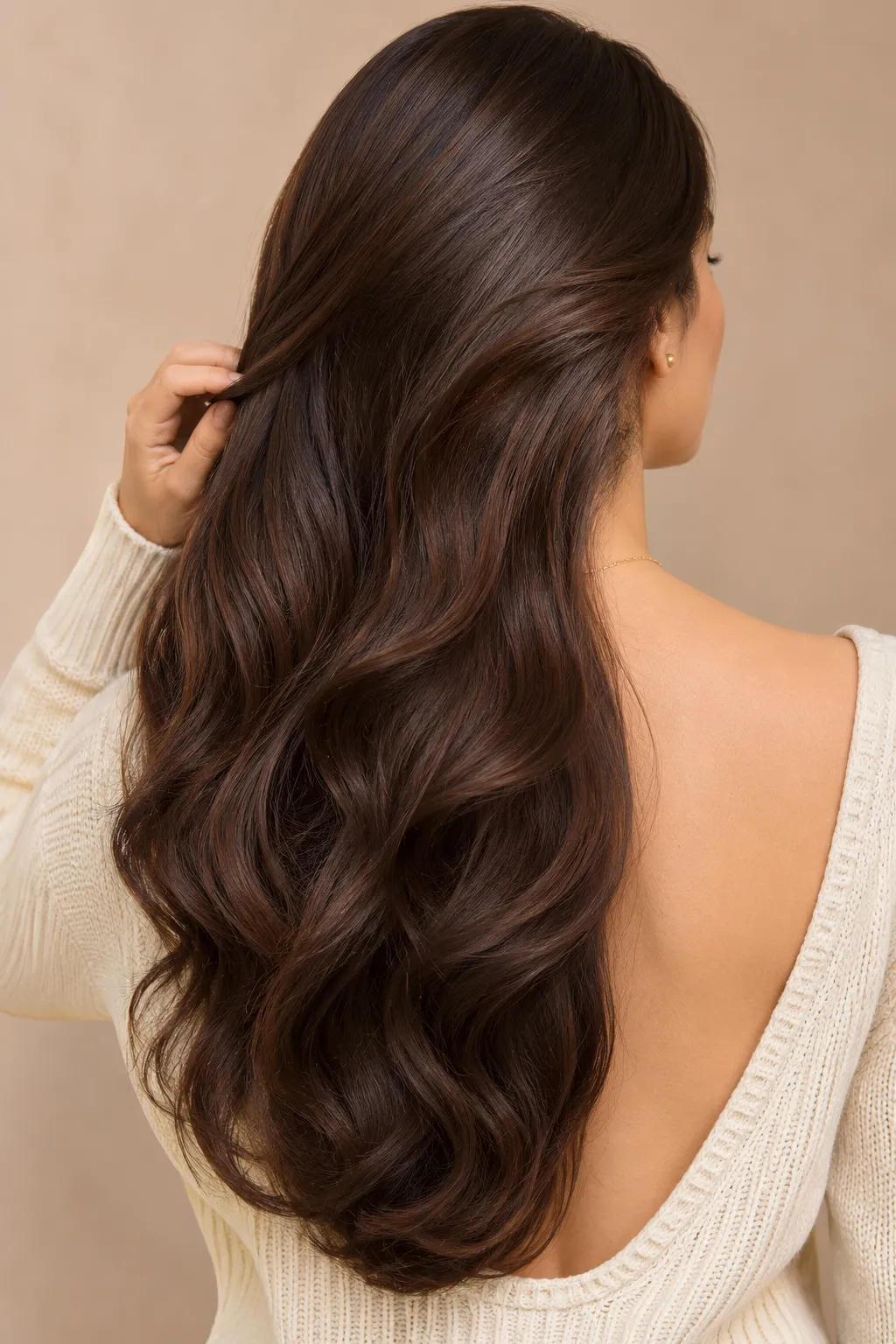
Internal weight removal layers are cut inside the hair, under the top layer. Your stylist shortens some sections underneath so the top layer rests smoothly over them. Point cutting on the inner sections often does the job.
The ends stay full and the outer length stays the same. Because the work is hidden, the cut looks narrower at the sides without losing length. They suit thick straight and wavy hair, and many curly cuts use a light version of the same idea.
Know the Signs That Your Hair Carries Too Much Weight
Your hair may be heavy if it puffs out at the sides, feels heavy in a ponytail or takes a long time to dry. Another sign is a top layer that lies flat while the lower hair flares out.
If you are unsure, ask your stylist to lift your hair at the sides and show you how much weight sits there. If your hair is fine or thin, you likely have little weight to remove, so skip this step.
Stylist Tip: On a first visit, ask for a little less weight removal than you think you need. Your stylist can take out more later, but you cannot put it back.
Face Shape Tells You Where the Shortest Layer Should Start
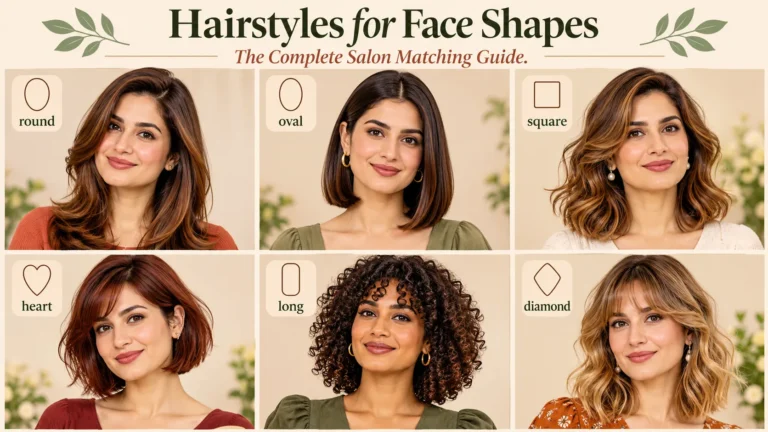
Face shape does not limit your choices, but it helps you place the first layer. The shortest layer draws the eye, so start it where you want attention. The table below gives a simple guide.
| Face Shape | Layer Placement | Tip |
|---|---|---|
| Round | At the chin or lower | Avoid layers that end at the widest part of your cheeks |
| Square | At the chin or just below | Soft, feathered ends ease a strong jawline |
| Oval | At the cheekbone or chin | Most placements work, so choose by hair type |
| Heart | At the chin | Add fullness near the chin to balance a wider forehead |
| Long | At the cheekbone | Add width at the sides to balance the length of the face |
These are starting points, not rules. Your hairline, part and bangs change the result too. If you have bangs, ask your stylist to blend face framing layers into them so the two look like one shape. If you sit between two face shapes, choose the placement that flatters the feature you like most.
Angle matters as much as placement. A layer that slants toward your face leads the eye inward, while a straight across layer adds width.
Before cutting, ask your stylist to hold a section of hair at the planned length next to your face. You can judge the placement before it is gone and ask for changes.

When in doubt, start at the chin.
A Clear Request Gets You the Layers You Pictured
Your stylist can only cut what you describe, so a short plan helps. Two habits make the biggest difference: a clear script and clear words.
What to Tell Your Hairstylist Before the First Cut
Decide what to tell your hairstylist, then say it in this order:
- Bring two or three photos of cuts you like.
- Name the length you want to keep.
- Say how you style your hair on a normal day.
- List what you want to avoid, such as short pieces at the crown.
- Ask where the shortest layer will start before cutting begins.
Photos show the goal. Words set the limits. Together they leave less room for guesses.

Swap Vague Words for Clear Ones
| Vague Request | Clearer Request | Why It Helps |
|---|---|---|
| Just layers | Long layers that start at my collarbone | Sets placement and keeps your length |
| Make it lighter | Remove weight from inside and keep my ends full | Lowers weight without short pieces |
| Frame my face | Face framing layers that start at my chin | Gives the first layer a fixed spot |
| Something choppy | Soft choppy layers with point cutting at the ends | Tells your stylist how bold the edge should be |
| Not too short | My shortest layer stays below my chin | Replaces a feeling with a clear limit |
Landmarks beat adjectives. Words like chin, collarbone and shoulder are easy to picture, but words like light or short mean different things to different people.
Prep Note: Arrive with dry hair styled the way you wear it most days, so your stylist can see how it falls.
Use One Simple Formula to Plan Your Next Layered Cut
Before your next visit, build your request from four parts. Keep each part to a few words, save it in your phone and read it aloud once before you go.
Formula: length goal + layer type + placement + edge.
Your length goal says how much hair you want to keep. The layer type names the style, such as long, face framing, feathered or choppy. Placement tells your stylist where the shortest layer starts. Edge says whether you want soft blending or bold separation.
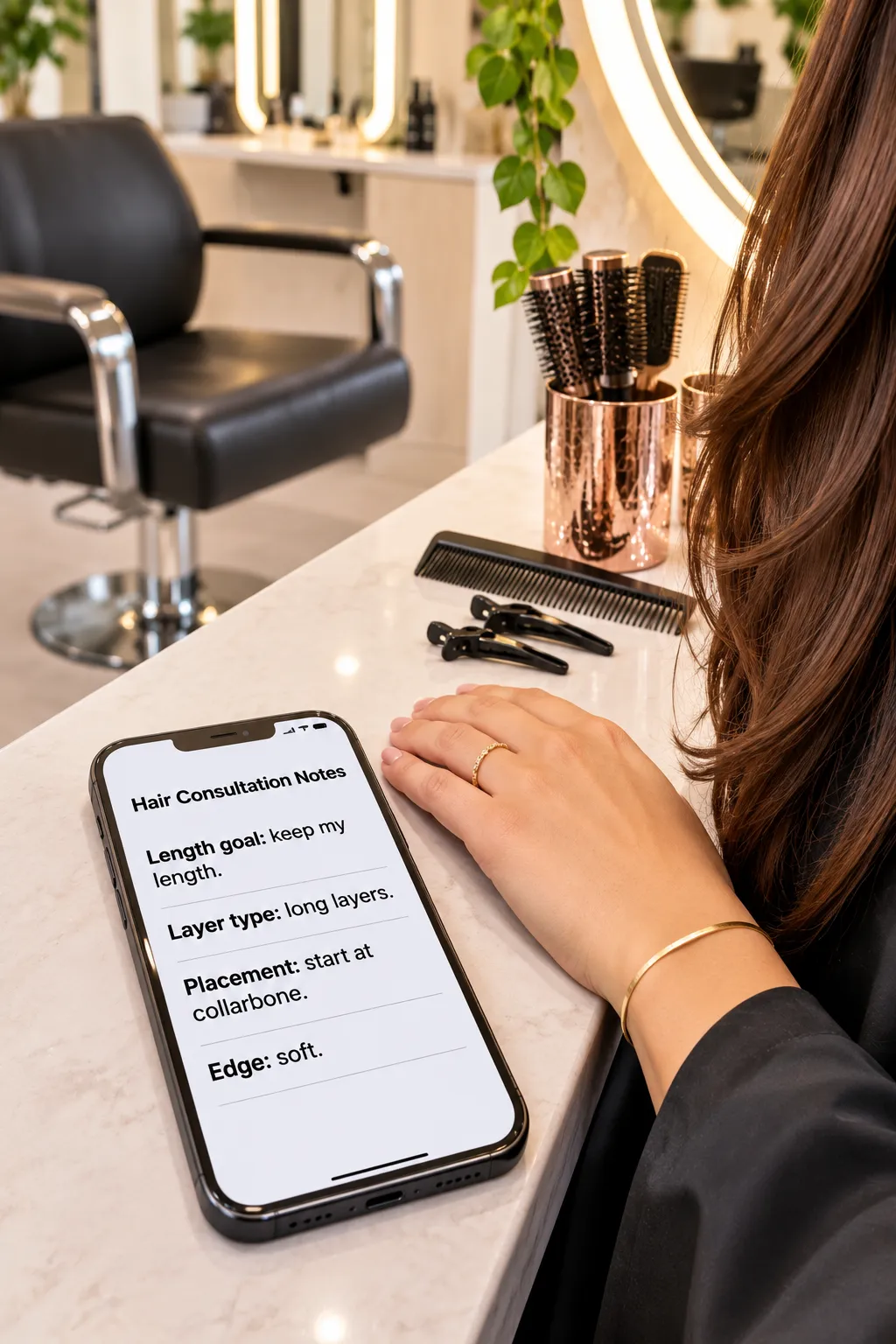
Here is how the formula works for three hair types.
Fine, straight hair: Keep my length, add long layers that start at the collarbone, and keep the edge soft.
Thick, wavy hair: Keep my length, add long layers that start below the collarbone, remove weight from inside, and keep the edge soft.
Short, straight hair: Keep my chin length, add choppy layers that start near the cheekbone, and give me a bold, broken edge.
The formula works because it covers what your stylist must decide: how much length stays, which style to cut, where it starts and how the ends finish. Change one part at a time when you want a new look. Move the placement higher for more lift, or switch the edge from soft to bold. Clear words make clean layers.
Frequently Asked Questions
These are the questions people ask most before they book a layered cut.
How Often Should I Trim My Layers?
Most types of hair layers look best with a trim about every 8 to 12 weeks. Short layers and choppy layers may need one sooner, because they lose their shape faster. Ask your stylist to set a schedule that fits your hair, and book the next visit before you leave.
Will Layers Make My Hair Look Thinner?
They can if you add many short layers to fine hair. A few long layers usually keep the ends looking full. If you worry about thin looking ends, tell your stylist before the cut starts, and ask for soft, blended edges. Ask to see where the shortest layer will land, too.
Can I Add Layers While I Grow My Hair Out?
Yes, if you keep the layers long. Long layers and face framing layers can stop hair from looking heavy while you grow length. Skip short layers, since they take away more length, and ask your stylist to cut only what the shape needs on each visit.
Can I Mix Different Layer Styles in One Cut?
Yes, and stylists often do. A common mix is long layers through the back with face framing layers at the front. Tell your stylist which part matters most to you, so the two styles blend well, and bring photos of each style so they can see how the two should meet.
Is a Shag the Same as Choppy Layers?
Not quite. A shag is a full haircut with short layers on top and longer layers below. Choppy layers describe the edge of the layers, and a shag often uses them. You can also add choppy layers to cuts that are not shags.
Layers feel less confusing once you know the words. Pick your layer type, choose where the shortest layer starts, and bring a photo to your next visit. You will walk out with the cut you pictured, and the types of hair layers will no longer feel like a guessing game.