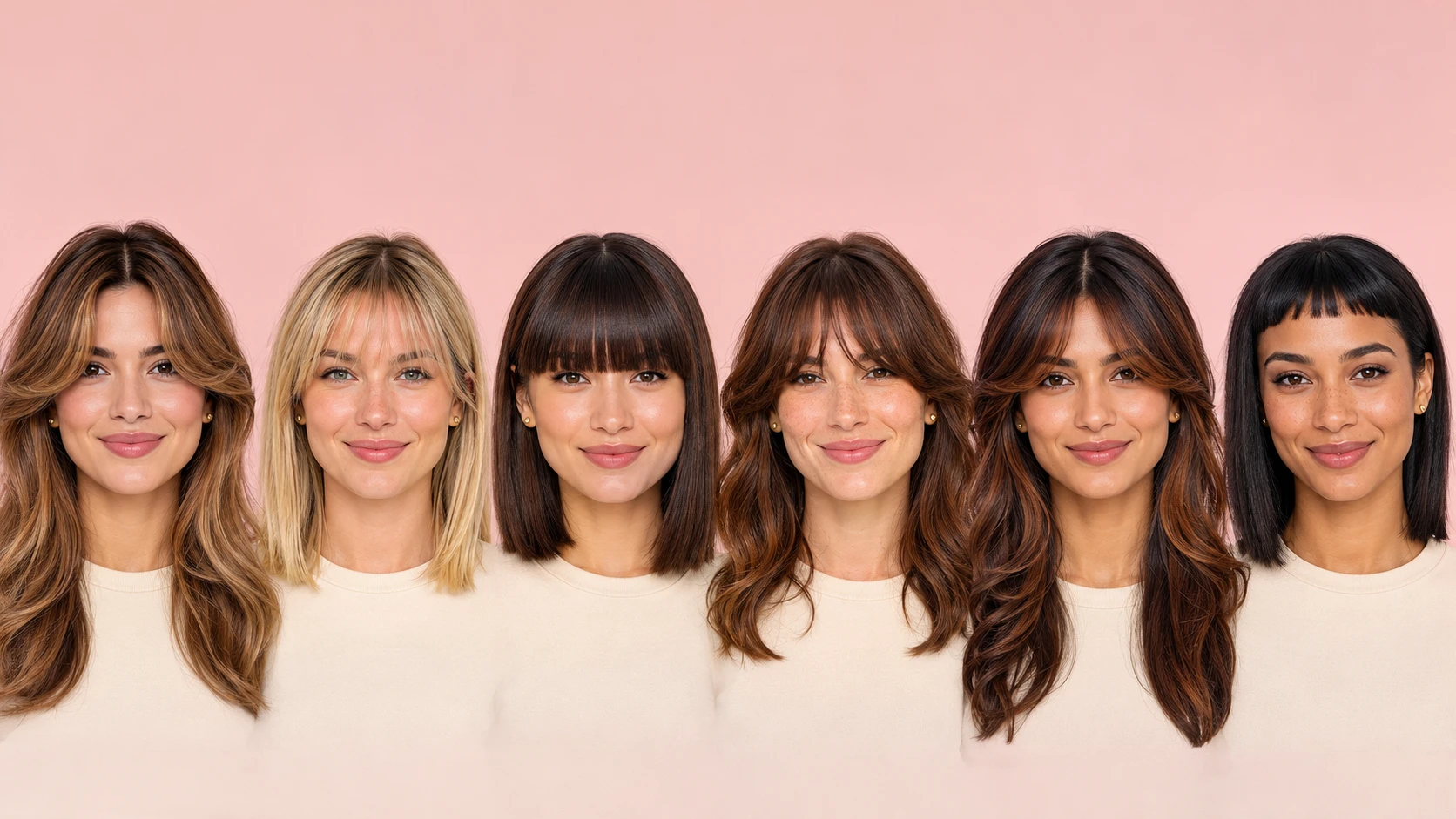
Types of Bangs Chart: How to Pick the Right Fringe for Your Face
You save a dozen photos of bangs, and every one looks great on someone else. Then you try to book a cut and the names blur together. Curtain, wispy, Birkin, bottleneck. Which one is yours?
A high forehead, a stubborn cowlick, or fine hair can change how any cut behaves on you, even when it looks easy in a photo. And if you guess wrong, bangs take months to grow out.
The answer is simple. The right bangs match three things: your forehead height, your hair texture, and the time you will spend styling them each morning. A types of bangs chart lines those three up for you.
Below, you will meet six main cuts, see who each one suits, and learn a simple formula that makes the choice easy.
A Types of Bangs Chart Makes the Choice Much Easier
Bangs have too many names and not enough rules. A chart fixes that by sorting each cut by three things: where it ends, how heavy it looks, and how much work it takes.
Salons and social media often use different words for the same cut. So read the table by length and shape, not by name alone. Then bring a photo to your appointment.
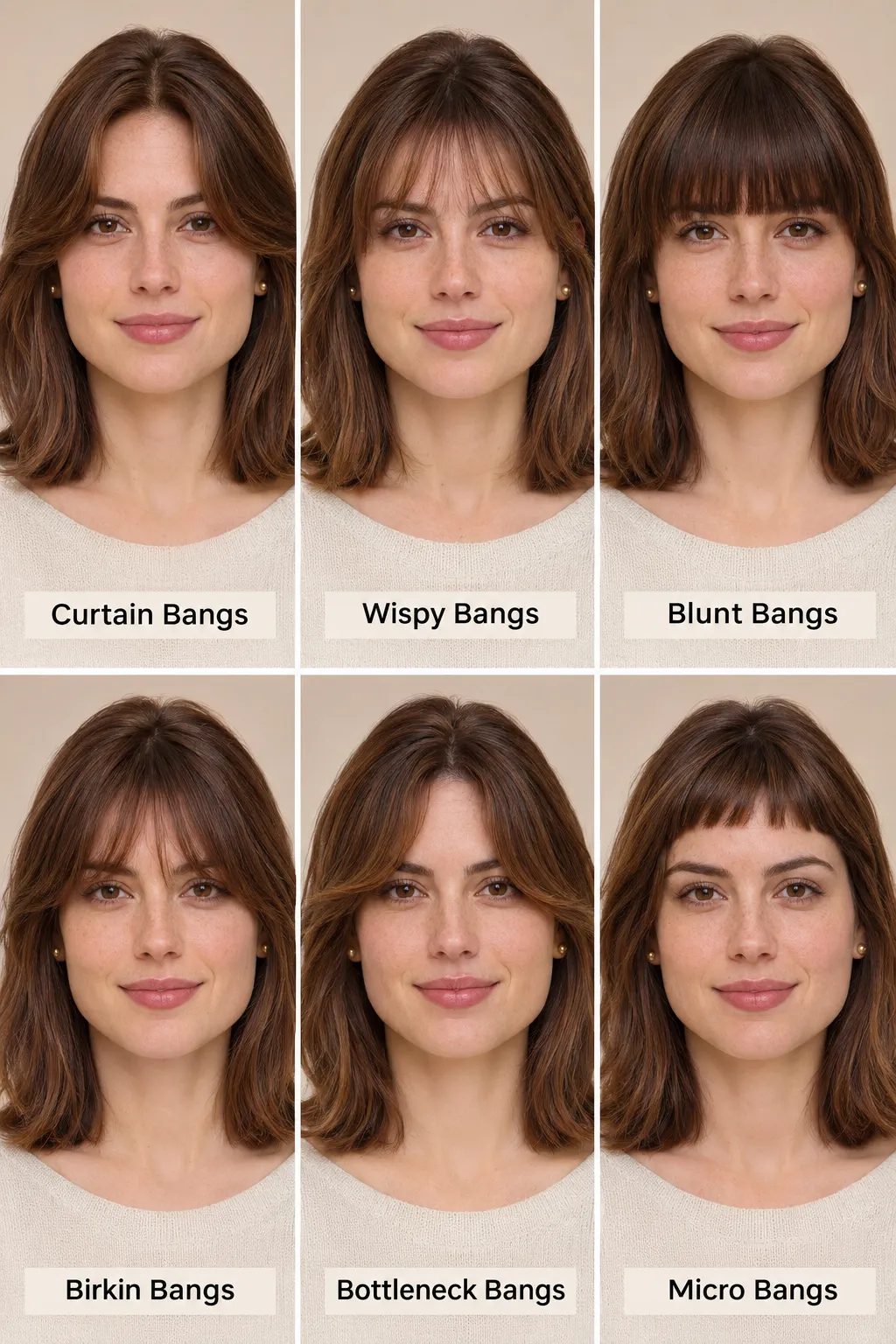
| Bang Type | Where It Ends | Look and Weight | Upkeep |
|---|---|---|---|
| Curtain bangs | Near the cheekbone | Parted in the center, sweeping to each side | Low |
| Wispy bangs | At the brow | Thin, light, and see through | Low to medium |
| Blunt bangs | At or just below the brow | Heavy, straight across, one length | High |
| Birkin bangs | Just below the brow, longer at the sides | Feathered ends with a soft curve | Medium |
| Bottleneck bangs | Short in the center, longer at the sides | Flares into face framing layers | Medium to high |
| Micro bangs | An inch or more above the brow | Very short and very bold | High |
Read down the chart and a pattern shows up. The shorter and heavier a cut gets, the more upkeep it asks for. Longer and lighter cuts forgive more.
Cut Note: Show your stylist where you want the ends to land, such as the brow or the cheekbone. A word like soft means different things to different people.
Soft Bangs Blend In and Forgive a Slow Grow Out
Soft bangs melt into the rest of your hair. That makes them the safest place to start. If you change your mind, they grow into face framing layers instead of an awkward stage.
Curtain Bangs vs Wispy Bangs: Parting, Length, and Weight
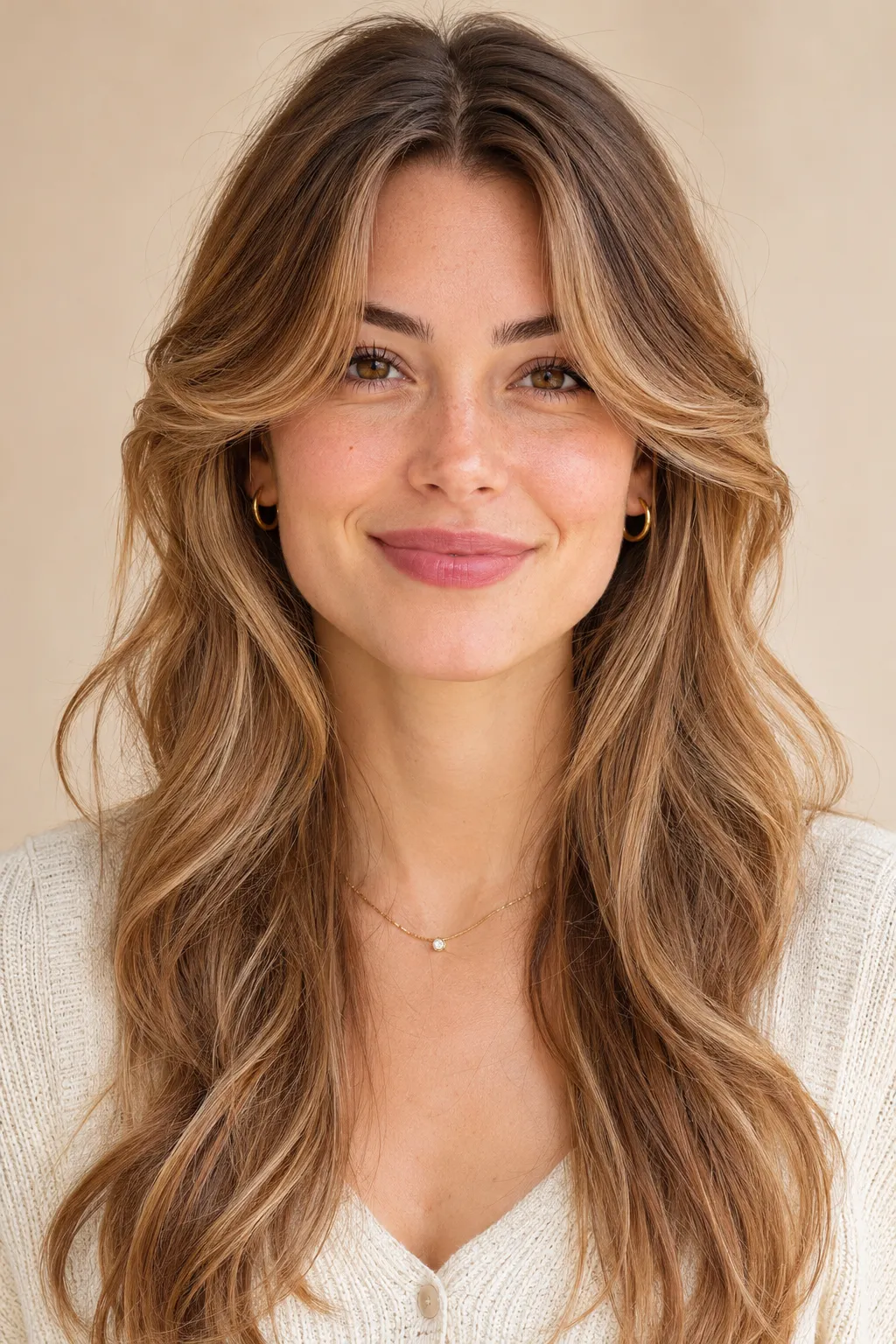
Curtain bangs part in the center and sweep to each side. They run longer, usually ending near the cheekbones, so they frame the face from the sides. Wispy bangs sit across the forehead and stay thin and see through, so a little skin shows. Both cuts can be worn parted or swept, so a quick comb changes the look.
In the curtain bangs vs wispy bangs debate, the real question is coverage. Wispy bangs suit fine hair because they need very little hair to look full. Curtain bangs work on most textures, since the extra length hides small differences in density.
If you want a soft cut that still covers the forehead, pick wispy. If you want face framing more than coverage, pick curtain.
Side Swept Bangs Work as a Gentle First Step
Side swept bangs cross the forehead on a slant from a deep side part. They are longer on one side and blend into the length on the other. With no straight line to protect, they hide a bad day and a late trim.
Straight hair keeps the slant smooth. Wavy hair adds movement and a relaxed finish.
Light, loose, easy.
Full Bangs Frame the Eyes but Need the Right Hair
Full bangs cover the whole forehead. They pull attention to your eyes and cheekbones. They also show every flaw at the hairline, such as cowlicks and uneven density, so planning matters.
Blunt Bangs vs Birkin Bangs: Edge, Texture, and Length
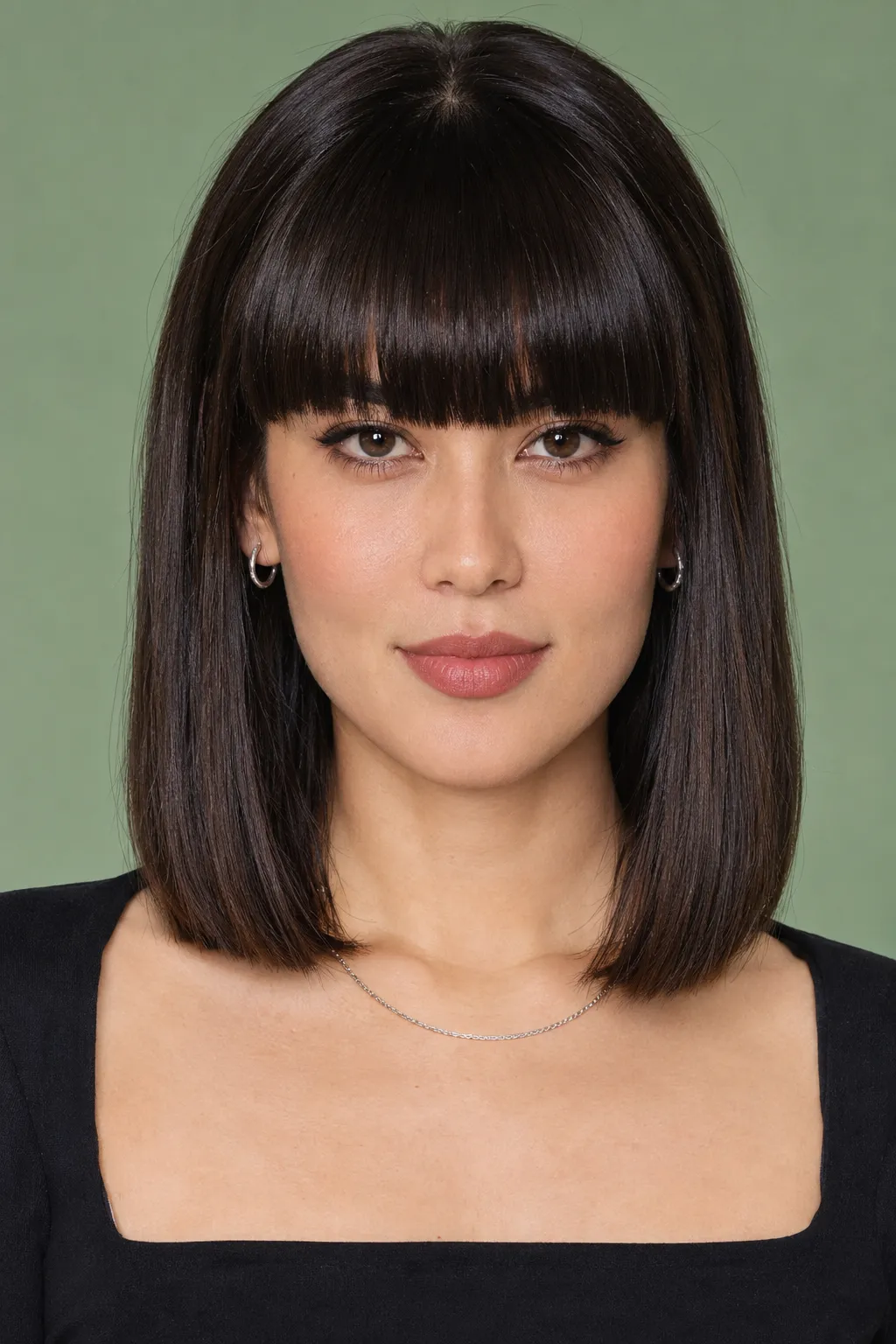
Blunt bangs end in a clean, straight line at or just below the brow. The edge is the whole point. It gives a sharp, graphic look that works best on straight, thick hair.
Birkin bangs soften that edge. They have feathered, see through ends, a slight curve, and a little extra length at the sides. In the blunt bangs vs Birkin bangs choice, blunt makes a statement while Birkin feels relaxed.
Birkin bangs also grow out more kindly, because the ends already blend with your layers.
Hair Texture Decides How Heavy Full Bangs Can Go
Texture sets the limit. Use these guides:
- If your hair is fine: Take a thin, shallow section so the bangs do not look sparse. Birkin or wispy bangs often work better than blunt.
- If your hair is thick: Ask your stylist to remove some weight so the bangs do not push forward. Blunt bangs can look great here.
- If your hair is wavy or curly: Start a little longer, since the bangs will spring up as they dry.
- If your hair is coily: Choose a longer cut at or below the brow, because shrinkage can be strong.
Stylist Tip: Ask for curly or wavy bangs to be cut dry, so you can see the real spring before the final snip.
Statement Bangs Add Drama but Ask for More Upkeep
Some bangs are made to be noticed. They are shorter or more shaped than the rest of your hair, and they reward the right face and the right routine.
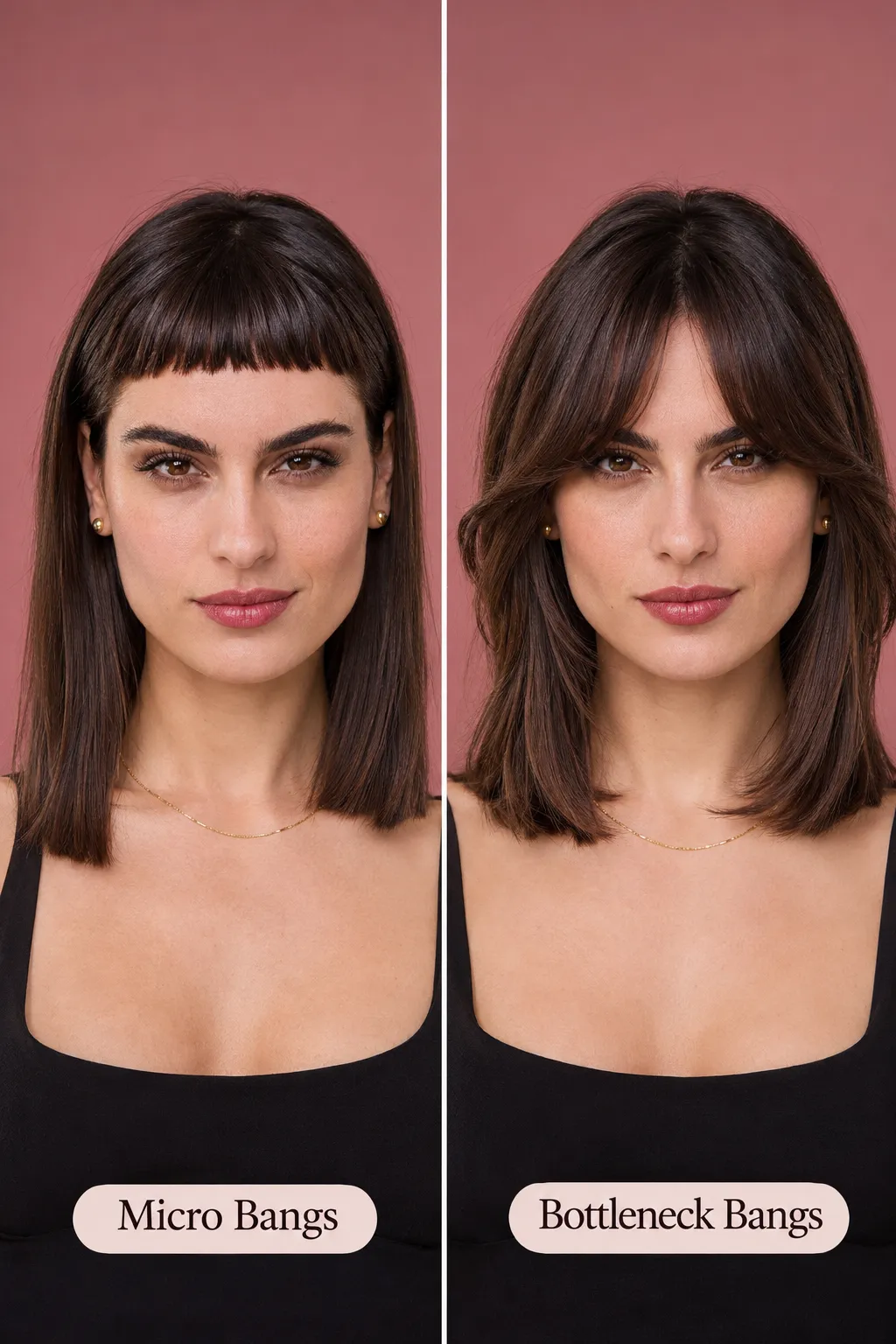
Bottleneck Bangs and Micro Bangs Take Two Different Paths
Bottleneck bangs are short in the center and grow longer toward the sides. The shape looks like the neck of a bottle. It flares into face framing layers, so it feels like a mix of curtain bangs and full bangs.
Micro bangs go the other way. They sit an inch or more above the brow, about halfway up the forehead. They draw all the attention to your eyes and brows.
- Choose bottleneck bangs if: you want a bold shape that still blends into your layers.
- Choose micro bangs if: you want a sharp, short cut and you do not mind a visible forehead.
Trim Schedules and Styling Time Decide If They Last
Both bottleneck bangs and micro bangs show growth fast. Micro bangs need a trim about every three to four weeks. Bottleneck bangs sit in the middle, so plan on four to six.
Styling time matters too. Micro bangs dry in seconds, but they show every flip and cowlick. Bottleneck bangs need a small brush and a minute of shaping each morning.
Care Note: Short bangs touch your skin all day. Wash them in the sink between full washes if they get oily, and keep heavy products away from them.
Short bangs reward confidence, not impulse.
Match Bangs to Your Face Shape for Better Balance
Face shape works like a compass, not a rule book. It narrows the types of bangs chart to a short list. The goal is balance, so you want bangs that soften strong angles or add length where you need it.
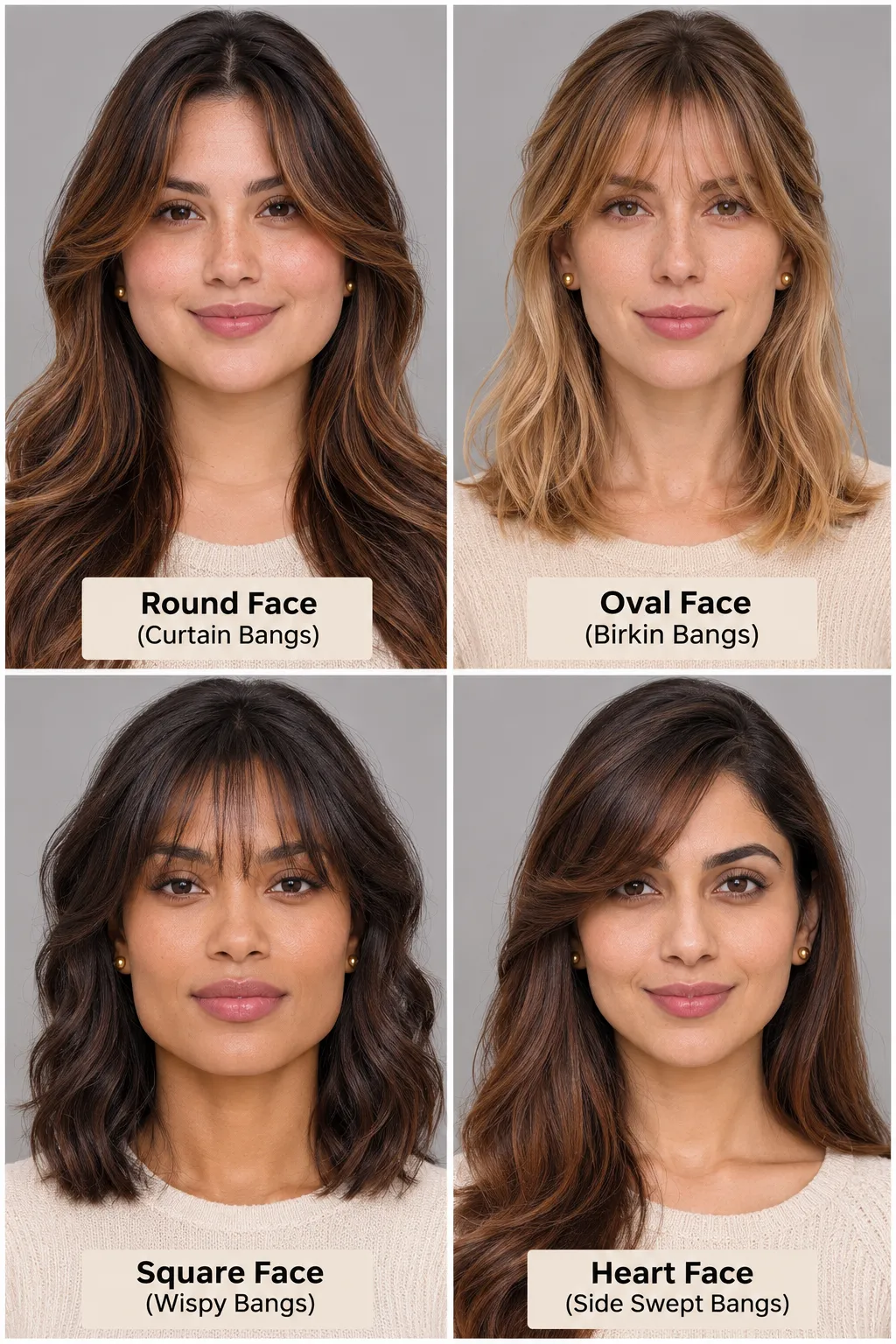
| Face Shape | Best Bangs | Tip |
|---|---|---|
| Round | Curtain or side swept | A deep part adds the look of length |
| Oval | Almost any cut | Choose by hair texture and upkeep |
| Square | Wispy or Birkin | Soft ends ease a strong jaw |
| Heart | Curtain or side swept | Sweeping lines balance a wider forehead |
| Long | Blunt or Birkin at the brow | Full coverage shortens the look of length |
Treat the table as a starting point. Hair texture, forehead height, and your own taste can override it. A round face with thick, straight hair may love blunt bangs, and that is fine.
Width matters as much as shape. Bangs that stop at the outer edge of each brow keep the face looking narrow and long. Bangs that reach the temples add width, which can balance a long face.
Face shape sets the balance. Forehead height sets the length, and that comes next.
Forehead Height Sets How Short or Long Bangs Should Go
Measure before you choose a length. It takes one minute.
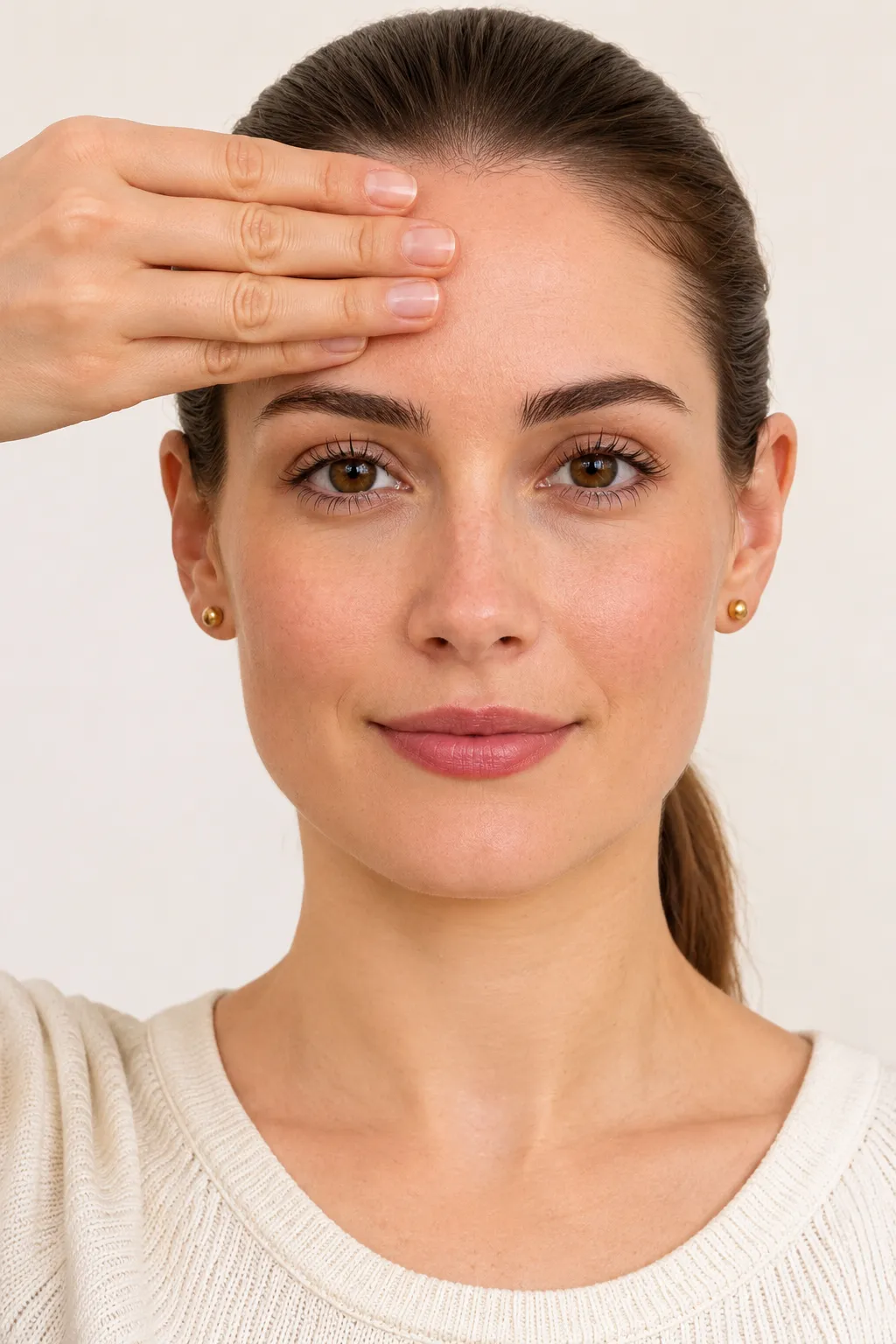
- Pull your hair fully back so the hairline shows.
- Hold your fingers flat, side by side, between your brow and hairline.
- Count the fingers. About three is average, four or more is high, and two or fewer is short.
- Look for a cowlick or a pointed center in the hairline.
The count points you toward the best bangs for high vs short foreheads. It works because bangs are cut from the front hairline down, so the space you have limits your options.
Prep Note: Measure with dry hair. If your hairline is thinning at the front, talk to a stylist or dermatologist before you cut bangs.
Best Bangs for High vs Short Foreheads
A high forehead suits fuller bangs. Birkin, blunt, and curtain bangs that start at the brow cover more skin and shorten the look of the forehead. Micro bangs show even more of it, so choose them only if you want that effect.
A short forehead needs a lighter touch. Wispy bangs, side swept bangs, and curtain bangs with a wide center part leave room to breathe. Heavy blunt bangs can feel crowded, and micro bangs may feel tight.
Cowlicks and Widow’s Peaks Change the Plan
A cowlick pushes hair in one direction at the front. Heavy blunt bangs often fight it all day, while a longer, softer shape such as curtain or Birkin bangs works with it.
A widow’s peak, a pointed center hairline, is easier. Part the bangs in the center or sweep them to one side.
When in doubt, start longer. You can always go shorter.
A Quick Morning Routine Keeps Bangs Smooth and Settled
Bangs take about five minutes when you follow a routine. The goal is to set the shape while the hair is damp, then dry it flat. Skip heavy products, since bangs soak up oil and weight quickly.

- Wash or dampen only your bangs if the rest of your hair is clean.
- Comb them forward, then side to side, to break any cowlick pattern.
- Blow dry on medium heat with a small round brush or your fingers.
- Finish with a cool shot to set the shape.
- Add a light dusting of dry shampoo at the roots if they look flat or oily.
Damp hair holds the shape it dries in. Drying side to side tells the roots where to lie, and cool air locks that shape in.
Heat Tip: Dry your bangs first, before they air dry into a flip. Medium heat is enough, and a few inches of distance helps protect the ends.
Even with a routine, small problems pop up. Use the table to spot the cause and fix it fast.
| Problem | Likely Cause | Fix |
|---|---|---|
| Bangs split in the middle | Natural part or drying the wrong way | Dry side to side, then comb straight |
| Ends flip up | Too much brush tension or heat | Dry flat and finish with cool air |
| Oily by noon | Skin oil touching hair all day | Wash only the bangs and add dry shampoo |
| Poking into your eyes | Growth past the brow | Book a trim, or pin them to the side |
| Flat at the roots | Heavy product or drying forward only | Skip rich creams and dry roots up and over |
Use the Types of Bangs Chart With This Simple Formula
You now have the pieces. Combine them the same way each time you pick a cut.
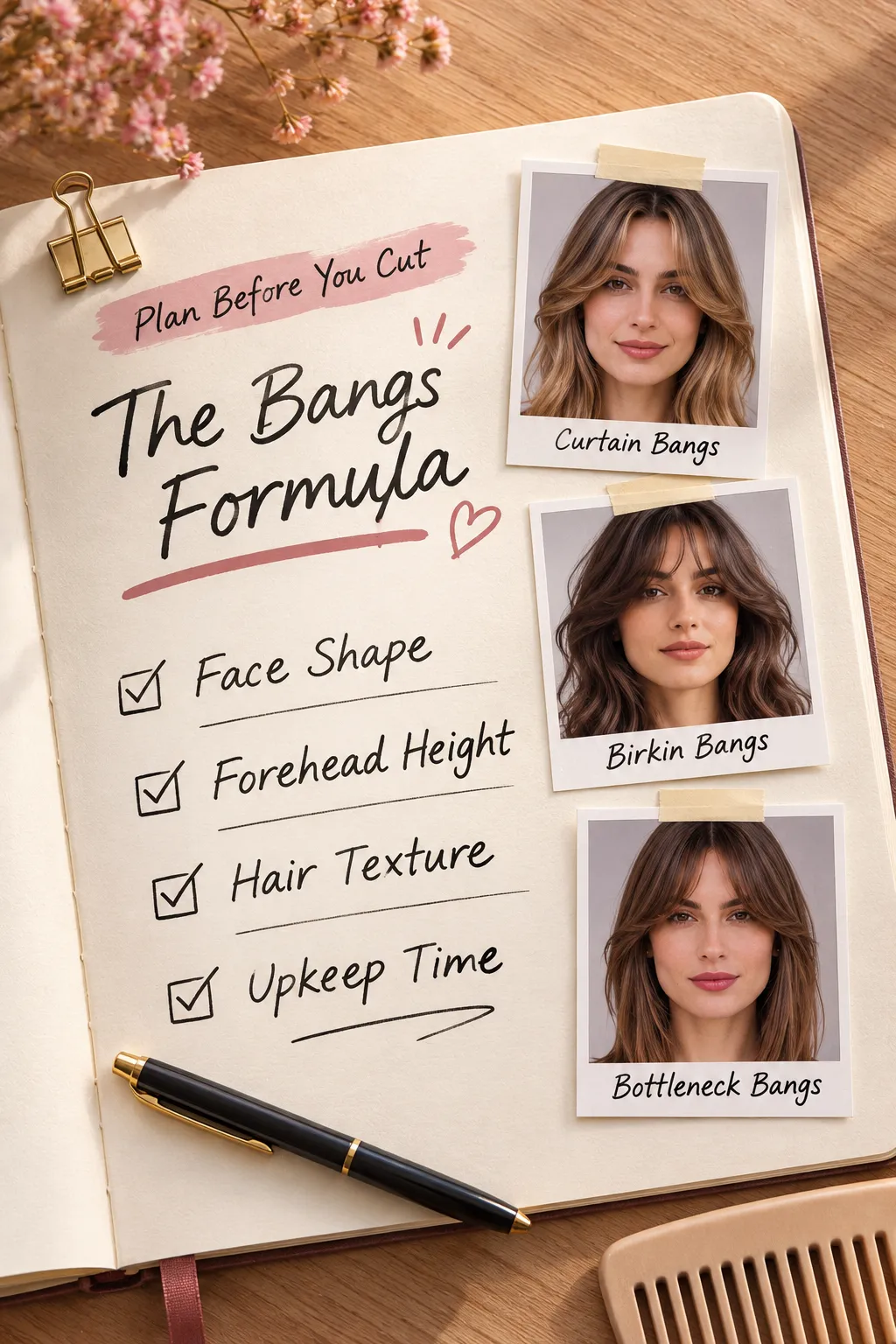
Formula: face shape + forehead height + hair texture + upkeep time.
Start with face shape to decide where you need softness or length. Add forehead height to set the length. Check your hair texture, then count the minutes you will spend each morning. The cut that fits all four is yours. If two cuts tie, pick the one with less upkeep. You can always go bolder at your next visit.
Take a round face with an average forehead, fine and straight hair, and five minutes a day. The formula points to curtain bangs. They add length and need almost no effort.
Now try a square face with a high forehead, thick and wavy hair, and medium upkeep. Birkin bangs fit. The feathered ends soften the jaw, and the length covers the forehead.
One more: an oval face with an average forehead, straight hair, and a willingness to trim. Bottleneck bangs give you a bold shape, and an oval face carries it well.
Write your four answers down and take them to your stylist.
Frequently Asked Questions
Which Bangs Are Easiest to Grow Out?
Curtain bangs are the easiest to grow out. Their long, parted shape blends into face framing layers as the rest of your hair catches up. Hair often grows about half an inch a month, so you may be able to tuck them behind your ears within a couple of months.
How Do I Use a Chart if My Hair Is Curly or Coily?
Use it for the shape, then add length to allow for curl. A types of bangs chart gives you the cut, but curls spring up as they dry, so ask for a longer starting point. A stylist who cuts curls dry can match the final length more closely.
How Often Should I Trim My Bangs?
Short and blunt bangs need a trim every three to four weeks. Curtain and Birkin bangs can wait six to eight weeks. Bottleneck and wispy bangs fall in between, at about four to six weeks, so book the next visit before you leave the salon.
Can I Get Bangs if I Have a Cowlick?
Yes, if you choose a longer, softer shape, since a cowlick is common and rarely a dealbreaker. Curtain and Birkin bangs work with the growth direction, while heavy blunt bangs often fight it. Ask your stylist to check the cowlick before the first cut, with your hair dry.
Should I Cut My Bangs at Home?
A stylist is the safer choice, since bangs are quick to cut short and slow to grow back. If you do trim at home, work on dry hair, take off a tiny amount, and check the length after each snip. Skip cutting them wet, because hair shrinks as it dries and the bangs end up shorter than planned.
Bangs change your whole look, so a little planning pays off. Keep this types of bangs chart handy, measure your forehead, and bring a photo to your stylist. Soon you will have bangs that fit your face and your mornings.