How to Use a Claw Clip: 5 Secure Ways for Thin & Thick Hair
You twist your hair up and snap the clip shut. Ten minutes later, it slides down your neck. Learning how to use a claw clip sounds easy, yet it fails more often than you would expect. You fix it, and it slips again.
Hair type makes it harder still. Thin strands slip out of the teeth. Thick hair spills over the jaw and pushes the clip loose. Short layers add their own trouble.
Here is the key idea. A claw clip holds when its teeth grip a twisted, textured section of hair, not a loose pile. Think of the clip as a hand that needs something to hold. Size, grip, and placement do the rest.
Below are five secure ways to wear one, with clear steps for fine and thick hair.
A Claw Clip Holds Better When You Match Its Size to Your Hair
Learning how to use a claw clip starts with size, which matters more than most people think. A clip that is too big for your hair has nothing to grip. A clip that is too small cannot close around a full twist.
Look at three things before you start. Jaw width tells you how much hair fits, and teeth spacing affects grip. Surface texture matters too, because a matte or lightly textured clip often grips better than a glossy, smooth one.
Length changes the choice as well. Chin length hair works best with a small or medium clip, while shoulder to mid back lengths suit medium and large ones. Very long hair often needs a large clip and a deep twist.
Wash day plays a part. Freshly washed hair is often the slipperiest. Day two hair tends to grip better than squeaky clean strands.
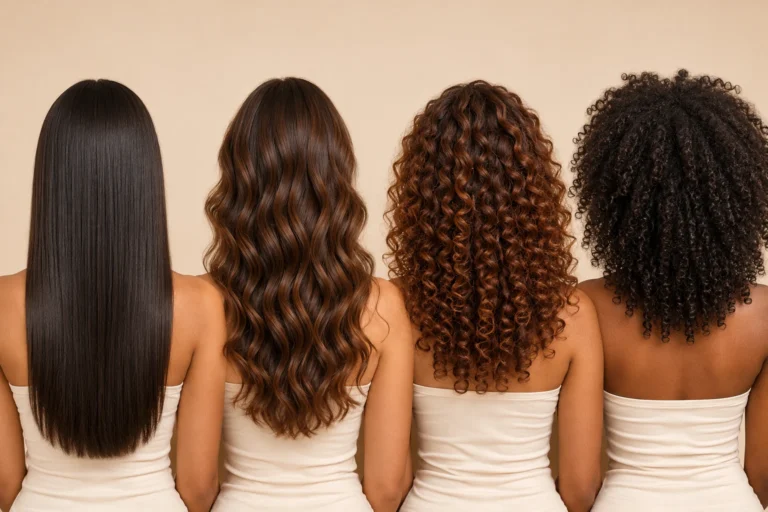
This chart gives a simple starting point. Results may vary with length, density, and how smooth your strands feel.
| Hair Type | Best Clip Size | Why It Works |
|---|---|---|
| Fine and straight | Small to medium | A narrow jaw squeezes a small twist tightly |
| Fine and wavy | Medium | Waves add natural grip, so a medium jaw holds |
| Thick and straight | Large with strong teeth | A wide jaw carries the weight without pinching |
| Thick and curly | Extra large | Wide jaws hold volume without crushing curls |
| Coily | Large with wide teeth | Spaced teeth glide through coils instead of snagging |
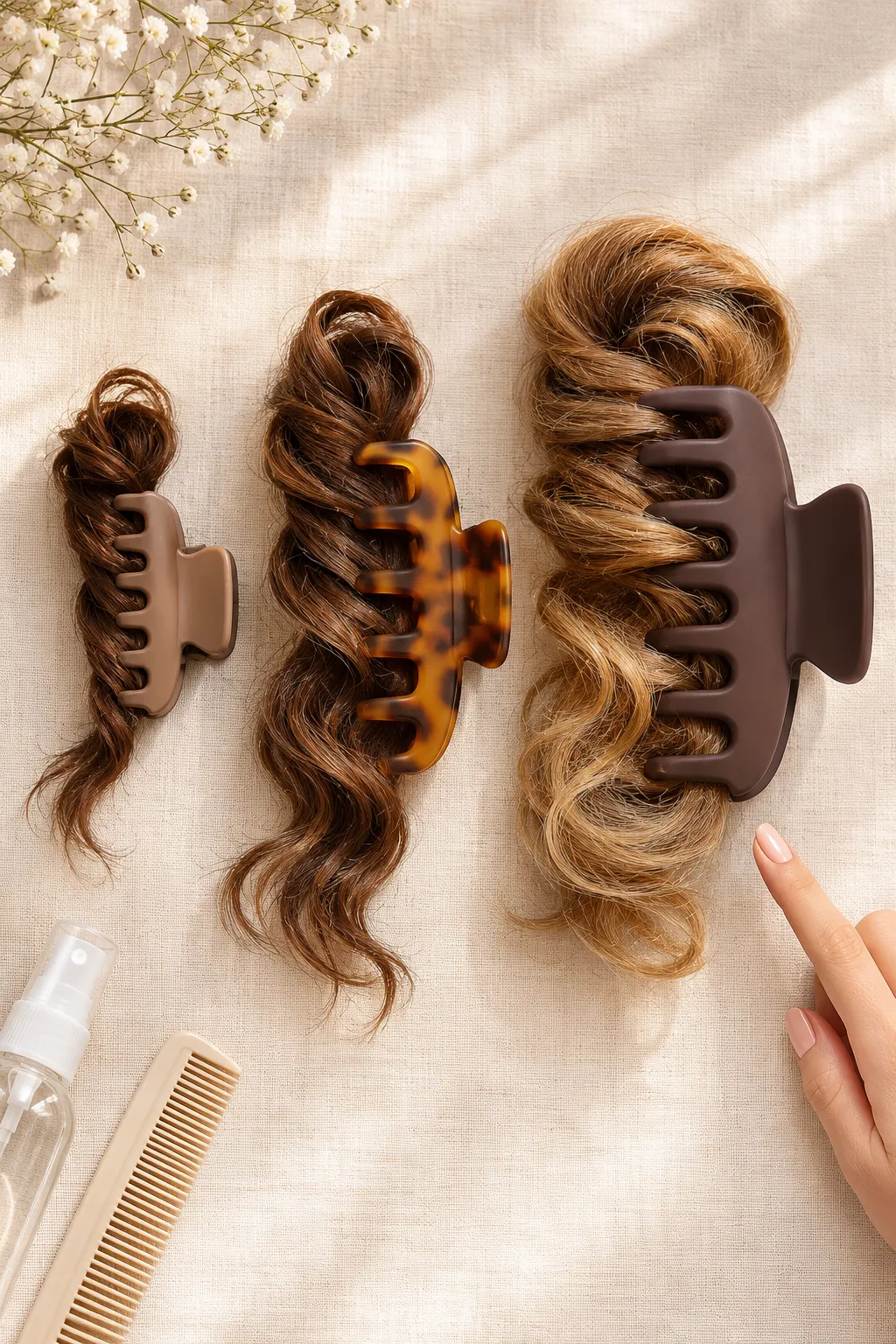
Fit Check: Gather your hair into a twist, then close the clip. If the jaw barely shuts, go up a size.
The right size does half the work.
How to Use a Claw Clip for the Classic Twist Step by Step
The classic twist is the first of the five ways, and it is the base for every other style. Learn it once and you can adjust it for any hair type.
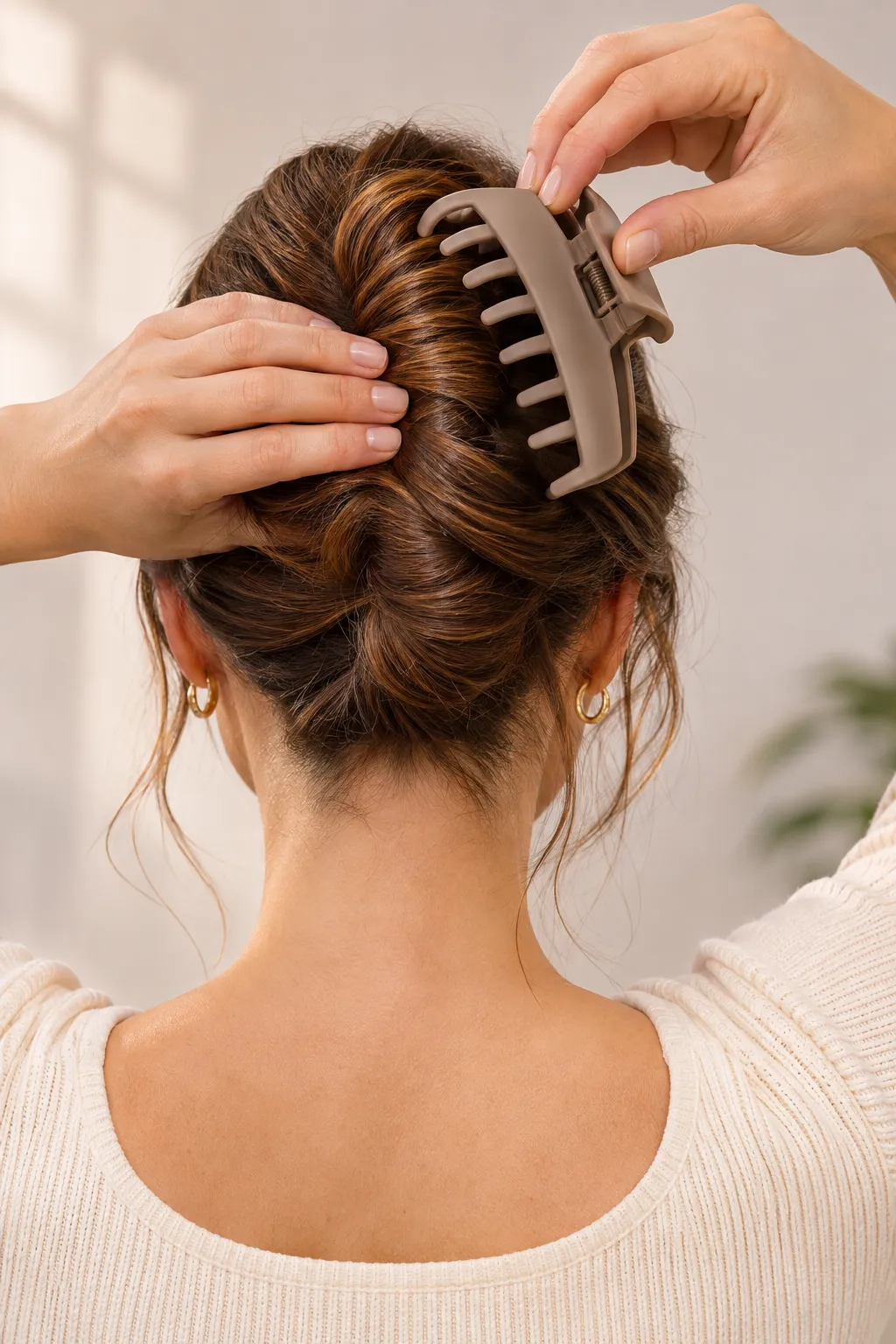
Start with a brush. Detangle your hair and smooth the top section. Dry or barely damp hair grips best.
Next, gather your hair at the back of your head, as if you were making a low ponytail. Twist it in one direction until it coils like a rope. Keep the twist snug.
Fold the coil up toward your crown with the ends pointing up. Hold it flat against your head with one hand.
Open the clip wide and slide it in from the top. The teeth should catch the folded twist and a little hair at your head. Close the clip, then give it a gentle tug.
Do not let go of the coil too early. Keep holding it until the clip is fully closed. A twist that unwinds before the teeth bite leaves a loose hold.
Why does this hold? The twist packs hair into one dense piece, and the teeth press it against your head. That contact keeps the clip in place.
Hold Note: Set the clip across the middle of the coil. If it sits at the very end, the weight pulls it down.
Short hair needs fewer turns. Long hair may need an extra fold, with the tail tucked under the twist. A few loose pieces at the front look natural, so skip the urge to fix them.
One twist, one clip, no fuss.
Fine Hair Looks Fuller When You Add Grip Before You Clip
Fine hair often slips because it is smooth and light. Give it texture first, and the clip has something to hold.
Apply a light texturizing spray or dry shampoo through your mid lengths and ends. Work it in with your fingers. Skip heavy oils and creams, which can make strands slide.
Claw Clip Tutorial for Thin Hair: The Fan Out Method
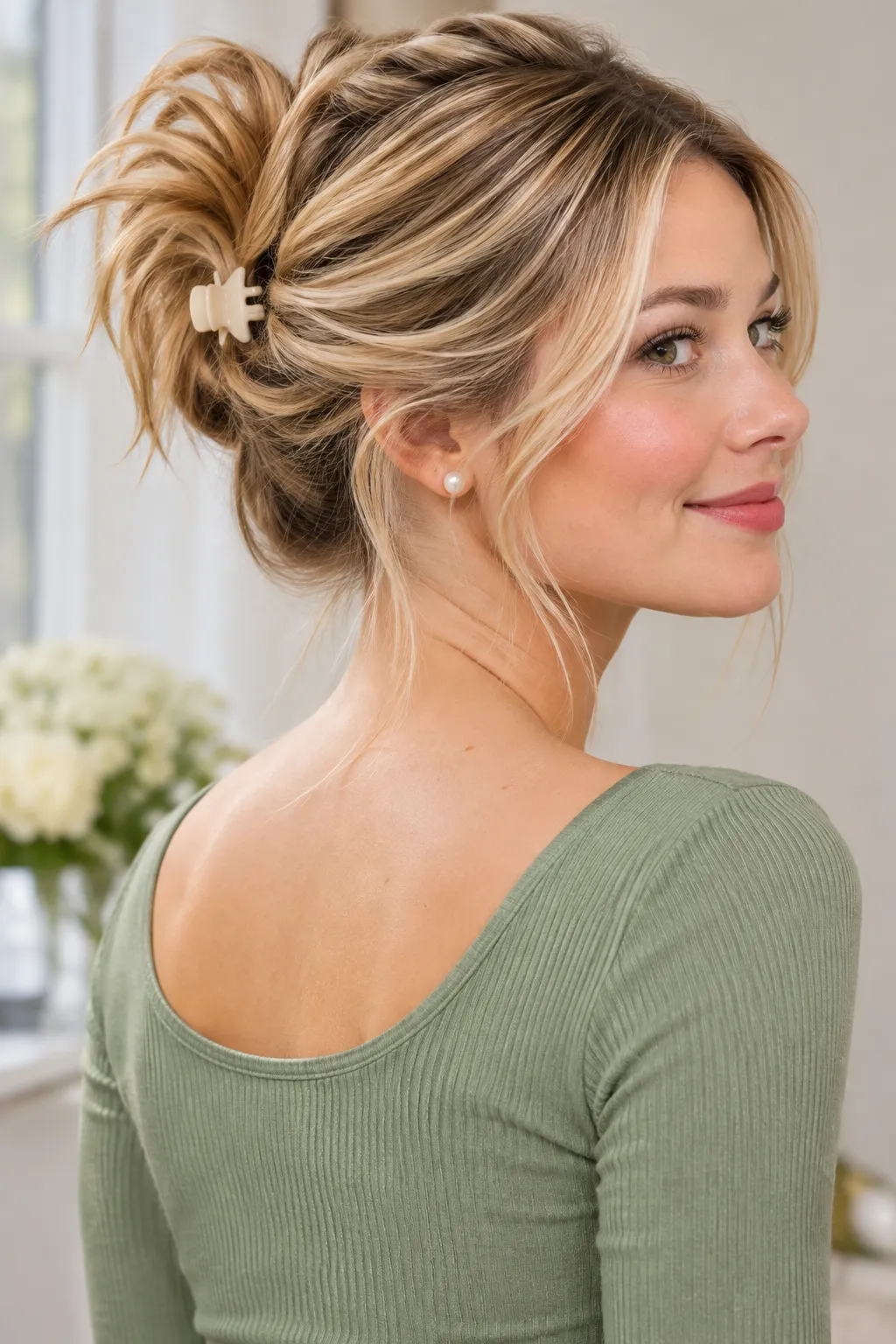
Now try the fan out method. Gather your hair at the crown, give it just one loose twist, and clip it across the base. Let the ends spill out the top, then spread them gently with your fingers.
This claw clip tutorial for thin hair works because a tight twist can make fine hair look flat and small. Spread ends add width and hide part of the clip.
Prep Note: Gently tease a small patch under the clip spot with a fine tooth comb. That rough patch gives the teeth something to catch.
Check the back with a hand mirror, because thin hair can show gaps near the clip. Fan the ends wider to fill them.
Choose a lightweight clip. A heavy clip can drag thin hair down and pull at the roots. Metal clips often weigh more than plastic ones, so check before you buy.
- If your hair is fine and straight: use a small clip and mist texture spray before you twist.
- If your hair is fine and wavy: twist less, since the waves already add grip.
- If your hair is fine and curly: clip near the crown and let the curls fall out the top.
If thinning feels sudden, check in with a dermatologist.
Texture first, clip second.
Thick Hair Stays Put When You Split the Weight Between Two Clips
Thick hair often slips because of weight. One clip carries too much, so the jaw spreads and the grip loosens.
How to Claw Clip Thick Hair Without Slipping Using Two Sections
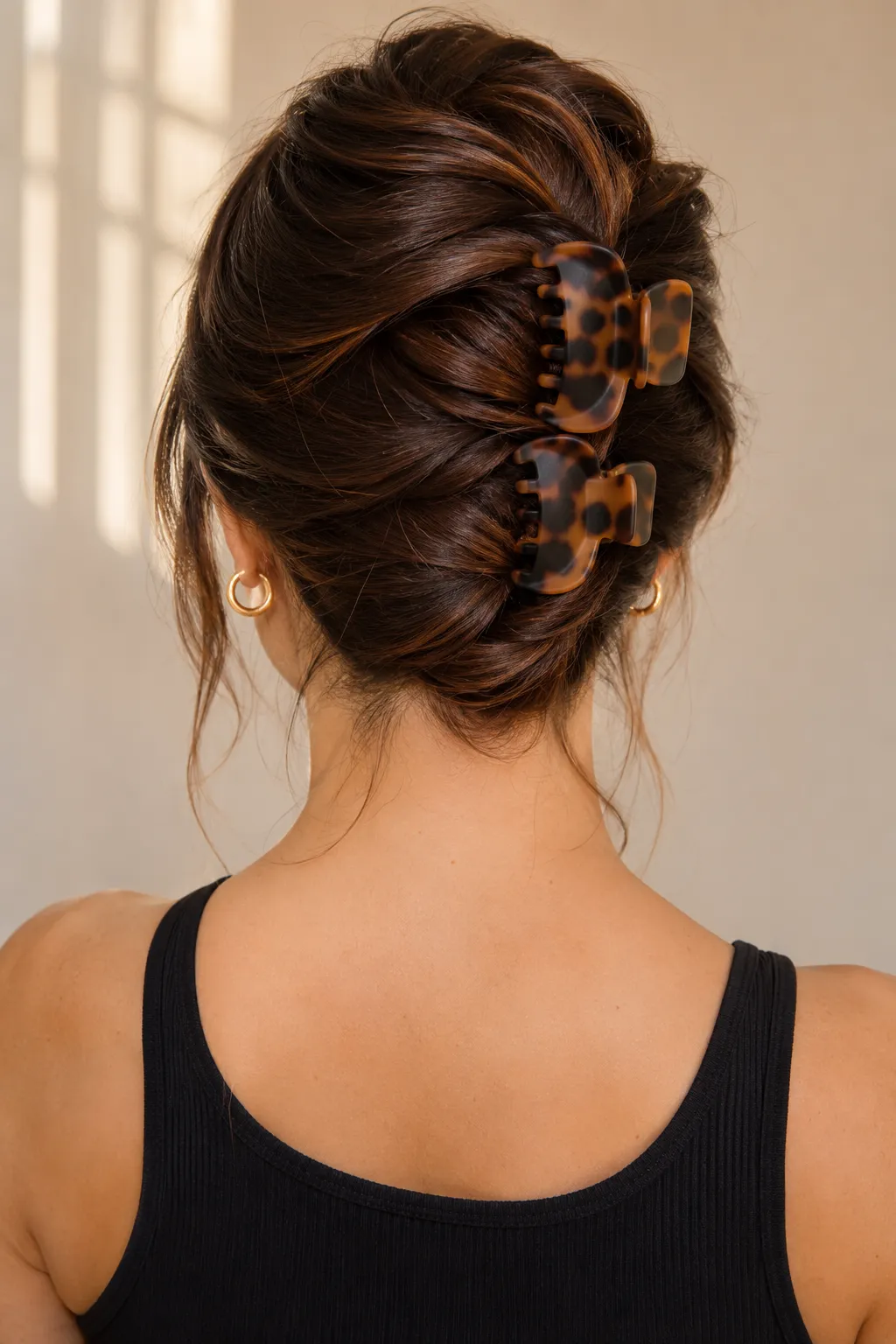
Divide your hair at ear level into a top and a bottom layer. Twist the bottom layer upward and clip it low on your head.
Next, twist the top layer and fold it over the first clip. Secure it with a second clip just above the first. The overlap locks both layers together.
Two medium clips often hold thick hair better than one oversized clip. Each one carries half the weight.
If you still wonder how to claw clip thick hair without slipping, check these common causes.
| Problem | Likely Cause | Fix |
|---|---|---|
| Clip slides down | Too much hair in one section | Split it into two sections |
| Teeth will not close | Clip is too small | Size up or use two clips |
| Twist unravels | Twist is too loose | Add one more turn before clipping |
| Clip tilts back | Heavy ends hang past the jaw | Fold the ends under before clipping |
| Scalp feels pulled | Clip sits too tight in one spot | Move it lower and loosen the twist |
Stylist Tip: Choose a clip with a curved jaw for thick hair. The curve follows your head and spreads the pressure.
Long, thick hair needs a deeper twist. Add two or three extra turns, then fold the ends under.
Curly and coily hair often grips on its own. Focus on lifting and gathering, not twisting hard.
Less weight per clip means more hold.
A Half Up Style Adds Lift at the Crown Without Pulling Your Hair
A half up style is one of the easiest ways to wear a claw clip, and it suits most lengths. It also leaves your face framing pieces free.
The Half Up Claw Clip Technique That Stays Secure All Day
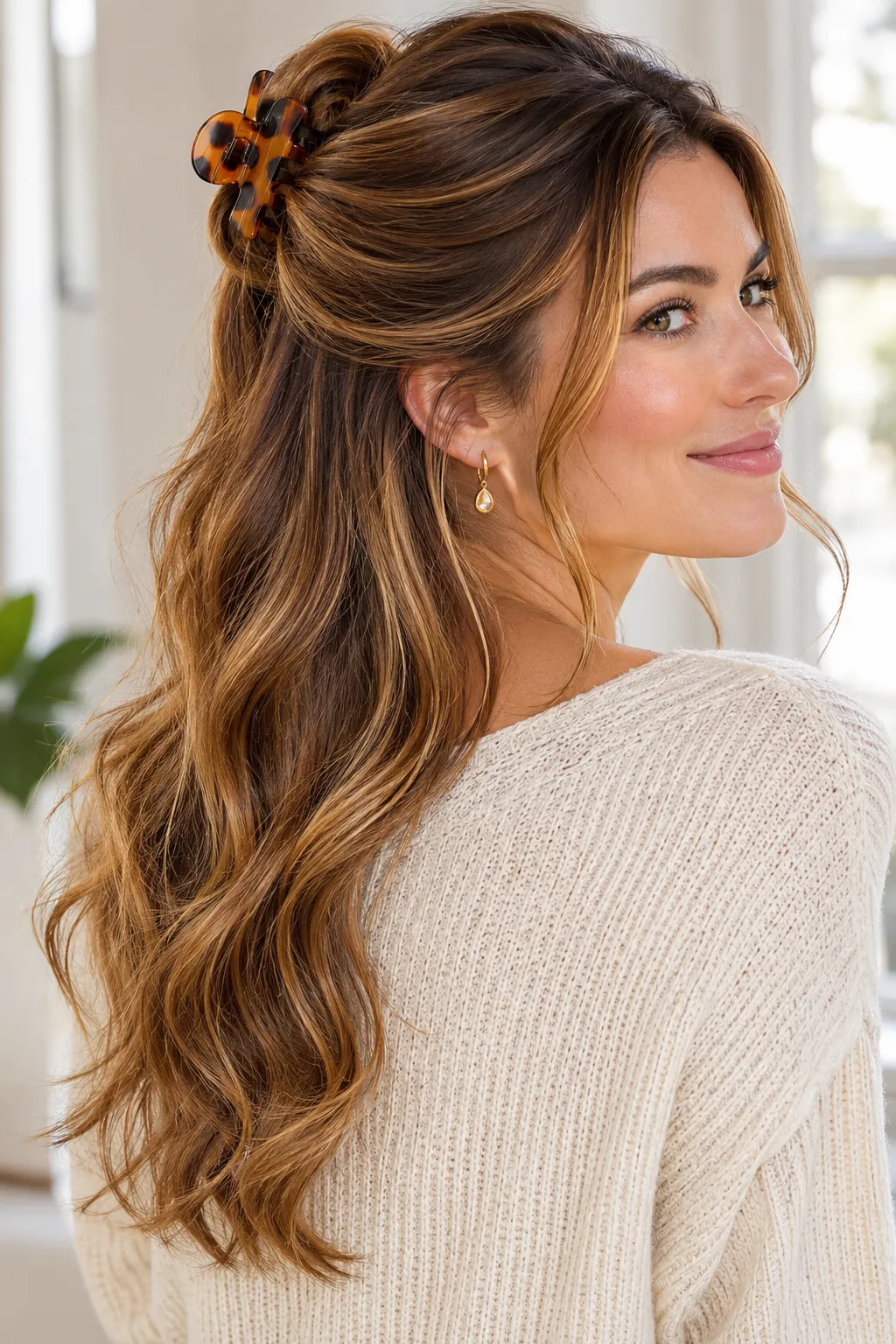
Take a section from the top of your head, starting just above each ear. Gather it at the crown and give it one or two light twists.
Hold the twist against your head. Slide the open clip in from the front, with the teeth pointing back. Close it and let the rest of your hair fall loose.
For thin hair, take a smaller section and set the clip higher for lift. For thick hair, take a wider section so the clip holds more of the weight.
Every version of this half up claw clip technique follows one rule: let the clip rest on the curve of your crown, where your head helps support it.
Face shape can guide placement. A higher clip adds height, which often balances a round face. A lower clip with soft front pieces may suit a long face.
Style the lower hair last. Smooth it with a brush for a sleek look, or scrunch in a little light cream for soft texture. The clip stays secure either way.
Cut Note: Short layers around the crown may poke out of the clip. Take a wider section to catch them, or leave them as soft texture.
Lift at the crown, softness everywhere else.
A Polished Updo Starts With a Smooth Base and a Straight Clip
The French twist is the dressy cousin of the classic twist. It sits flat and upright along the back of your head, so it needs a clean base.
French Twist With a Claw Clip for Dressy Days
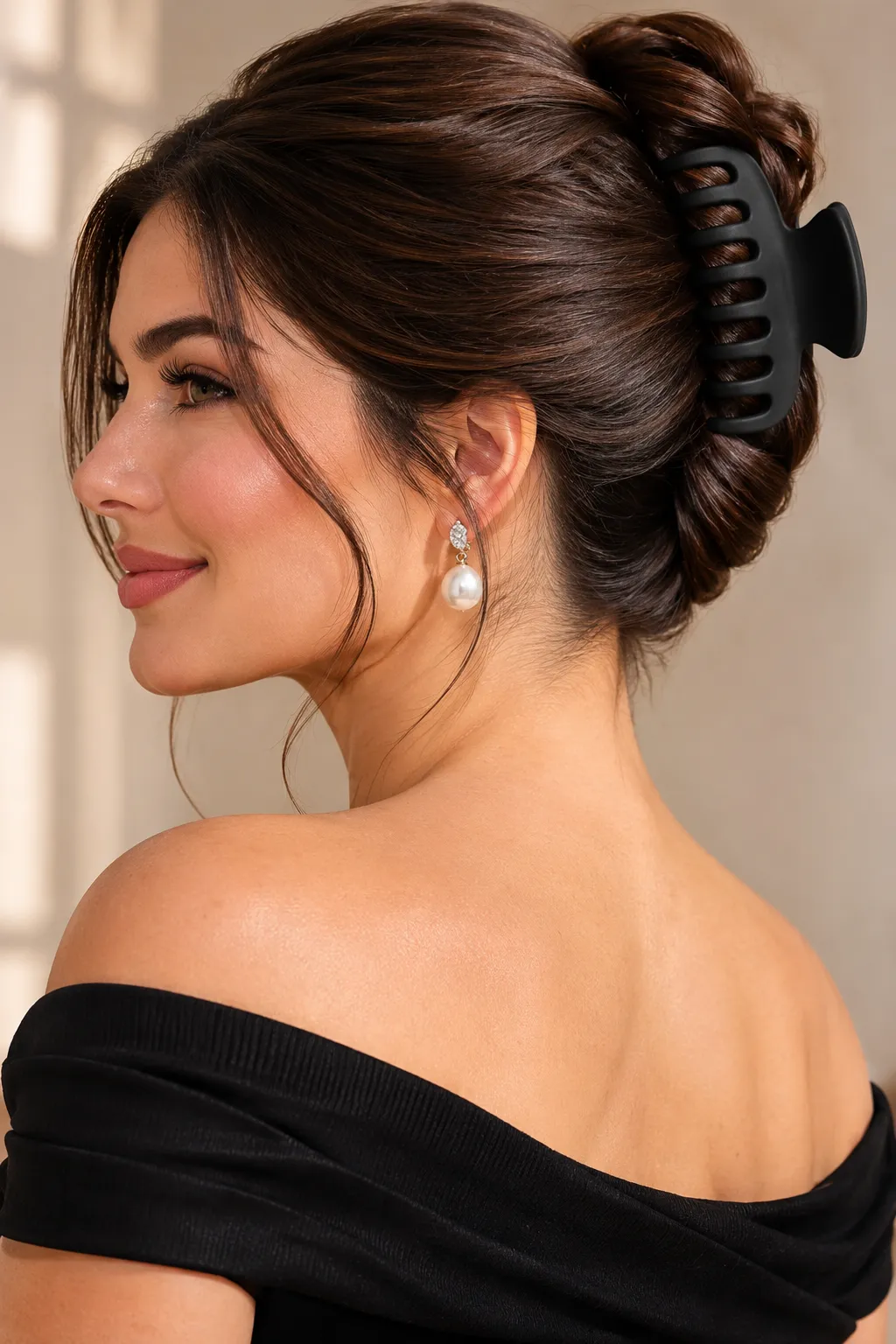
Brush your hair back and smooth the surface with a little light hold cream. Gather it all at the nape and hold it in one hand.
Twist the hair toward one side and roll it upward along your head. Tuck the ends inside the roll.
Keep the roll in place with one hand. Slide the open clip down into the top of the roll, with the teeth angled toward your head. Close it so the clip sits upright.
This French twist with a claw clip suits office days, dinners, and weddings. It works best on hair that is shoulder length or longer.
Fine hair looks fuller with a loose roll and a gentle tug on the sides. Thick hair needs a larger clip and a flatter, tighter roll.
A few pins can help. If your hair is slippery, slide one or two bobby pins into the roll before you add the clip. Pins give the roll extra support so it does not slide.
Heat Tip: If you smooth the front with a flat iron, use a heat protectant first. Let the hair cool fully before you twist, since warm hair may not hold its shape.
Smooth first, clip straight.
Most Slipping Problems Come From a Few Small Habits You Can Change
If you keep asking how to use a claw clip so it stays, look at your habits first. Fix them and the clip often holds with less effort.
This table lists the habits that cause the most trouble.
| Old Habit | Why It Fails | Better Way |
|---|---|---|
| Clipping untwisted hair | It slides through the teeth | Twist it into a firm coil first |
| Skipping the tug test | A weak hold shows up too late | Tug gently and shake your head before you leave |
| Sleeping in a clip | Strands may rub, break, and tangle | Use a loose braid or soft scrunchie |
| Pulling the twist tight | The scalp may feel sore | Leave a little give at the roots |
| Clipping the same spot daily | Repeated tension may stress strands | Shift the placement each day |
If you see breakage or a tender scalp, talk to a dermatologist or stylist.
Care Note: Open the clip fully before you remove it. Yanking it out half open can snag strands.
Check the spring and teeth now and then. A weak spring or a cracked tooth can loosen the hold, even when your technique is right. Wipe off product buildup with a damp cloth, since residue can make the teeth slick.
Match the style to the day. A claw clip suits desk days and errands. For running or sports, a soft elastic or a braid keeps your hair safer.
Change one habit at a time.
How to Use a Claw Clip Every Day With One Simple Formula
You do not need a new method each morning. You need one formula you can repeat, whatever your hair type.
Formula: prep + grip + shape + lock.
Prep means a brushed, dry base. Grip means texture spray, a light twist, or gentle teasing.
Shape means choosing your style, such as a twist, a half up, or a fan. Lock means setting the clip and giving it a gentle tug.
Here is how it plays out on three types of hair:
- Fine and straight, shoulder length: brush, mist texture spray, use the fan out method, and lock it with a small matte clip.
- Thick and wavy, mid back length: start with dry hair, twist deeply, shape two sections, and lock them with two medium clips.
- Medium thickness, long and straight: smooth with a brush, tease a small patch, shape a French twist, and lock it with a large clip.
Swap one element at a time. Change the shape for the occasion, but keep prep and grip the same.
Save your best version. Note the clip size, the grip step, and the shape that worked, then repeat it on busy mornings.
Quick Fix: If a style slips, go back to the grip step before you add more product.
Same four steps, any hair, any day.
Frequently Asked Questions
Can I use a claw clip on short hair?
Yes, and the steps for how to use a claw clip stay the same, only smaller. Chin length hair works with a small clip and one loose twist at the crown. If your layers are too short to reach the clip, try a half up style, because the longer top pieces do the gripping.
Can I wear a claw clip on wet hair?
Barely damp hair works, but soaking wet hair is heavy and slippery. Towel dry first, then twist loosely and clip, and the twist may set a soft shape as the hair dries. Wet strands may stretch and break more easily, so skip the tight twist.
Do claw clips work on curly and coily hair?
Yes, they often work well, especially in a large size with wide teeth. Detangle first so the teeth slide in smoothly, and gather your curls loosely at the crown instead of twisting them hard. Pull a few curls loose at the front for a soft frame.
Will a claw clip leave a dent in my hair?
It can, especially on fine, straight hair. Clip it loosely and give your hair a break during the day. When you take it out, shake your roots loose with your fingers, and mist the bend lightly with water if it stays.
What is the easiest claw clip style for beginners?
Start with the classic twist on dry, brushed hair, since it needs only one clip and one hand. Once it feels easy, move on to the half up style. Save the French twist for last, because it asks for the most placement skill.
A claw clip is a small tool, but good technique makes it hold. Start with the classic twist, then try the other four ways as you get comfortable. Your hair will show you which one feels best.