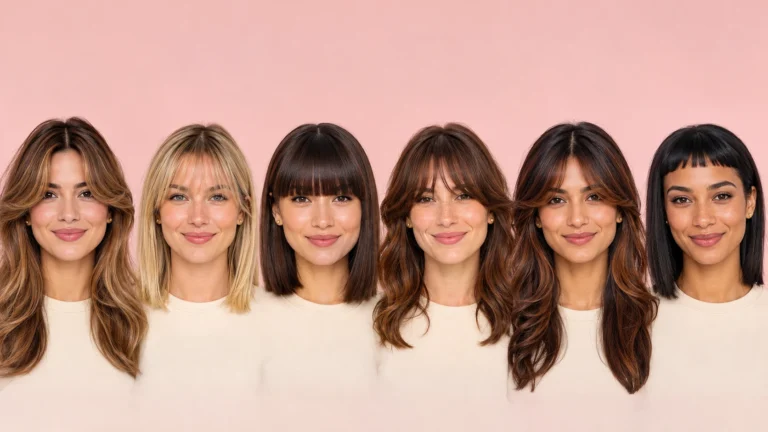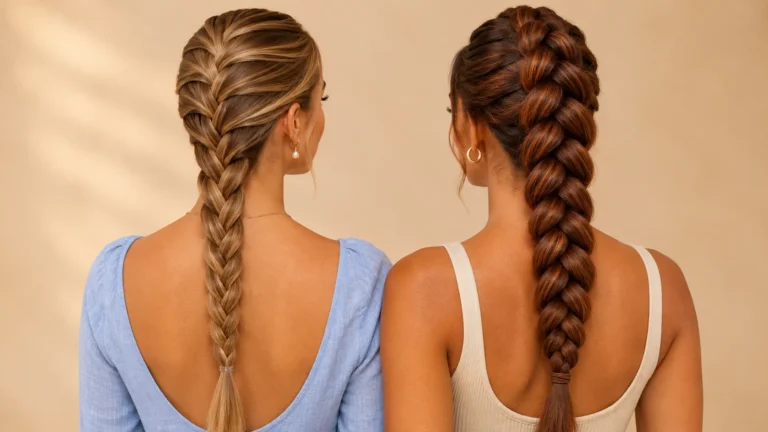
Hair Type Chart (1A to 4C): How to Find & Care for Your Texture
You open a hair type chart and feel more lost than before. Your hair seems to fit three boxes at once, or none at all. So you guess, buy a product, and hope for the best.
Maybe your crown dries wavy while your nape stays curly. Maybe old advice, like “curly hair needs heavy oil,” never matched your strands. Mixed patterns and mixed messages make every label feel shaky, and you are not alone in feeling stuck.
Your hair type is the shape your strands make when they dry with no heat and no product. Name that shape, and every care choice gets simpler. Wash days, products, and styling all follow from it.
Below, you will learn how to read the chart, test your own hair at home, match products to your type, and build a routine that fits your strands.
A Hair Type Chart Sorts Strands by Curl Pattern, Not Quality
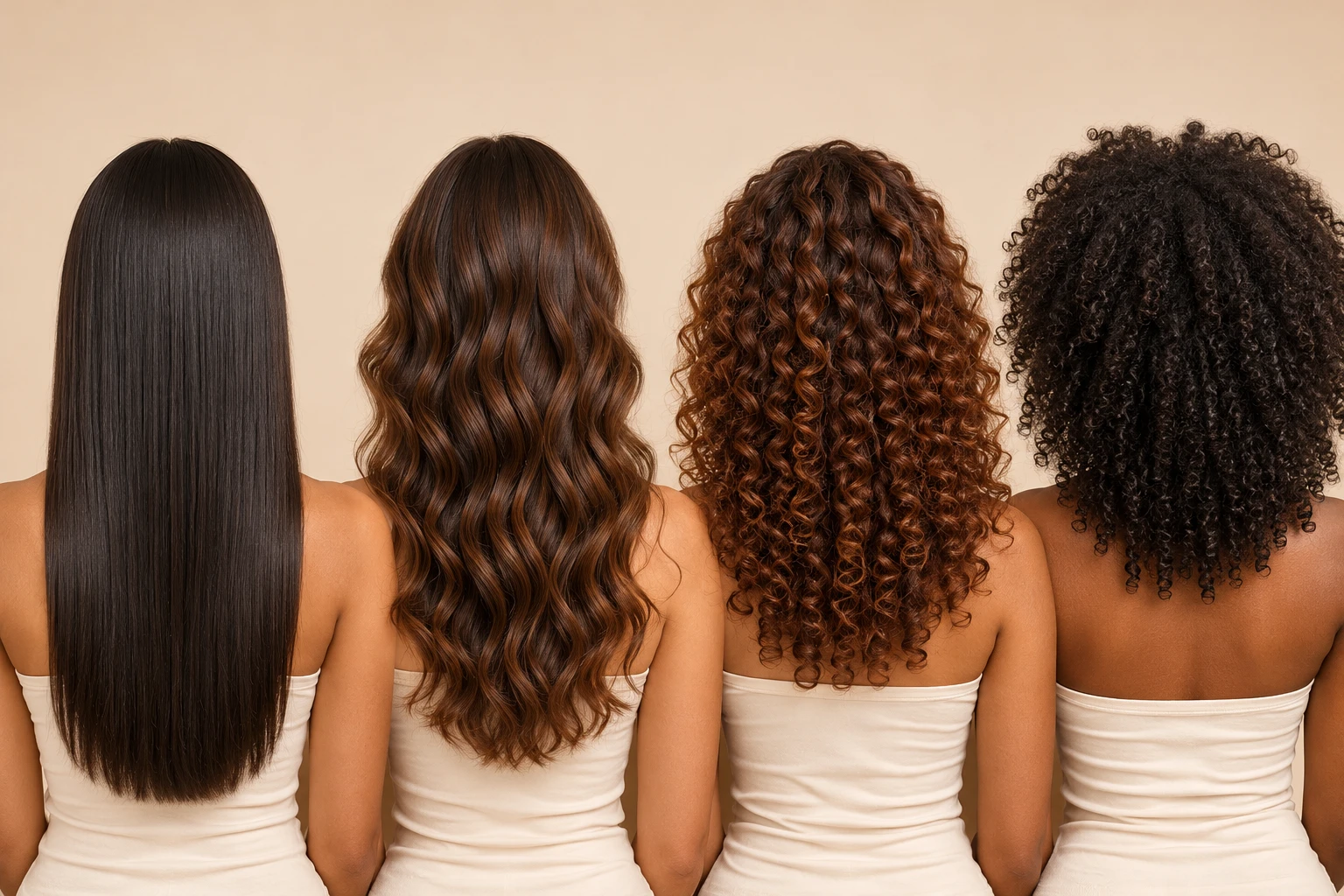
A hair type chart sorts hair into four families by curl pattern. The numbers run from 1, which is straight, to 4, which is coily. The letters A, B, and C show how tight or how defined the pattern gets inside each family.
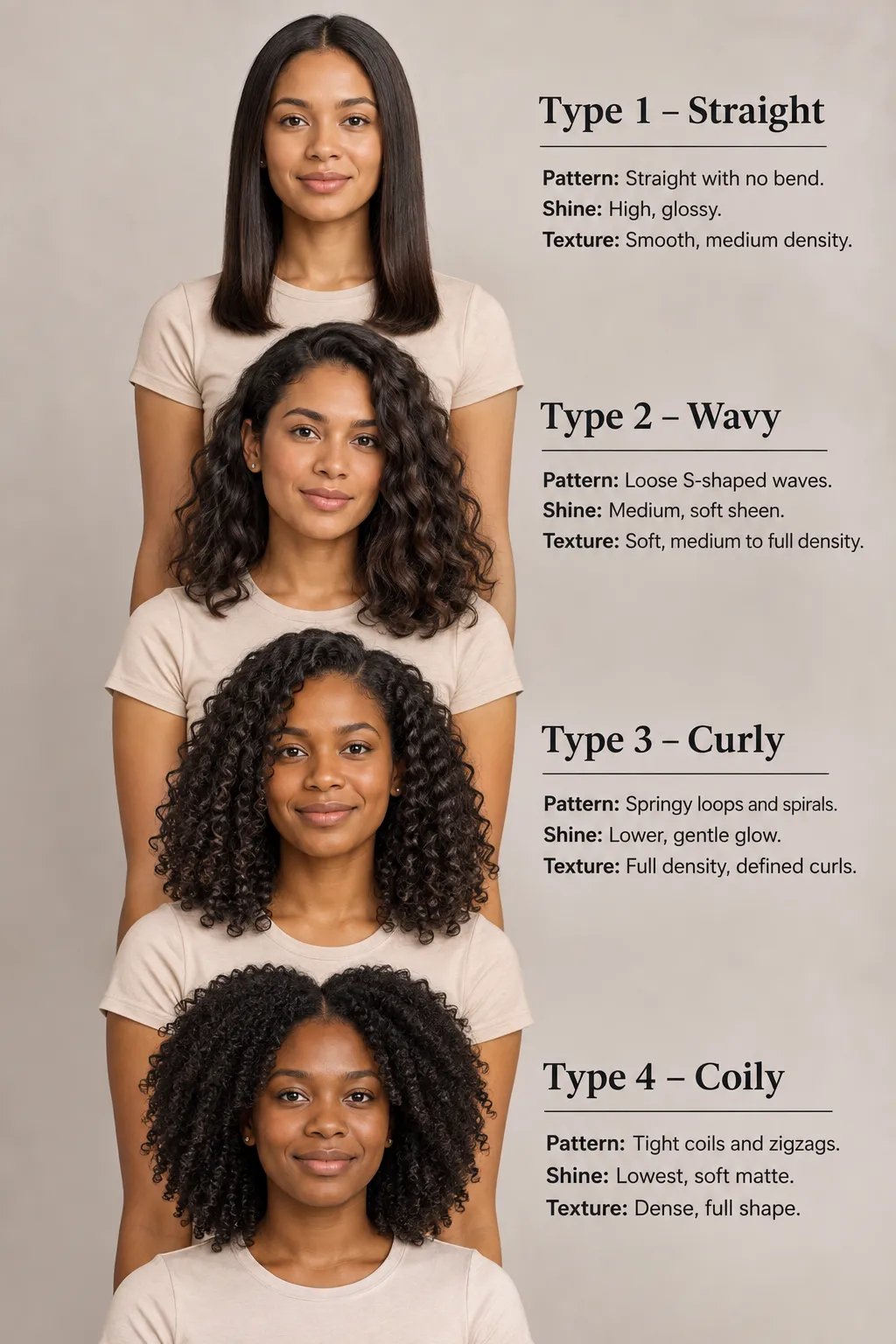
The four families are type 1 straight hair (1A, 1B, 1C), type 2 wavy hair (2A, 2B, 2C), type 3 curly hair (3A, 3B, 3C), and type 4 coily hair (4A, 4B, 4C). Think of the chart as a map, not a grade. No type ranks above another.
| Type | Curl Pattern | Natural Shine | Common Challenge |
|---|---|---|---|
| Type 1 | Straight, no bend | High | Oily roots and flat volume |
| Type 2 | S shaped waves | Medium | Frizz and waves that fall flat |
| Type 3 | Springy loops and spirals | Lower | Dryness and tangles |
| Type 4 | Tight coils and zigzags | Lowest | Dryness, breakage, and shrinkage |
Straight hair reflects light easily, so it looks glossy. Tighter patterns scatter light, so they often look matte unless they are well moisturized.
Most people land between two letters. One head can even hold two patterns, such as 2B waves at the nape and 3A curls at the crown. Treat the label as a guide and let your strands have the final word.
Stylists and product makers often use the same system. That makes the chart handy for reading labels and for describing your hair at the salon. Shape tells you where to start. Your strands tell you the rest.
A Wash and Dry Test Shows Your Hair Type at Home
You can find your hair type at home with one wash and one dry. The goal is to see your natural curl pattern without heat, gel, or a tight ponytail changing it.
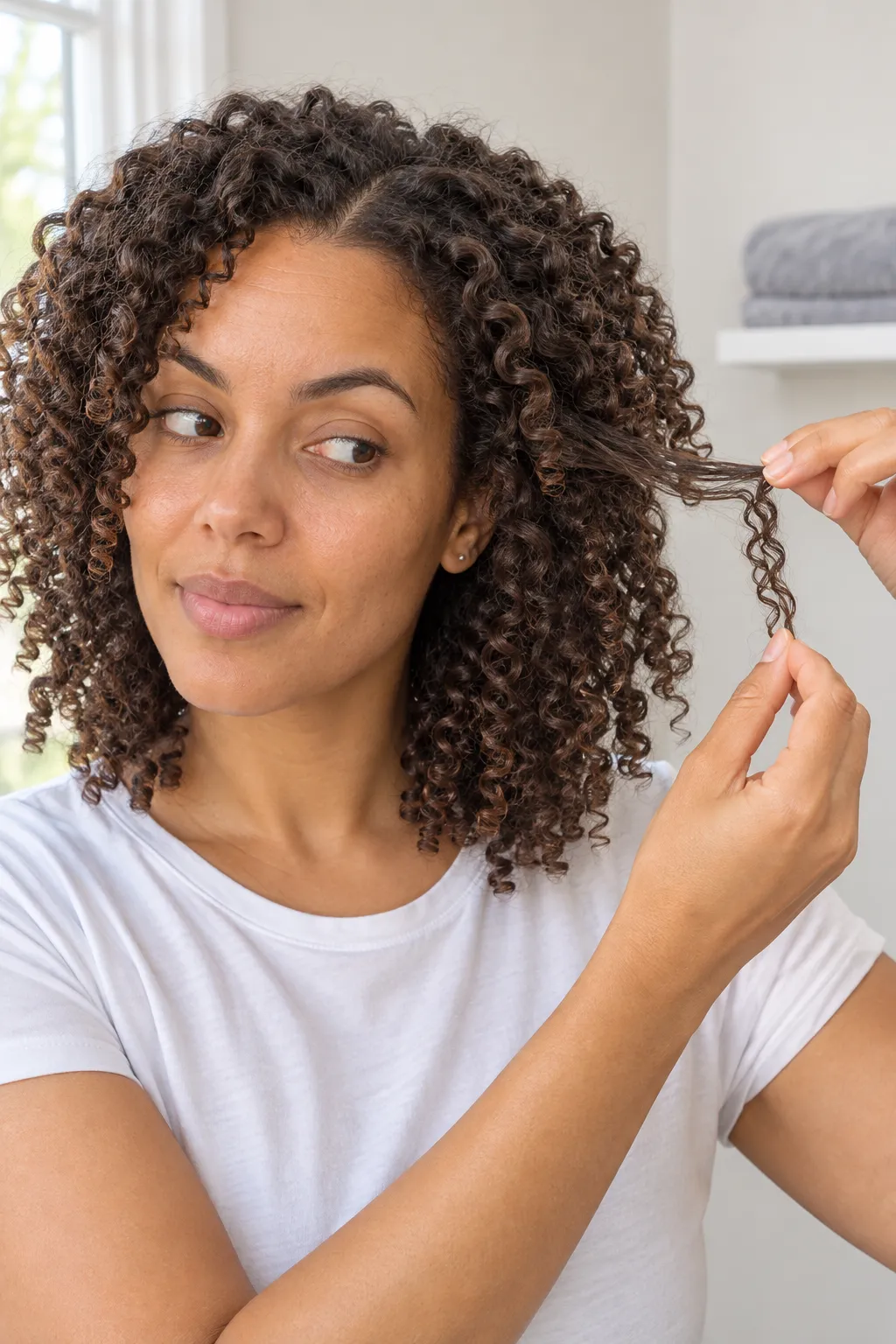
- Wash with a gentle shampoo and rinse well.
- Smooth on a light conditioner and rinse most of it out.
- Skip every product, including gel, cream, and oil.
- Let your hair air dry fully, without brushing or touching it.
- Check three spots once it is dry: near your ears, your crown, and your nape.
- Pull one section straight, let go, and watch how far it springs back.
- Match what you see to the chart and write it down.
Heat, tight styles, and product can hide your pattern. A clean, dry, untouched head shows what your strands do on their own. Checking three spots also reveals a mixed pattern, and a big spring back often points to tighter coils.
Take a clear photo of each spot in daylight. A photo helps you compare results when you retest later. If the result feels unclear, repeat the test once more.
Very short hair may not show its full pattern yet, so wait until it grows a little before you test.
Prep Note: Wait until your hair is fully dry before you judge it. Damp hair often looks looser than it really is, and thick hair can take many hours to dry.
Straight and Wavy Hair Look Best With Light Products
Types 1 and 2 share one big need: lightness. Heavy creams and oils weigh strands down fast, so pick light formulas and keep them away from the roots.

Type 1 Straight Hair (1A, 1B, 1C) Gets Oily Fast and Needs Light Care
1A is very straight and often fine, so it shines but falls flat. 1B is straight with a little body. 1C is straight but coarse, and it may frizz in humid weather.
Natural oil slides down smooth strands quickly, so many people with straight hair wash every 2 to 3 days. A lightweight conditioner on the ends keeps them soft without greasy roots. For lift, try a volumizing mousse or dry shampoo at the roots.
1C may need a little more conditioner than 1A, since coarse strands can feel dry.
Type 2 Wavy Hair (2A, 2B, 2C) Needs Moisture and a Light Hold
2A has loose, soft waves that sit close to the head. 2B waves start lower and bend more, often with frizz at the crown. 2C waves run thick and defined, close to curls.
Waves usually do well with a wash 2 to 3 times a week. A light foam or mousse on wet hair helps them clump. Rich butters may pull waves straight, so choose a lightweight to mid weight conditioner.
2A often needs only a light mousse, while 2C may handle a light gel.
Weight Note: Start with a small amount of mousse or conditioner, about the size of a pea, and add more only if needed. Too much weighs straight and wavy hair down.
Keep it light and let the shape show.
Curly and Coily Hair Needs Rich Moisture and Gentle Handling
Types 3 and 4 lose moisture faster because natural oil struggles to travel down bends and coils. Dry strands tangle and snap more easily. Rich conditioners, creamy stylers, and slow detangling make the biggest difference.
Trim split ends every 8 to 12 weeks so splits cannot creep up the strand.
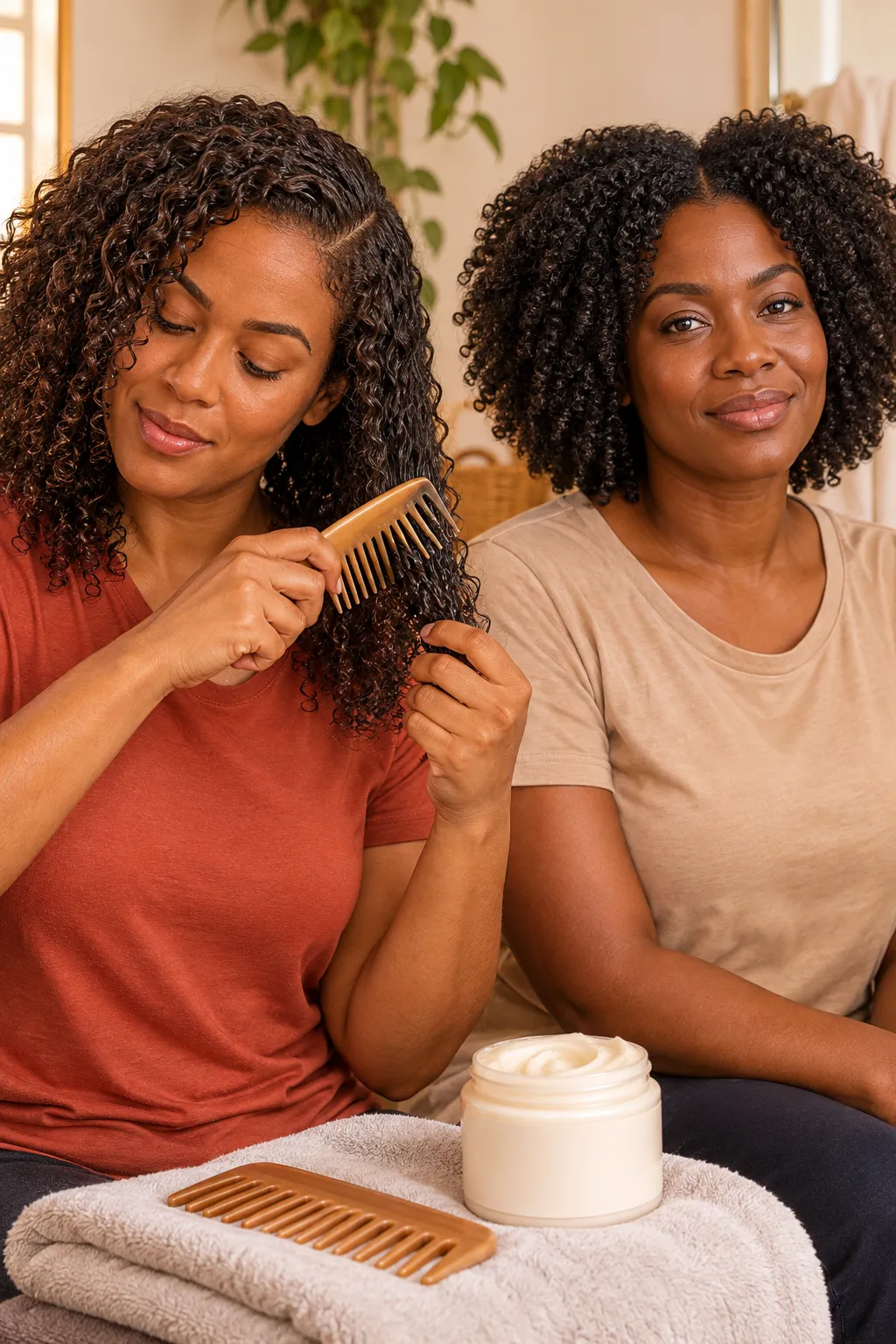
Type 3 Curly Hair (3A, 3B, 3C) Thrives on Slip and Definition
3A forms loose, springy loops about the size of sidewalk chalk. 3B forms tighter ringlets. 3C forms dense corkscrews, close to the width of a pencil.
Most curly hair feels best with a wash once or twice a week. A creamy conditioner with slip lets you detangle wet hair with a wide tooth comb, and a gel helps hold the curl pattern as it dries. Skip the brush on dry curls, since it breaks up the clumps.
3A may need a lighter cream, while 3C often welcomes a richer one.
Type 4 Coily Hair (4A, 4B, 4C) Needs Deep Moisture and Protection
4A has tight, springy coils with a clear S shape. 4B bends in sharp Z shaped angles. 4C is the tightest, with the most shrinkage and the least visible definition.
Coily hair is fragile at every bend, so it often does best with a wash about once a week and a deep conditioner treatment. Rich butters and oils help seal in moisture. Protective styles like twists or braids cut down daily friction, and detangling in small sections causes less breakage.
4A often holds definition with a cream and a gel, while 4C may need richer butters and extra patience.
Strand Thickness and Porosity Change How Every Hair Type Behaves
Two people with the same hair type can need very different care. Strand thickness, porosity, and density explain why.
Strand thickness is how wide one strand is, from fine to medium to coarse. Porosity is how easily a strand takes in and holds water. Density is how many strands you have, so dense hair may need more product and more drying time.
Thickness changes your product choices more than most people expect:
- If your hair is fine: Choose light products. Heavy creams may flatten it, and oils can make it look limp.
- If your hair is medium: You have the widest range of products to try. Adjust them by season and curl pattern.
- If your hair is coarse: Pick richer conditioners and butters. Thick strands often feel dry and need extra slip.
Porosity takes one minute to check on clean, dry hair:
- Start with hair that has no product on it.
- Spritz one small section with plain water.
- Watch for a minute. Beads that sit on top suggest low porosity, and water that soaks in fast suggests high porosity.

Low porosity hair often prefers light, watery products because heavy ones sit on top. High porosity hair takes in water fast but loses it fast, so creams and sealing oils often help. Fine hair that is also low porosity may need the lightest products of all.
Care Note: Porosity can change with heat, color, and bleach, so recheck it a few times a year.
Same type, different strands.
Use Your Hair Type Chart to Set Wash Rhythm and Products
Once you know your type, the chart becomes a care plan. Wash rhythm, conditioner weight, and styling product all shift as the curl pattern gets tighter. Treat the table below as a starting point, then adjust by how your hair feels.
| Hair Type | Typical Wash Rhythm | Conditioner Weight | Styling Product Type |
|---|---|---|---|
| Type 1 | Every 2 to 3 days | Lightweight, ends only | Mousse or dry shampoo |
| Type 2 | 2 to 3 times a week | Lightweight to mid weight | Foam or light gel |
| Type 3 | Once or twice a week | Creamy and rich | Curl cream and gel |
| Type 4 | About once a week | Thick, deep moisture | Butter, cream, and oil |

Your scalp matters too. An oily scalp may need more frequent washing, while a dry scalp may need less. A hair type chart cannot feel your scalp, so trust what you notice between wash days.
On types 1 and 2, keep conditioner on the mid lengths and ends. On types 3 and 4, work it through the whole length. A deep conditioner every 1 to 2 weeks suits types 3 and 4.
Seasons shift your needs as well. Humid months may call for gel to calm frizz, and dry winter months may call for a richer conditioner. Adjust slowly, one change at a time.
Fine hair may need less conditioner than coarse hair of the same type.
Hold Note: Gel, mousse, and foam give hold, while creams and oils give moisture. Choose by what your pattern needs most.
Common Habits Quietly Work Against Your Curl Pattern
Even with the right products, a few habits can fight your hair type. Most are easy to change, and small changes often show results within a few washes. The table below shows the usual culprits and a better way to handle each.
| Old Habit | What Happens | Better Way |
|---|---|---|
| Brushing dry curls | Clumps break up and frizz grows | Detangle wet hair with a wide tooth comb and conditioner |
| Washing with very hot water | Natural oil strips away and hair dries out | Rinse with warm water |
| Sleeping on a rough pillowcase | Friction causes tangles and breakage | Use a satin or silk pillowcase or bonnet |
| Using hot tools daily | The curl pattern can loosen and strands dry out | Use a heat protectant on a low setting |
| Touching curls while they dry | Clumps split apart and frizz appears | Leave them alone until fully dry |
| Copying a friend’s routine | Products may not suit your type or porosity | Choose products by your own hair type |

Heat changes hair the most. Repeated high heat may loosen your curl pattern for good, and damage is easy to mistake for a new hair type. If you notice heavy damage, sudden thinning, or an irritated scalp, see a professional stylist or a dermatologist.
Heat Tip: Start on the lowest heat setting and raise it only if the style will not hold. Fine hair often needs less heat than coarse hair.
Which habit will you drop first?
One Formula Keeps Care Simple for Any Hair Type
A routine is easier to keep when it fits in one line. This formula works for every family on the chart, and you only change the weight of the products.
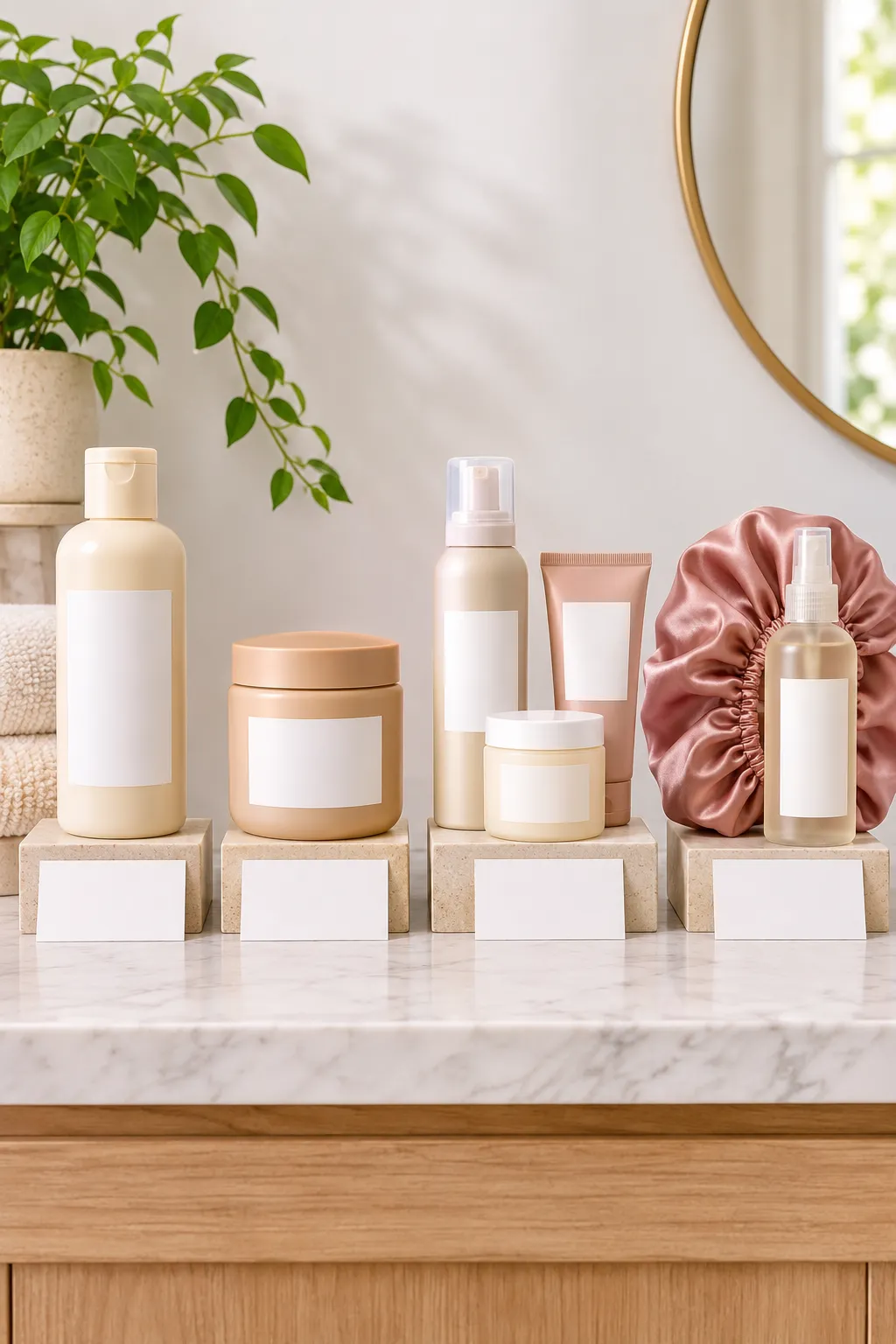
Formula: cleanse + condition + style + protect.
Cleanse means a gentle shampoo at your own rhythm. Condition means the weight that suits your type.
Style means mousse, cream, or gel for hold and definition. Protect means low friction at night and low heat by day.
Each step gets richer as the curl pattern tightens. Here is the formula at work on three heads:
- If your hair is 1A and fine: Cleanse every 2 to 3 days, condition the ends with a lightweight formula, style with mousse at the roots, and protect with a loose bun at night. Dry shampoo can stretch the time between washes.
- If your hair is 2B and wavy: Cleanse 2 to 3 times a week, use a lightweight to mid weight conditioner, scrunch in a light foam, and sleep on a satin pillowcase. A diffuser on low heat adds extra lift.
- If your hair is 4C and coily: Cleanse about once a week, use a thick deep conditioner, style with cream and butter, and protect with twists under a satin bonnet.
Change one step at a time for two weeks. If your hair feels heavy, go lighter. If it feels dry, add moisture. Write the formula on a note near your mirror, and wash day gets quicker.
Frequently Asked Questions
What Is the Difference Between Type 3 and Type 4 Hair?
Type 3 hair forms loops and spirals, while type 4 hair forms tight coils or zigzags with more shrinkage. Curly hair usually shows clear definition, so a gel can hold it in place. Coily hair often looks less defined, yet it can be dense, soft, and fragile at every bend.
How Accurate Is Hair Typing?
A hair type chart is accurate enough to guide product choices, but it cannot capture everything. Strand thickness and porosity matter just as much as the letter. Use your result as a starting point, change one product at a time, and adjust as you learn how your hair behaves.
Can My Hair Type Change Over Time?
Your hair type can shift a little. Heat, color, and bleach can loosen a curl pattern, and many people notice changes with age or after big shifts in their routine. Retest your curl pattern on clean, dry hair about once a year, and update your routine if the shape has changed.
Can I Have More Than One Hair Type?
Yes, and it is common. You might see waves at the nape and curls at the crown, or a looser front and a tighter back. Care for each area by its own pattern, and choose products for the driest section so no area gets left behind.
Which Hair Type Needs the Most Moisture?
Type 4 coily hair often needs the most moisture, since natural oil struggles to travel down tight coils and bends. Type 3 comes next, and fine curls can still dry out quickly. Type 1 needs the least and may need conditioner only on the ends.
Your hair type is a starting point, not a verdict. Test it on clean, dry hair, match your products to it, and adjust as your strands show you more over the seasons. Save this hair type chart for your next salon visit, and your stylist will know exactly where to begin.